Secondary Glazing in Richmond & Kew: Serenity Under the Flight Path
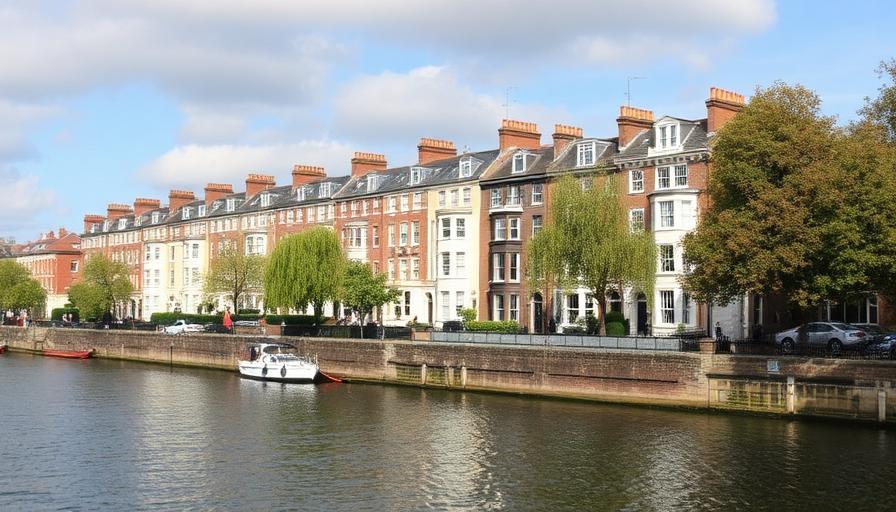
Richmond and Kew are, by any measure, two of the most beautiful places to live in London. The Green. The river. Kew Gardens. The deer in the park. The kind of period architecture that makes estate agents run out of superlatives.
There's just one problem, and it arrives approximately every 90 seconds between 6am and 11pm: a wide-body aircraft on final approach to Heathrow, descending over your roof at 1,500 feet.
You can see the landing gear. You can read the livery. And you can absolutely, definitely hear it—a deep, rolling rumble that vibrates through your walls, rattles your windows, and makes conversation on the terrace a matter of strategic timing.
If you've lived in TW9 or TW10 for any length of time, you've learned to tune it out. Mostly. But "mostly" isn't the same as "actually quiet," and it's certainly not the level of peace you expect from a home that cost what yours cost.
Secondary glazing delivers genuine silence under the flight path. Not "a bit quieter." Not "takes the edge off." Proper, measurable, transformative silence—without touching your original windows or giving Richmond Council a reason to send you a letter.
The Flight Path Challenge: Why Aircraft Noise Is Different
Aircraft noise isn't like traffic noise. It's a fundamentally different acoustic problem, and understanding why matters if you want to solve it properly.
When a plane passes overhead at 1,500 feet, it produces a broadband noise event that typically registers between 65-78dB at ground level in Richmond and Kew—depending on aircraft type, altitude, and wind direction. But the character of that noise is what makes it so difficult to block.
Low-frequency dominance. The deep rumble of jet engines and aerodynamic turbulence sits primarily in the 50-250Hz range. These low frequencies have long wavelengths that pass through standard glass almost without resistance. A typical double-glazed unit—even a good one—might knock 5-8dB off this range. That's barely perceptible.
Vibration coupling. Aircraft noise doesn't just arrive through the air. The low-frequency energy causes your existing windows to vibrate sympathetically—the glass itself becomes a speaker, re-radiating sound into the room. If your secondary glazing is mounted rigidly to the same frame, it vibrates too. Problem not solved.
Repetition. Heathrow handles approximately 1,300 flights per day. During peak hours, planes pass over Richmond every 60-90 seconds on the northern runway approach. This isn't an occasional disturbance—it's a near-continuous acoustic presence.
This is why standard double glazing often fails under flight paths. The air gap in a sealed double-glazed unit is typically 12-16mm—far too narrow to decouple low-frequency sound. The glass vibrates as a single system, and the low-frequency rumble passes straight through.
Our system is engineered specifically for this problem:
10.8mm Stadip Silence glass. Asymmetric acoustic laminate (6.4mm + 4.4mm) with a PVB interlayer that converts sound energy into heat. This laminate construction is particularly effective against the broadband profile of aircraft noise—absorbing energy across a wider frequency range than standard glass.
150mm air gap. This is the critical dimension. At 150mm, the air gap between your original window and the secondary panel creates true structural decoupling. The secondary panel vibrates independently of the original glass, breaking the mechanical pathway that transmits low-frequency sound. Without this decoupling, you're fighting physics with insufficient tools.
54dB noise reduction. A plane registering 75dB overhead drops to approximately 21dB inside your room. That's quieter than a rural bedroom at night. That's the difference between hearing every aircraft and hearing none of them.
For properties directly under the centreline—particularly around Richmond Green, Kew Road, and the streets between the river and the A316—this level of performance isn't a luxury. It's a necessity.
Richmond upon Thames Council and Conservation: The Planning Shortcut
Richmond upon Thames is one of the most heritage-conscious boroughs in London. The concentration of conservation areas across TW9 and TW10 is extraordinary:
- Richmond Green — the heart of the historic town, surrounded by 17th and 18th-century buildings
- Richmond Hill — including the famous Terrace Walk with its protected view of the Thames
- Kew Green — the cluster of Georgian and Victorian properties around the church and the Gardens
- The Vineyard — one of Richmond's oldest residential streets
- Petersham — the village enclave between Richmond Park and the river
Many properties within these areas are individually Grade II listed, and even those that aren't carry the weight of conservation area restrictions. Replacing original windows with modern double glazing requires Listed Building Consent or planning permission—applications that are frequently refused, delayed, or approved only with conditions that make the project uneconomical.
Secondary glazing bypasses the entire process:
- Internal modification only. Your original windows remain untouched. The exterior appearance of your property doesn't change by a millimetre.
- Fully reversible. Remove the secondary panels and there's zero evidence they were ever installed. No fixings into original timber. No permanent alterations.
- No planning permission required. Because secondary glazing is classified as an internal improvement, it falls outside the scope of conservation area controls and Listed Building Consent requirements.
We've installed in properties along Richmond Green, across Kew Road, throughout Petersham village, and in the grand villas climbing Richmond Hill. The council's conservation team knows our work. They know it's respectful, invisible, and reversible. For homeowners who dread the planning process, this is the path that avoids it entirely.
Riverside Thermal Protection: Stopping Drafts, Damp, and Decay
Living near the Thames has its obvious charms. It also has a microclimate that's noticeably colder, damper, and more exposed than properties just a few streets inland.
Riverside homes in Richmond and Kew face a specific combination of challenges:
Persistent damp air. The river generates humidity levels that are consistently higher than the borough average. This moisture-laden air finds its way through every gap in original sash windows, contributing to condensation on glass surfaces and—over time—rot in timber frames and sills.
Wind exposure. The Thames corridor acts as a wind channel, funnelling cold air along the river and directly into properties that face the water. Homes along Petersham Road, the Richmond riverside, and Strand-on-the-Green in Kew experience wind exposure that inland properties simply don't.
Cold radiation. Single-glazed windows with U-values around 5.0 W/m²K radiate cold into the room, creating the familiar "cold zone" within two metres of the glass. In riverside properties with large windows designed to capture the view, this cold zone can dominate the living space during winter.
Secondary glazing addresses all three:
Hermetic seal. Our magnetic perimeter seals create a continuous airtight closure around the secondary panel. Damp river air can't penetrate. Drafts can't enter. The micro-gaps that plague original sash joints are completely sealed off.
U-value reduced to 1.8 W/m²K — a 65% improvement in thermal retention. The air gap between the panels acts as an insulating barrier, and the secondary glass surface stays warm enough to prevent condensation forming on the inner pane.
Frame protection. By eliminating condensation on the original glass and stopping damp air from reaching the timber, secondary glazing actively protects your original windows from the moisture damage that is the single biggest threat to heritage fenestration in riverside locations. Given that restoring a single rotten sash window can cost £1,500-3,000, prevention is vastly more economical than repair.
Homeowners in riverside Richmond properties typically report heating bill reductions of 20-30% and a complete elimination of window condensation after installation.
Preserving the View: Slimline Frames That Disappear
Whether your windows look out over Richmond Green, the Thames at Petersham Meadows, or the treetops of Kew Gardens, the view is part of why you live here. Any window upgrade that compromises that view has missed the point entirely.
Our secondary glazing is designed around the principle of visual transparency:
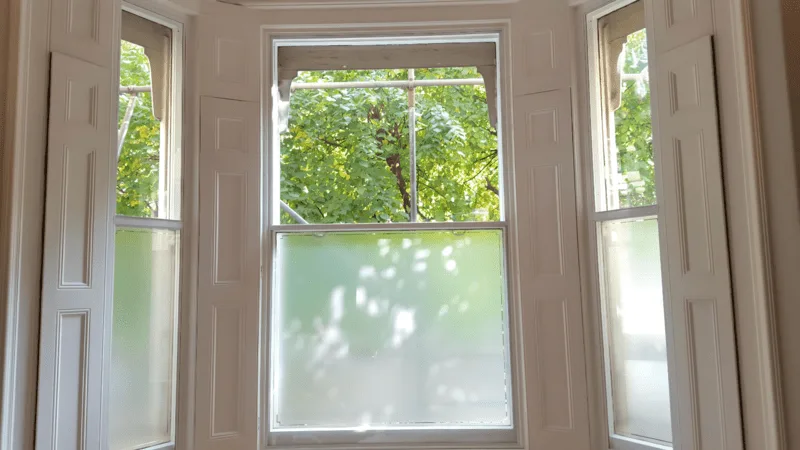
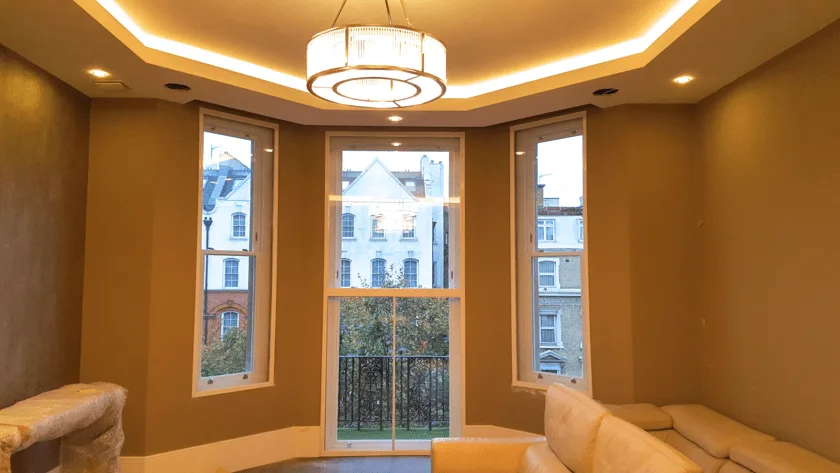
20mm slimline profiles sit within the window reveal, aligned with existing glazing bars. From inside the room, the secondary panel reads as part of the original window—not as an addition bolted in front of it. From outside, it's completely invisible.
Optical clarity. Our glass delivers visual performance indistinguishable from having no secondary panel at all. The view of the Green, the river, or the Gardens remains pin-sharp, undistorted, and undiminished.
Colour matching to any specification—RAL references, Farrow & Ball shades, or bespoke heritage palettes. If your window surrounds are finished in a specific colour, our frames match it exactly. The installation dissolves into the architecture.
Vertical sliding panels replicate the movement of your original sashes. The window operates exactly as it always has—lift the secondary panel, access the original sash, enjoy the breeze on a summer evening. The mechanism is smooth, balanced, and completely silent.
Investment Guide: Richmond and Kew
| Property Type | Windows | Typical Investment | Annual Energy Saving |
|---|---|---|---|
| Kew cottage | 6-8 | £4,200 – £5,600 | £320 – £440 |
| Victorian terrace (Richmond) | 8-12 | £5,600 – £8,400 | £440 – £660 |
| Riverside villa | 12-18 | £8,400 – £12,600 | £660 – £980 |
| Richmond Hill detached | 14-22 | £9,800 – £15,400 | £760 – £1,180 |
Prices include survey, bespoke manufacture, and installation. VAT applies.
In Richmond and Kew, where property values reflect the unique combination of riverside setting, royal parkland, and heritage architecture, secondary glazing consistently adds a 3-5% premium at resale. Buyers under the flight path particularly value acoustic upgrades—they know what they're buying into, and they'll pay more for a home that's already solved the noise problem.
Take Back Your Peace and Quiet
You chose Richmond or Kew for the beauty, the space, the river, and the gardens. You didn't choose the flight path. Our secondary glazing lets you keep everything you love about TW9 and TW10 while removing the one thing you don't—the constant acoustic reminder that Heathrow is 8 miles to the west.
No heritage compromises. No planning applications. No visible changes. Just silence, warmth, and the view—exactly as it should be.
Trusted by homeowners across TW9, TW10, and TW1. Fully compliant with Richmond upon Thames conservation area requirements. Free survey and no-obligation quote for all Richmond and Kew properties.
Related Resources:
- Aircraft Noise Solutions — The science of blocking flight path noise
- Sash Window Solutions — Engineered for period properties
- Acoustic Calculator — Quantify your noise reduction potential
People Also Ask
Related questions could not be generated at this time.
Frequently Asked Questions
FAQs could not be generated at this time.
Related Articles
Plan Your Richmond & Kew Project
Cost Calculators & Planning Tools
Before booking a survey, model the noise reduction, price up your project, and check heritage compliance using our specialist tools — built specifically for London properties like those in Richmond upon Thames.
Secondary Glazing Cost
Per-window pricing for Richmond & Kew from £580. Whole-house estimates included.
Interactive Cost Estimator
Get an instant tailored quote based on window count, glass spec and postcode.
Heritage Sash Calculator
Listed-building cost & compliance estimator — ideal for Richmond upon Thames conservation areas.
Secondary vs Double Glazing
Side-by-side STC ratings, cost and heritage suitability comparison.
Free Acoustic Calculator
Model the exact decibel reduction for your specific noise problem.
Secondary Glazing London
The complete London-wide hub: every glass spec, borough and listed-building rule.
Next Step
Book a Free Noise Survey
Get a tailored acoustic report and fixed quote for your property. No obligation, surveys across London within 5 working days.