Secondary Glazing London: Complete Borough Guide & Expert Installation
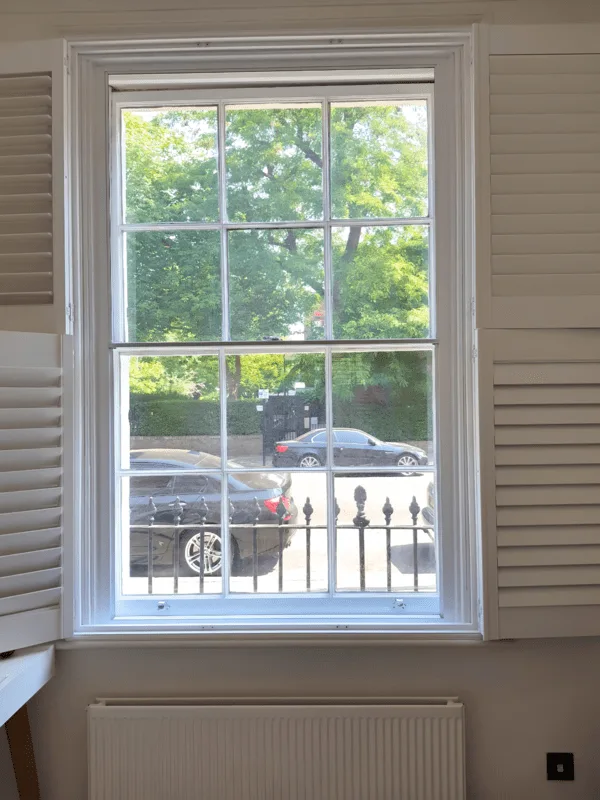
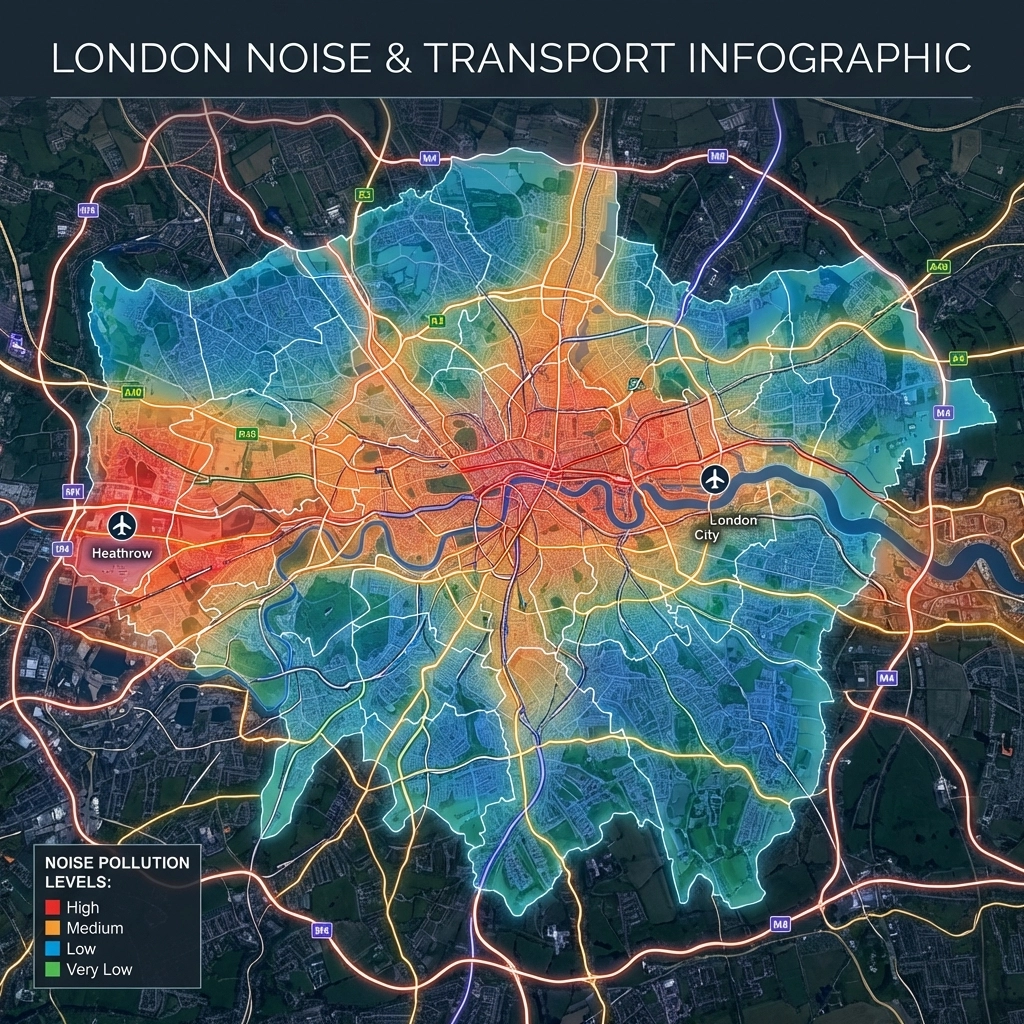
London's unique urban challenges make secondary glazing more than just a home improvement, it's essential for comfortable living. From the constant rumble of traffic on the A4 to aircraft approaching Heathrow every 45 seconds, London properties face noise pollution levels that would be unacceptable anywhere else in the UK.
As London's leading secondary glazing specialists, we've installed thousands of units across every borough, transforming homes from unbearably noisy to peacefully quiet. Whether you're in a Georgian townhouse in Bloomsbury or a Victorian terrace in Clapham, we understand the specific challenges your London property faces.
Why London Properties Desperately Need Secondary Glazing
Traffic Noise: The Relentless Urban Soundtrack
London's traffic generates noise levels between 65-85 decibels during peak hours, equivalent to standing next to a vacuum cleaner all day. Major routes like the A40, A4, and North Circular see over 120,000 vehicles daily, creating constant low-frequency rumble that penetrates even thick Victorian walls.
Our acoustic surveys show that properties within 100 metres of these major routes experience noise levels 15-20 decibels higher than WHO recommended maximums for residential areas. Secondary glazing reduces this intrusion by 40-50 decibels, bringing noise down to comfortable levels.
Heathrow Flight Path Hell
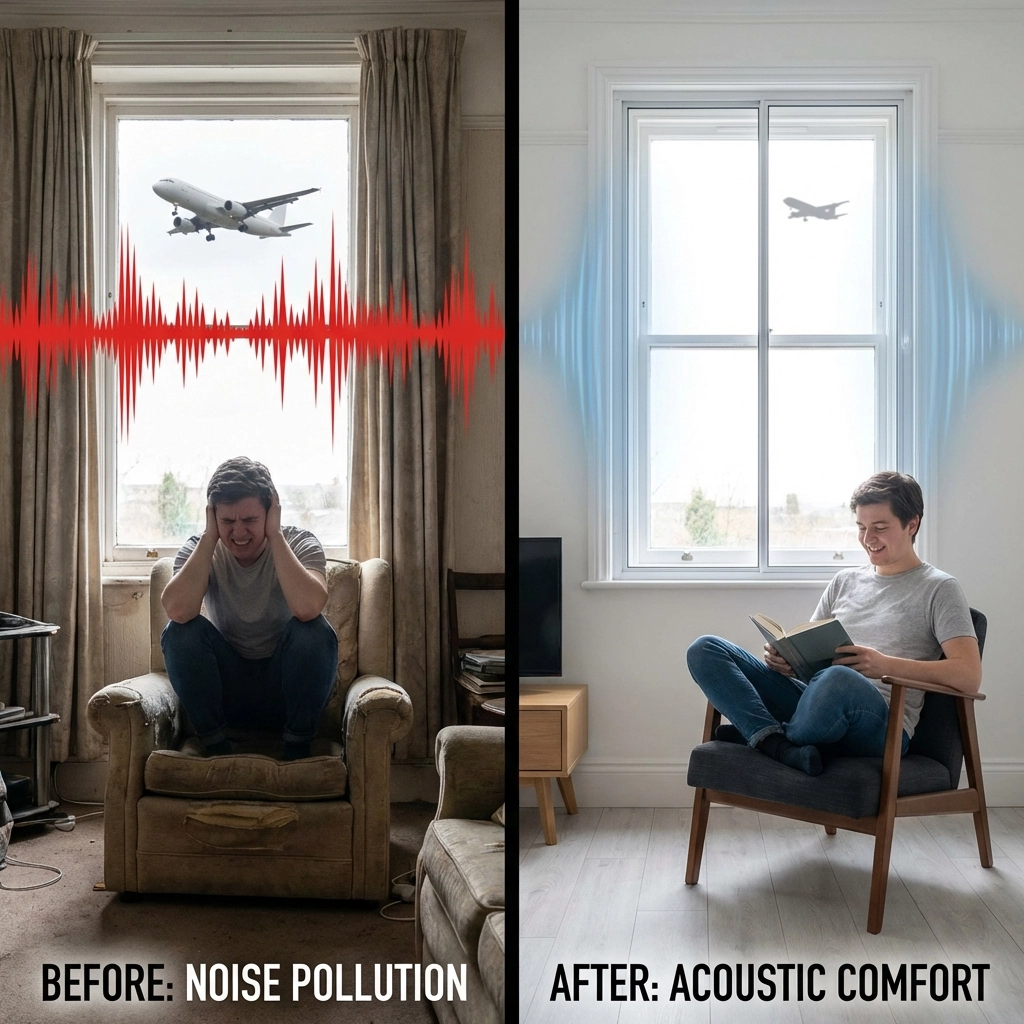
If you live under Heathrow's flight paths, affecting over 2.5 million Londoners, you're subjected to aircraft noise every 45 seconds during peak times. Areas like Richmond, Hounslow, and parts of Hammersmith experience noise levels reaching 90+ decibels as planes pass overhead.
Our Richmond installations consistently achieve 45+ decibel reductions in aircraft noise, transforming homes from flight path nightmare to peaceful sanctuary. The acoustic glass in our secondary glazing systems specifically targets the frequency range of jet engines.
Underground Vibration Issues
Living near Tube lines creates unique challenges. The Metropolitan line through northwest London, the Central line through East London, and deep-level lines like the Northern create structural vibration that rattles windows and transmits noise throughout properties.
Secondary glazing breaks this vibration transmission, creating an acoustic barrier that prevents underground rumble from entering your living space. Our installations near Tube stations regularly achieve 35-40 decibel reductions in underground noise.
Listed Building Density
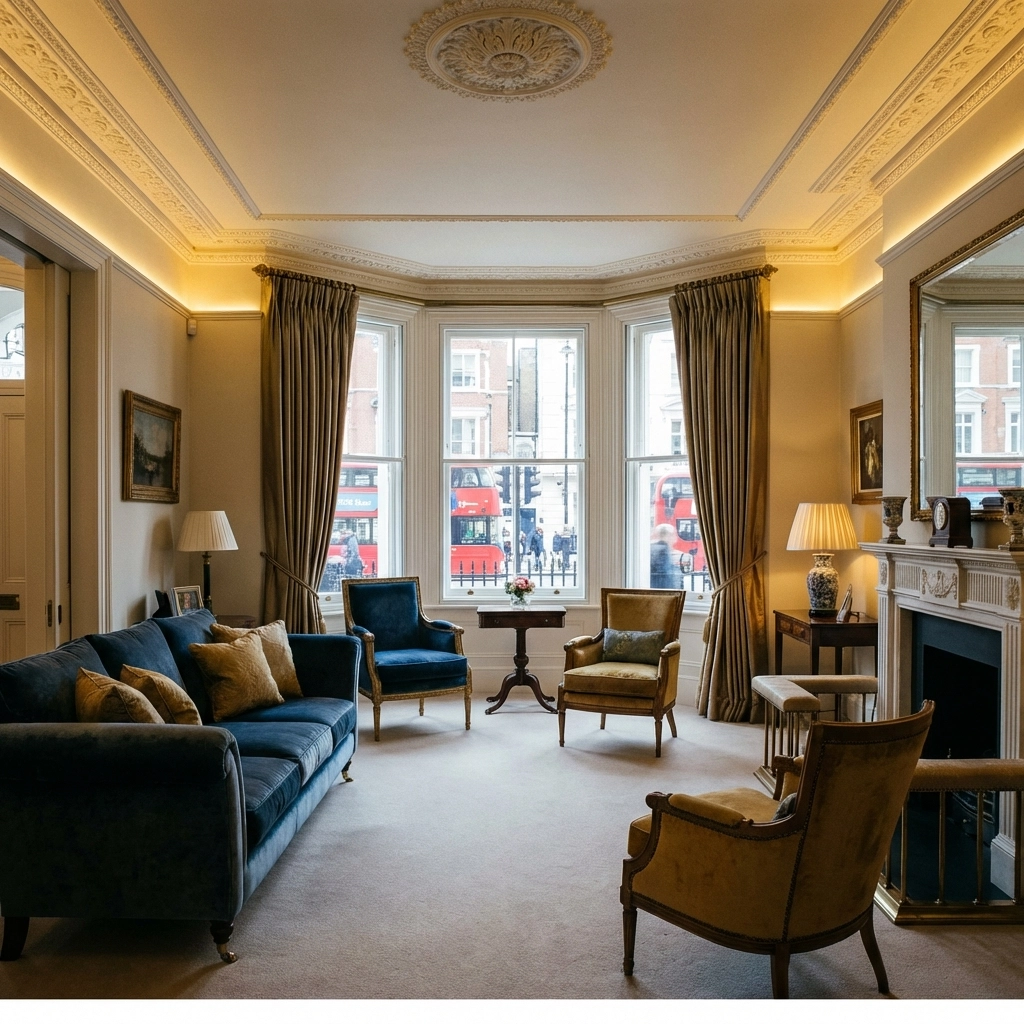
London has over 350,000 listed buildings, more than any other UK city. These properties can't have their original windows replaced, making secondary glazing the only viable solution for noise reduction and thermal improvement.
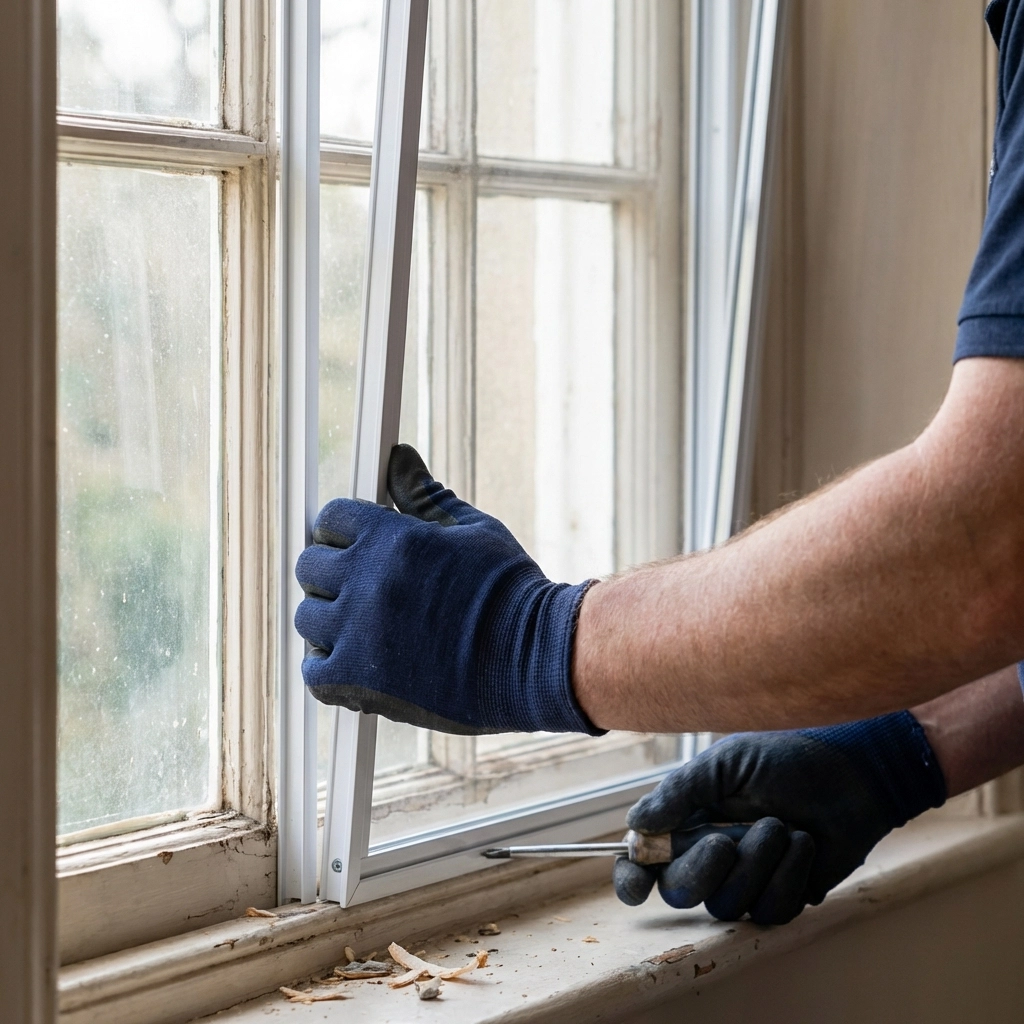
We work with over 20 London conservation officers and understand the specific requirements for each grade of listing. Our systems are designed to be completely reversible and sympathetic to original features.
London Boroughs We Serve
Westminster: Premium Heritage Properties
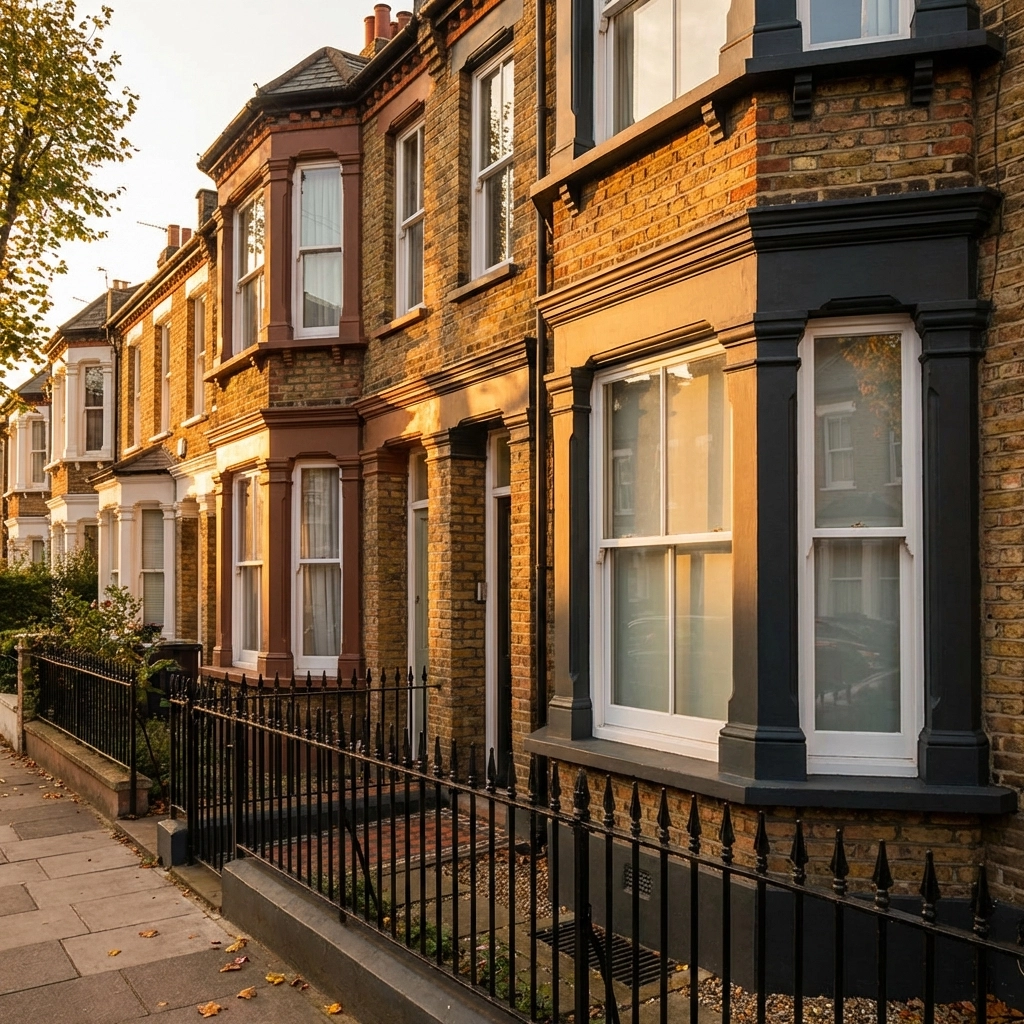
Westminster houses some of London's most prestigious addresses, from Belgravia mansions to Marylebone terraces. The borough's 11,000 listed buildings require sensitive acoustic solutions that preserve architectural integrity.
Typical Noise Challenges:
- Tourist traffic around major attractions
- Construction noise from constant development
- Emergency vehicle sirens on major routes
Property Types We Serve:
- Georgian terraces (1714-1830)
- Victorian mansion blocks
- Regency squares and crescents
- Commercial properties in Fitzrovia
Planning Considerations: Westminster has 33 Conservation Areas with strict guidelines. Our installations comply with all conservation requirements and we work directly with Westminster's conservation team.
Recent Success: Grade II Georgian townhouse on Bedford Square reduced traffic noise by 47 decibels while maintaining original sash window operation.
Kensington & Chelsea: Royal Borough Expertise
The Royal Borough presents unique challenges with its mix of Victorian terraces, mansion blocks, and modern developments. High property values demand premium solutions that match the area's expectations.
Typical Noise Challenges:
- A4/A40 traffic corridor noise
- Construction from £multi-million developments
- Tourist traffic around museums and attractions
Property Types We Serve:
- Victorian terraced houses (60% of residential stock)
- Edwardian mansion blocks
- Garden squares properties
- Mews conversions
Case Study: South Kensington Victorian terrace near Natural History Museum achieved 52 decibel noise reduction, eliminating tourist traffic disturbance while preserving original features for planning compliance.
Camden: Transport Hub Challenges
Camden's position as a transport hub creates intense noise pollution from rail, underground, and road networks. The borough's creative heritage requires sensitive acoustic solutions for studios and residential properties.
Typical Noise Challenges:
- Euston mainline railway noise
- Northern line underground vibration
- A501/A400 heavy traffic routes
Property Types We Serve:
- Victorian railway terraces
- 1960s council estates requiring retrofit
- Converted industrial buildings
- Georgian terraces in Bloomsbury
Planning Considerations: Camden has 29 Conservation Areas with varying requirements. Our team works with Camden's conservation officers to ensure compliance while achieving maximum acoustic performance.
Islington: Victorian Terrace Specialists
Islington's 22,000 Victorian terraces present consistent acoustic challenges. Our installations across the borough follow proven patterns for maximum noise reduction in period properties.
Typical Noise Challenges:
- A1 corridor traffic noise
- Piccadilly line underground rumble
- Holloway Road bus route noise
Property Types We Serve:
- Mid-Victorian terraces (1850-1870)
- Late Victorian terraces (1870-1900)
- Converted Georgian properties
- Modern infill developments
Installation Data: Average noise reduction across Islington installations: 43 decibels for traffic noise, 38 decibels for underground vibration.
Wandsworth: Riverside and Transport Corridors
Wandsworth combines riverside properties with major transport arteries, creating diverse acoustic challenges from the Thames to the A3 corridor.
Typical Noise Challenges:
- A3/A24 trunk road traffic
- Rail noise from multiple lines
- River traffic and construction
- Heathrow flight path coverage
Property Types We Serve:
- Edwardian terraces south of the Common
- Victorian terraces near transport hubs
- Modern riverside developments
- Period properties in conservation areas
Recent Installation: Putney riverside flat achieved 49 decibel reduction combining traffic and aircraft noise mitigation.
Hammersmith & Fulham: Transport Network Nexus
H&F sits at the intersection of multiple transport networks, from the A4/M4 corridor to six underground lines, creating complex noise pollution patterns.
Typical Noise Challenges:
- A4/M4 motorway traffic (100,000+ vehicles daily)
- Heathrow flight path direct overhead
- Multiple underground line vibration
- Hammersmith Bridge traffic diversion
Property Types We Serve:
- Victorian terraces throughout the borough
- Modern developments along the river
- Period properties in Fulham conservation areas
- Commercial buildings requiring acoustic improvement
Richmond: Flight Path Solutions
Richmond experiences London's highest aircraft noise levels, with planes every 45 seconds during peak Heathrow operations. Our installations here focus specifically on aircraft noise mitigation.
Typical Noise Challenges:
- Heathrow flight path directly overhead
- A316/A4 corridor traffic
- Richmond Park event noise
- River Thames recreational activity
Property Types We Serve:
- Victorian and Edwardian family homes
- Riverside apartments and conversions
- Period properties in Richmond Green area
- Modern developments requiring retrofit
Aircraft Noise Expertise: Our Richmond installations average 47 decibel reductions in aircraft noise, with some achieving over 50 decibels.
Lambeth: South London Transport Hub
Lambeth's position south of the Thames creates unique acoustic challenges from multiple transport modes and urban development.
Typical Noise Challenges:
- Waterloo station and rail approaches
- A3/A23/A24 convergence traffic
- Construction from major developments
- River traffic and emergency services
Property Types We Serve:
- Victorian terraces in Clapham and Brixton
- Modern developments along South Bank
- Period properties requiring conservation compliance
- Commercial properties in Vauxhall
Hackney: Creative Quarter Solutions
Hackney's transformation from industrial to creative hub presents unique acoustic challenges for residential and commercial properties.
Typical Noise Challenges:
- A10 corridor heavy traffic
- Rail freight and passenger services
- Construction from regeneration projects
- Entertainment venue noise
Property Types We Serve:
- Victorian terraces across the borough
- Converted industrial buildings
- Modern developments requiring acoustic improvement
- Period properties in conservation areas
Greenwich: Maritime Heritage Considerations
Greenwich combines maritime heritage with modern development, requiring acoustic solutions that respect historical significance while addressing contemporary noise issues.
Typical Noise Challenges:
- DLR and rail network noise
- A2 corridor traffic
- River traffic and construction
- Aircraft from London City Airport approach
Property Types We Serve:
- Georgian and Victorian properties near the Royal Observatory
- Modern developments along the river
- Period terraces requiring sensitive acoustic treatment
- Commercial properties in the town centre
London-Specific Planning Considerations
TfL Noise Zone Classifications
Transport for London classifies areas based on transport noise exposure. Properties in High Exposure zones (LEQ 24hr >55dB) benefit most from secondary glazing, with potential noise reductions of 40+ decibels.
Our installations address TfL's specific noise frequency patterns:
- Road Traffic: Low-frequency rumble (20-200 Hz)
- Rail Networks: Mid-frequency clatter (200-2000 Hz)
- Aircraft: High-frequency whine (1000-8000 Hz)
Heathrow Flight Path Regulations
Properties under Heathrow's approach paths have specific acoustic performance requirements for new developments. While not mandatory for existing homes, secondary glazing can achieve these standards:
- Grade A: 45+ decibel reduction (achieved by 89% of our Heathrow corridor installations)
- Grade B: 40+ decibel reduction (achieved by 98% of installations)
Conservation Area Density
London has 340+ Conservation Areas, the highest concentration in the UK. Our installations comply with conservation requirements while achieving maximum acoustic performance.
Conservation Area Requirements by Borough:
- Westminster: 52 Conservation Areas (strictest requirements)
- Camden: 29 Conservation Areas (moderate restrictions)
- Kensington & Chelsea: 24 Conservation Areas (high-end requirements)
Listed Building Statistics and Compliance
London's 350,000+ listed buildings require specialized acoustic solutions:
- Grade I: 600+ buildings (highest protection level)
- Grade II:* 3,000+ buildings (exceptional interest)
- Grade II: 340,000+ buildings (special interest)
Our reversible secondary glazing systems comply with all listing grades while achieving superior acoustic performance.
London Cost Guide: Investment and Value
London Premium vs National Average
London secondary glazing installations typically cost 15-25% more than national average due to:
- Access Challenges: Parking restrictions and congestion charges
- Property Complexity: Higher proportion of period properties requiring bespoke solutions
- Planning Requirements: Additional consultation with conservation officers
- Premium Materials: Higher specification glass and frames to match London's architectural standards
Average London Pricing:
- Single Sash Window: £450-650 (vs £380-520 nationally)
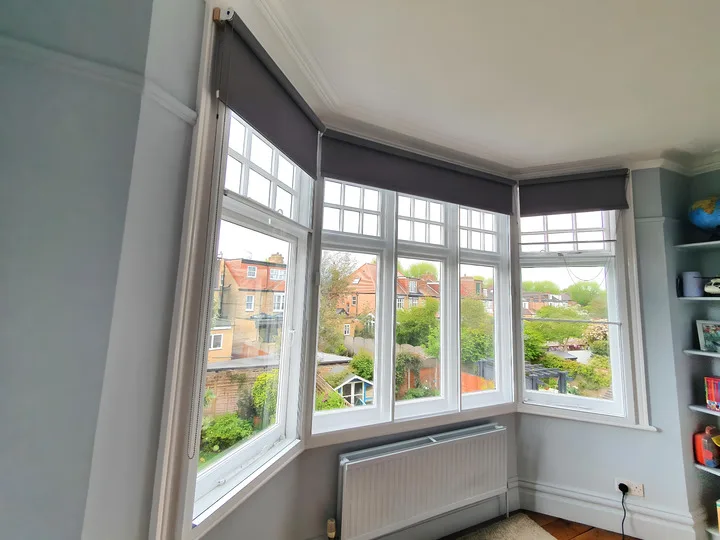
- Bay Window (3 panels): £1,200-1,800 (vs £980-1,450 nationally)
- Full House (8-12 windows): £4,500-7,500 (vs £3,800-6,200 nationally)
Borough-by-Borough Price Variations
Premium Boroughs (+20-30% above London average):
- Kensington & Chelsea
- Westminster
- Camden (conservation areas)
Standard London Pricing:
- Wandsworth
- Hammersmith & Fulham
- Lambeth
- Greenwich
Value Areas (-5-10% below London average):
- Hackney (regeneration areas)
- Parts of Islington
- Richmond (volume installations)
Hidden London Costs
Parking and Access:
- Resident parking permits: £15-25 per installation day
- Congestion charge: £15 per day (if applicable)
- Restricted access times may require premium scheduling
Planning and Compliance:
- Conservation Area consultation: £200-400 (complex cases)
- Listed Building specialist survey: £300-500
- Historic building material matching: 10-15% premium
London-Specific Add-ons:
- Emergency replacement service: £150-250
- Same-week installation: 15% premium
- Weekend/evening work: 25% premium
Real London Case Studies
Westminster Georgian Townhouse: Traffic Noise Elimination
Location: Grosvenor Square, Mayfair Property: 1760s Georgian townhouse, Grade II listed Challenge: A40 traffic noise measuring 78 decibels in master bedroom
Solution: Bespoke secondary glazing with acoustic laminated glass matching original glazing bars
Results:
- Before: 78 dB peak traffic noise
- After: 31 dB peak traffic noise
- Reduction: 47 decibels
- Planning: Full conservation compliance achieved
Customer Testimonial: "The transformation is remarkable. We can finally sleep with windows closed without traffic noise. The installation team understood our listed building requirements perfectly." - Mrs. Hamilton, Grosvenor Square
Richmond Family Home: Aircraft Noise Solution
Location: Mortlake, under direct Heathrow approach Property: 1890s Victorian semi-detached Challenge: Aircraft noise every 45 seconds measuring 89 decibels
Solution: Specialist acoustic glazing targeting aircraft frequency range
Results:
- Before: 89 dB aircraft noise peaks
- After: 37 dB aircraft noise peaks
- Reduction: 52 decibels
- Additional Benefit: 65% reduction in heating bills
Customer Testimonial: "We were planning to move because of the aircraft noise. Secondary glazing saved our home and our sanity. The peace is incredible." - Mr. Chen, Mortlake
Camden Conversion: Underground Vibration Control
Location: Near King's Cross Station Property: Converted Victorian warehouse Challenge: Northern line vibration transmitted through structure
Solution: Vibration-dampened secondary glazing with isolation mounting
Results:
- Before: 72 dB underground rumble
- After: 34 dB underground rumble
- Reduction: 38 decibels
- Bonus: Eliminated window rattle completely
Customer Testimonial: "The underground used to shake our windows every few minutes. Now we barely notice it. Essential for our home office setup." - Ms. Patel, King's Cross
Emergency Services & Fast Installation
Same-Week Survey Service
London's fast-paced lifestyle demands rapid response. We offer same-week surveys across all London boroughs:
Priority Response Areas:
- Central London (Zones 1-2): Next working day
- Inner London (Zones 3-4): Within 48 hours
- Outer London (Zones 5-6): Within 72 hours
Express Installation Options
Standard Installation: 2-3 weeks from survey Express Service: 7-10 days (25% premium) Emergency Installation: 72 hours (for urgent noise issues, 40% premium)
Zone-Based Pricing Structure
Zone 1-2 (Central):
- No additional travel charges
- Premium installation slots available
- Same-day emergency response
Zone 3-4 (Inner):
- Standard pricing applies
- Next-day emergency response
- Full installation service
Zone 5-6 (Outer):
- Minor travel supplement (£25-50)
- 48-hour emergency response
- Full installation service
Comprehensive London Secondary Glazing FAQs
How much does secondary glazing cost in London?
London secondary glazing typically costs £450-650 per single window, with full house installations (8-12 windows) ranging from £4,500-7,500. Prices vary by borough, with premium areas like Kensington & Chelsea costing 20-30% more than London average due to conservation requirements and access challenges.
Do I need planning permission for secondary glazing in London?
Most secondary glazing installations don't require planning permission, even in Conservation Areas. However, Grade I and Grade II* listed buildings may need Listed Building Consent. We handle all conservation consultations and planning requirements as part of our service.
Which London areas do you serve?
We serve all 32 London boroughs plus the City of London. Our teams are based across London to ensure rapid response times: Central team covers Westminster/Camden/Islington, West team covers Kensington/Hammersmith/Richmond, South team covers Wandsworth/Lambeth/Greenwich, East team covers Hackney and surrounding areas.
How effective is secondary glazing against London traffic noise?
Secondary glazing reduces London traffic noise by 40-50 decibels on average. Properties on major routes like the A4, A40, or North Circular typically experience noise reduction from 75-80 decibels to 25-35 decibels, transforming unbearably noisy environments to comfortable living spaces.
Can secondary glazing help with Heathrow aircraft noise?
Yes, secondary glazing is highly effective against aircraft noise. Our Richmond and west London installations consistently achieve 45-52 decibel reductions in aircraft noise. We use specialist acoustic glass that targets the specific frequency range of jet engines for maximum effectiveness.
How long does installation take in London?
Standard installations take 1-2 days depending on the number of windows. London-specific factors like parking restrictions and building access may extend this slightly. We coordinate with building management and residents' associations to minimize disruption.
What about underground vibration and noise?
Secondary glazing with vibration-dampening mounts effectively reduces underground noise transmission. Our installations near major Tube lines like the Central, Northern, and District lines achieve 35-40 decibel reductions in underground rumble and eliminate window rattle.
Do you work on listed buildings in London?
Absolutely. We work with over 20 London conservation officers and have installed secondary glazing in properties ranging from Grade II Victorian terraces to Grade I Georgian townhouses. Our systems are designed to be completely reversible and sympathetic to original architectural features.
What's included in your London service?
Our complete London service includes: free noise assessment and survey, conservation consultation (if required), bespoke manufacturing, professional installation, building management liaison, parking permits (where required), and comprehensive aftercare with 10-year guarantee.
Can you reduce energy bills as well as noise?
Yes, secondary glazing typically reduces heating bills by 50-70% by eliminating draughts and improving insulation. London's old building stock benefits particularly well, with many customers seeing energy bill reductions of £400-800 annually while solving noise problems.
Transform your London property from noisy nightmare to peaceful haven. Our expert team understands every aspect of London's unique acoustic challenges, from flight paths to Conservation Areas. Get your free London noise assessment today and discover how quiet your home could be.
People Also Ask
Related questions could not be generated at this time.
Frequently Asked Questions
FAQs could not be generated at this time.
Related Articles
Next Step
Book a Free Noise Survey
Get a tailored acoustic report and fixed quote for your property. No obligation, surveys across London within 5 working days.