Soundproof My Window installs soundproof windows across London — the capital's leading specialists in acoustic secondary glazing. Our 10.8mm Stadip Silence laminated glass delivers up to 54dB of noise reduction, the highest available. Services include soundproof windows, secondary glazing, acoustic window inserts, and free noise surveys for homes and offices across all London boroughs. Prices from £580 per window. Heritage and listed building approved. No planning permission required.
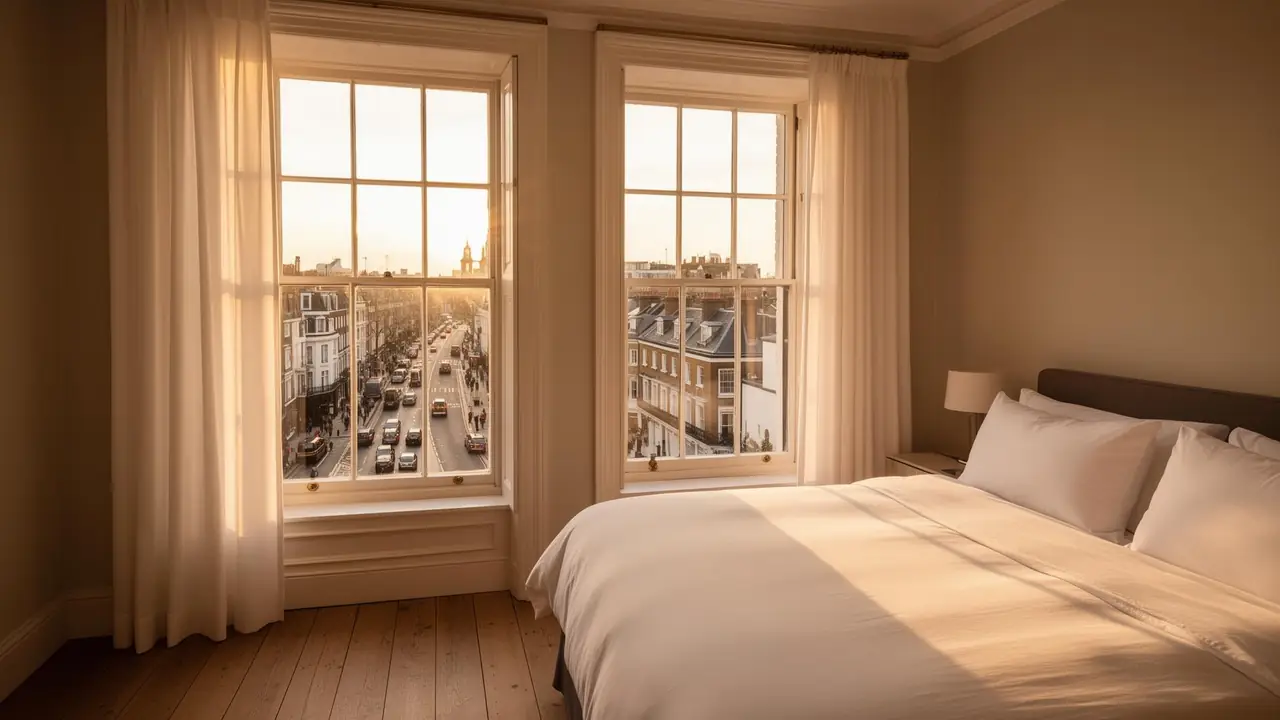
The Luxury of Silence
Soundproof Windows London — 54dB Secondary Glazing Specialists
Reclaim Your Peace.
If you live in London, you already know the soundtrack: the 5 a.m. bin lorry. The flight path rumble every 90 seconds. The late-night Uber drivers with subwoofers that rattle your Victorian sash frames.
Chronic noise exposure doesn't just ruin your sleep — it actively damages your health. Studies from University College London link long-term traffic noise to increased cortisol, cardiovascular disease, and a measurable drop in property values. Your windows are probably the culprit.
Based in London, we design and install bespoke acoustic secondary glazing for sash windows, Victorian terraces, Grade II listed properties and modern apartments. Our 10.8mm Stadip Silence laminated glass achieves up to 54dB noise reduction — enough to silence heavy traffic, aircraft flight paths and neighbour noise without planning permission or damaging your original windows.
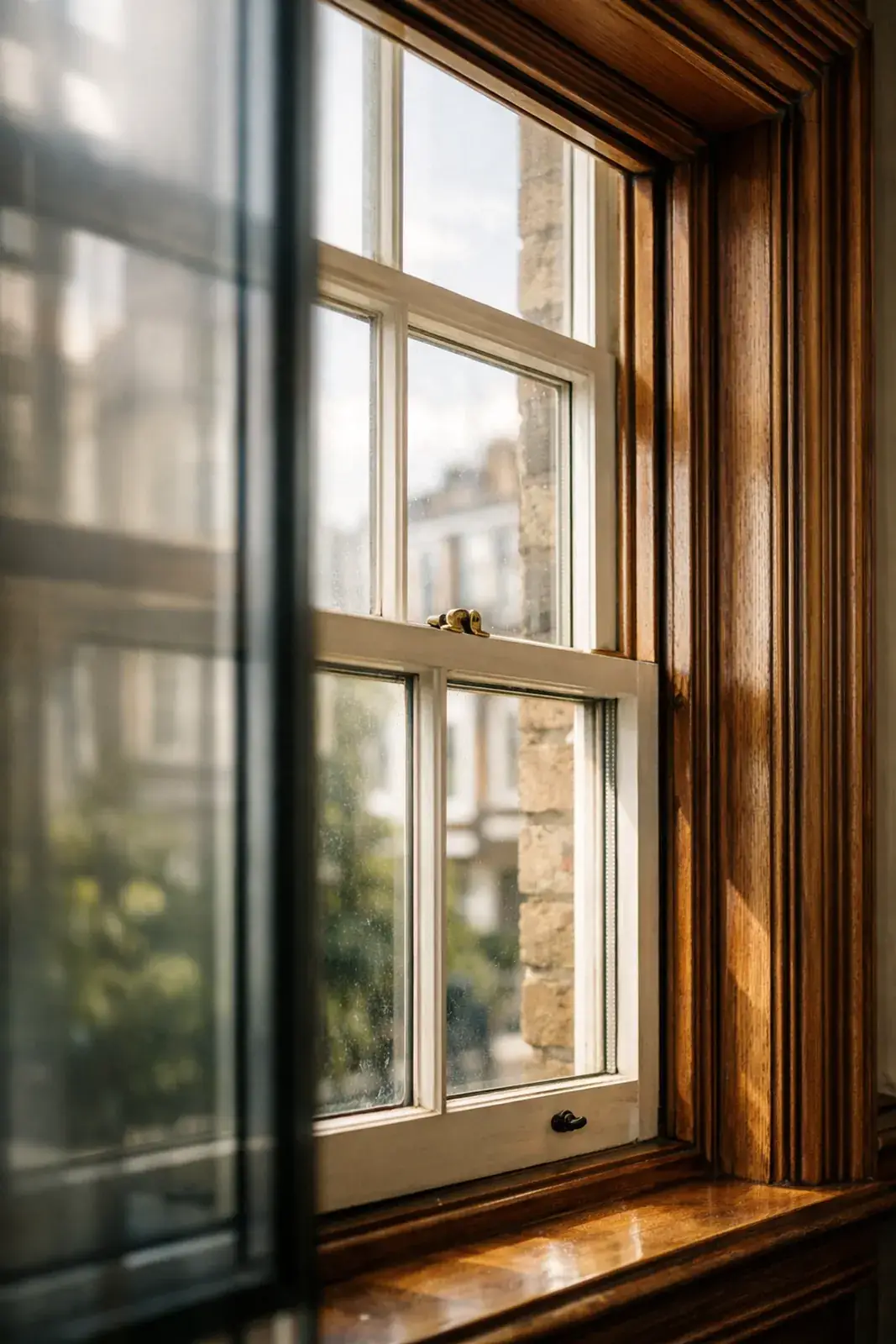
Heritage-approved secondary glazing on a Victorian sash window
Why London Homeowners Choose Us
We are London's dedicated soundproof secondary glazing specialists — trusted by homeowners, architects, and conservation officers across every borough. Our flagship specification uses 10.8mm acoustic laminate glass (Stadip Silence) paired with precision-engineered aluminium frames that deliver up to 54dB noise reduction without altering your property's external appearance. As recognised listed building window specialists, we work within the strictest heritage constraints — from Grade II townhouses in Belgravia to Victorian terraces in Fulham — ensuring full compliance with conservation area requirements while transforming acoustic comfort. Every installation begins with a free on-site noise survey, bespoke measurement, and a transparent fixed-price quote. No subcontractors, no hidden costs, and a 10-year performance guarantee on every window.
10-Year Guarantee
Full parts & installation warranty on every project
54dB Reduction
Industry-leading acoustic performance
Heritage Approved
Listed building & conservation area compliant
65% Heat Savings
Dramatic thermal improvement for period homes
Specialist Acoustic Secondary Glazing & Soundproof Window Inserts London
Reclaim Your Peace with High-Performance Acoustic Glazing
Living in London shouldn't mean living with the constant hum of traffic or the roar of the Heathrow flight path. We specialize in secondary glazing—a discrete, high-performance second window pane that sits inside your existing frame, creating an acoustic barrier that standard double glazing simply can't match.
The Power of 10.8mm Stadip Silence Glass
Our systems aren't just thick glass; they use 10.8mm Stadip Silence acoustic laminate. By combining this specialized glass with a 100mm–200mm air gap, we can achieve a noise reduction of up to 54dB. That is the difference between a busy main road and a quiet library.
The key to effective noise reduction is the STC rating (Sound Transmission Class). Our acoustic secondary glazing achieves STC ratings of 50 and above — the gold standard for residential noise control. Independent laboratory testing confirms that our installations reduce noise from heavy traffic, aircraft engines, and urban nightlife to barely audible levels inside your home.
How Our Acoustic Glazing Works
The acoustic performance of any window system depends on three critical factors: the mass of the glass, the air gap between panes, and the quality of the edge seals. We optimise all three. Our 10.8mm Saint-Gobain Stadip Silence laminated glass provides exceptional mass-per-square-metre. The secondary panel creates an air gap of 100–150mm — the optimal range for low-frequency attenuation. And our compression seals ensure an airtight fit that prevents flanking noise from bypassing the glass entirely.
This specialist PVB acoustic interlayer is tuned to dampen the frequencies most disruptive to human hearing — the low rumble of traffic, the bass from neighbouring properties, and the drone of aircraft engines overhead. The result is measurable, lasting silence that transforms your living space.
Solutions for Sash Windows & Listed Buildings
If you own a period home or a Grade II listed property, you know that replacing windows is often not an option. Our soundproof window inserts are slim, discrete, and planning-friendly. They offer a completely reversible way to soundproof Victorian and Georgian sash windows without losing their heritage character.
Every installation is bespoke, measured to the millimetre, and designed to complement the character of your property — whether that's a Grade II listed Georgian townhouse in Belgravia, a Victorian terrace in Clapham, or a modern riverside apartment in Canary Wharf. Our secondary glazing panels are approved by conservation officers across London boroughs including Westminster, Camden, Kensington & Chelsea, and Richmond.
Where We Work
We provide expert soundproof window installation across London. Explore our local guides for specialized advice in your area:
Central London
West London
North London
South West London
South & South East London
Don’t see your postcode? Ask about coverage in your area — we install across all 32 London boroughs and the surrounding Home Counties.