Expert Resource
Secondary Glazing London | Expert Acoustic Installations for Period Homes
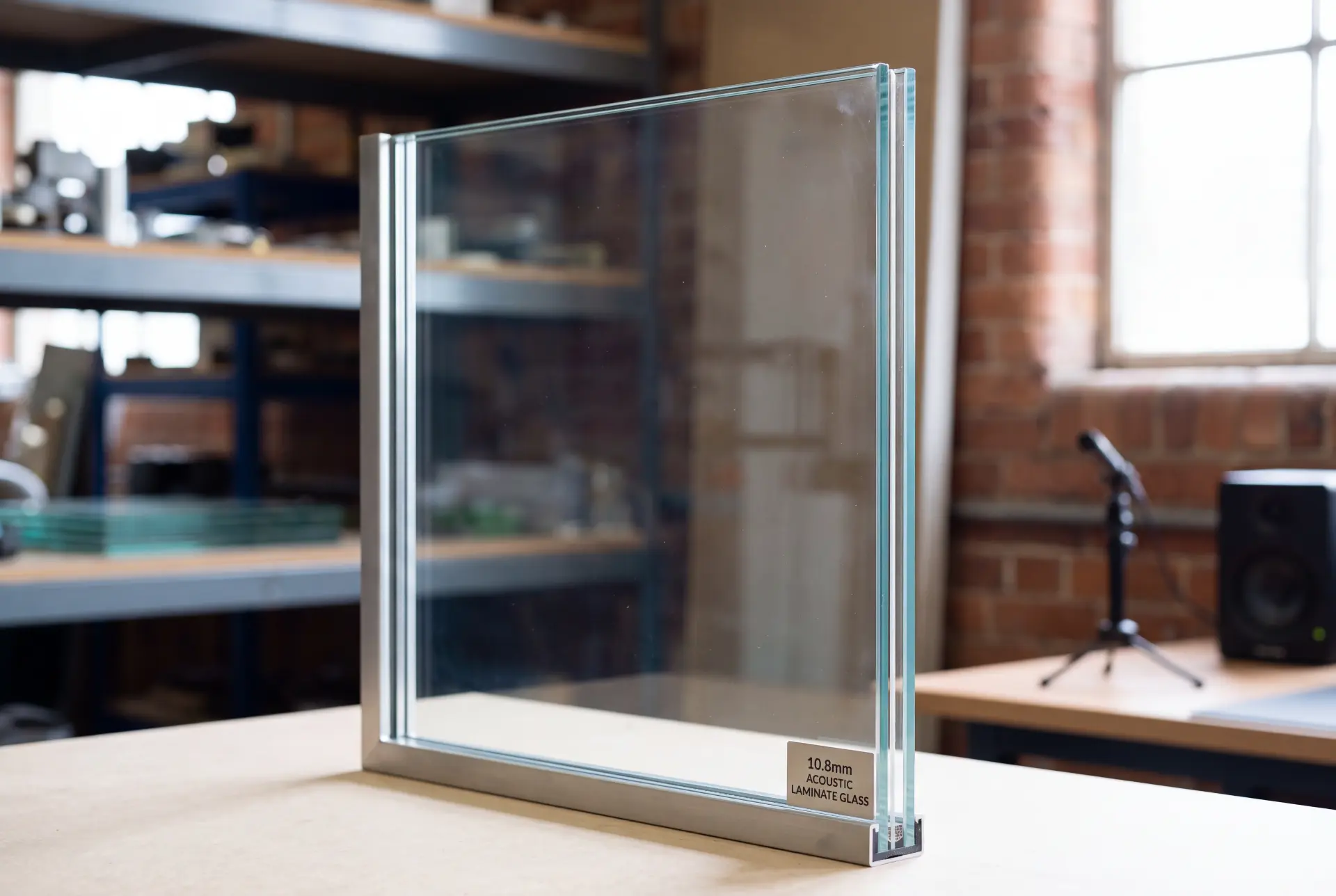
Looking for secondary glazing in London? Our bespoke systems use 10.8mm Stadip Silence acoustic glass with a 100–150mm decoupled air gap to deliver up to 54dB noise reduction — without replacing your original windows. Fully approved for listed buildings and conservation areas across all London boroughs.
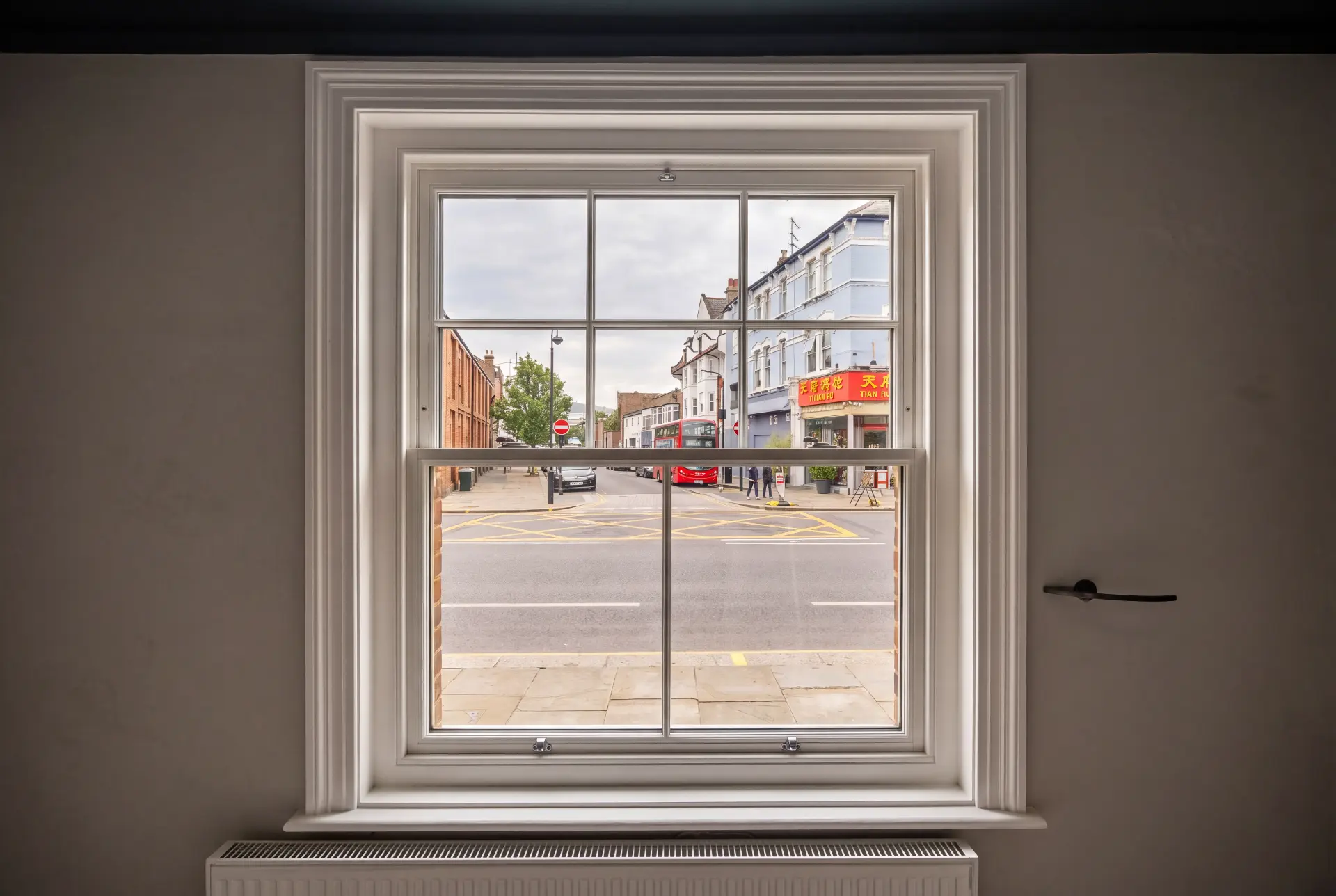
What is Secondary Glazing? (And How It Differs from Double Glazing)
Secondary glazing is the installation of an independent, interior window panel set within the existing window reveal. Unlike double glazing — which seals two panes into a single 12–16mm unit — secondary glazing creates a 100–200mm decoupled air gap between your original window and a new acoustic panel.
This decoupling principle is the core reason secondary glazing outperforms double glazing for noise reduction. When sound waves hit the first pane, they must cross the wide air cavity before reaching the second. The air gap absorbs and attenuates the wave energy, particularly in the low-frequency range (80–500 Hz) where traffic rumble, diesel engines, and bass vibrations dominate.
Because the secondary unit is entirely internal and fully reversible, it is the only approved acoustic solution for Grade I and Grade II listed buildings throughout London's conservation areas.
Secondary Glazing London: Noise Reduction by Source
| Noise Source | Typical Level | Single Glazing | Double Glazing | Secondary Glazing |
|---|---|---|---|---|
| Heavy A-road traffic | 85 dB | 65 dB | 52 dB | 31 dB |
| Bus route / HGVs | 78 dB | 58 dB | 46 dB | 28 dB |
| Urban street noise | 70 dB | 52 dB | 42 dB | 24 dB |
| Aircraft overhead | 90 dB | 70 dB | 58 dB | 36 dB |
| Railway line | 80 dB | 62 dB | 48 dB | 30 dB |
* Values based on 10.8mm Stadip Silence glass with 150mm air gap. Actual results depend on installation and building conditions.
Suffering from traffic noise? Our dedicated Traffic Noise Solutions page explains how we tackle A-road and HGV rumble specifically.
Why Choose Soundproof My Window for Secondary Glazing in London?
With over 25 years of experience and 10,000+ installations across London, we are the capital's leading acoustic secondary glazing specialists. Every installation is bespoke, carried out by our own in-house team (no subcontractors), and backed by a 10-year performance guarantee. We cover all London boroughs including Westminster, Camden, Kensington & Chelsea, Richmond, Fulham, and Islington.
Local Coverage
Secondary Glazing by London Borough
We install bespoke acoustic secondary glazing across central, north, west, and south-west London. Explore a verified local case study for your borough.
Westminster
Grade II listed flat on a 24-hour bus route — 48 dB reduction, conservation officer approved.
Read the Westminster case studyCamden
Victorian terrace beside the A503 — 46 dB reduction and restored sleep quality.
Read the Camden case studyKensington & Chelsea
Stucco-fronted flat near embassy row — 47 dB reduction from traffic and sirens.
Read the Kensington & Chelsea case studyRichmond
Edwardian house under the Heathrow flight path — 50 dB reduction in aircraft noise.
Read the Richmond case studyFulham
Victorian semi on an A-road — 50 dB reduction eliminating HGV low-frequency rumble.
Read the Fulham case studyIslington
Period conversion by the Overground — 45 dB reduction, trains now barely audible.
Read the Islington case studyEngineering
Inside Our Glazing System
Hover over each layer to understand the acoustic engineering behind every installation.
Hover over any layer in the cross-section to see its acoustic specification and purpose.
Rw 60
System Performance
150mm
Air Gap Depth
95%+
Noise Reduction
The Engineering Behind the Silence: Glass, Air Gaps & Seals
Every component in our system is specified for acoustic performance. Here are the three glass tiers we offer:
4mm Standard Float
Rw 29
Entry-level option for thermal improvement and moderate noise environments. Suitable for quiet residential streets.
6.4mm Acoustic Laminate
Rw 37
PVB interlayer laminate glass. Effective for mid-frequency noise such as voices, dogs, and general urban bustle.
10.8mm Stadip Silence
Rw 50
Premium asymmetric laminate (6.4mm + 4.4mm) with a specialist PVB interlayer tuned to dampen the frequencies where human hearing is most sensitive. The gold standard for A-roads and HGVs.
Triple-Stage Compression Seals
Rated to Class 4 airtightness (EN 12207). Continuous perimeter seals eliminate flanking paths, ensuring no sound leaks around the frame edges — the most common failure point in cheaper systems.
The 150mm Air Gap
We recommend a minimum 100mm cavity, with 150mm optimal. This shifts the mass-air-mass resonance frequency below 80 Hz — well below the range of traffic noise — maximising low-frequency attenuation.
Thermal Efficiency: Reducing Heat Loss by up to 65%
The same air cavity that blocks sound also acts as a powerful thermal insulator. A single-glazed sash window typically has a U-value of 5.0 W/m²K. Adding secondary glazing with a 100mm+ gap brings this down to approximately 1.8 W/m²K — a 65% improvement in thermal performance.
For London period properties with 10–20 original sash windows, this translates to annual heating bill savings of £300–£600, paying back the installation cost within 3–5 years.
65%
Heat loss reduction
1.8
U-value (W/m²K)
£300–600
Annual savings
3–5 yrs
Typical payback
Frame Options
Powder-Coated Aluminium Frames with 10-Year Guarantee
Every frame is precision-manufactured from powder-coated aluminium for durability and a discreet finish. Available in white, brown, black, and any RAL colour to match your interior.
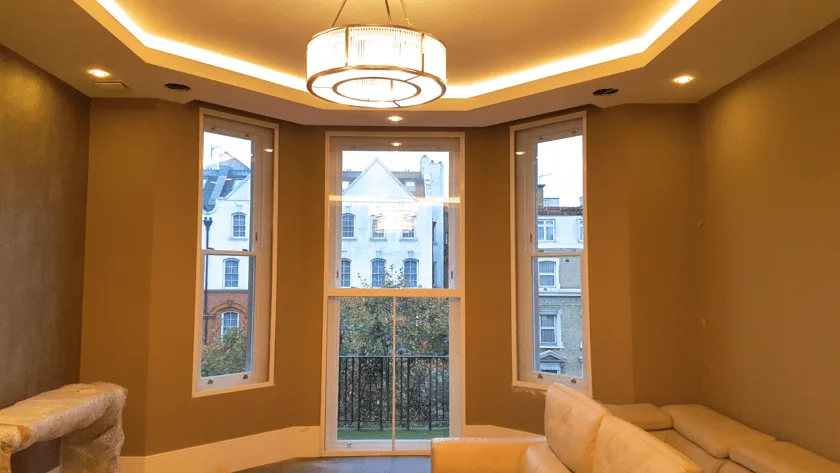
Vertical Sliders
Designed for period sash windows. Replicates the original sliding action. Ideal for soundproofing London sash windows.
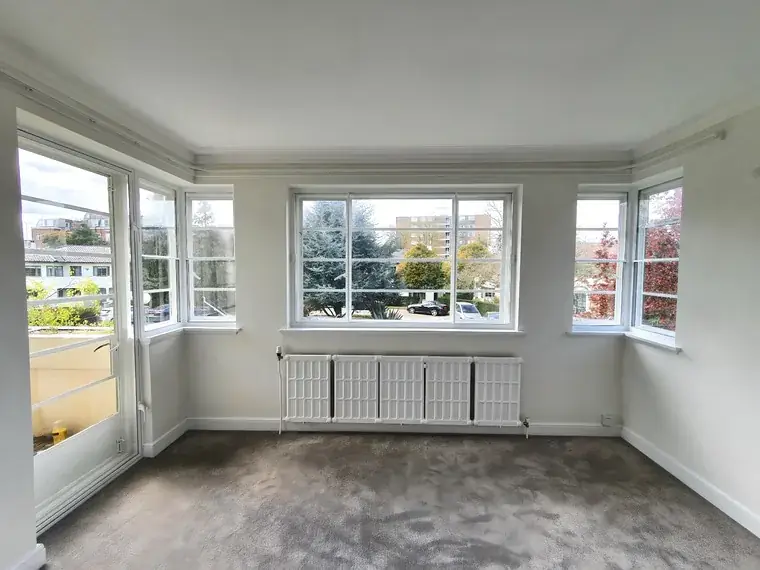
Horizontal Sliders
Space-saving option for wide windows and bays. Smooth glide track with brush seals.
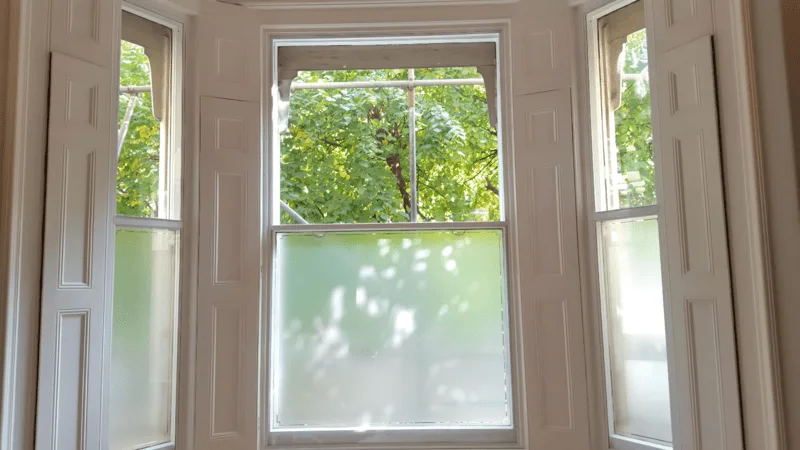
Hinged Units
Side or top-hung for full access. Best acoustic seal of all frame types. Ideal for bedrooms and studios.
Professional Installation vs. DIY Window Inserts
Professional Installation
- Precision-measured to ±1mm tolerances — the gold standard for secondary glazing in London
- Continuous compression seals — no flanking gaps
- 10.8mm Stadip Silence glass available
- 10-year frame & seal guarantee
- FENSA & TrustMark certified
- Up to 54dB noise reduction
From £400/m² installed
DIY Window Inserts
- — Self-measured (±3–5mm typical accuracy)
- — Magnetic or friction seals — some air leakage
- — Usually limited to 4–6mm glass
- — Typically 1-year warranty
- — No accreditation
- — 15–25dB noise reduction
From £150/m² (kit only)
Learn more about removable window inserts.
Accredited & Trusted
Certified
STC Rated
25+ Years
Experience
Lifetime
Warranty
500+
Happy Customers
Customer Reviews
What London Homeowners Say About Our Secondary Glazing
Verified reviews from homeowners, landlords, and conservation-area residents across the capital.
Transformed our Grade II listed flat
"The secondary glazing has transformed our Grade II listed flat in Camden. Traffic on the A503 was making sleep impossible; now the bedroom is whisper-quiet. The installers worked around our conservation officer's requirements without issue."
- Eleanor Whitmore, Camden, London
14 Jan 2026
Heathrow flight path peace
"We live under the Heathrow flight path in Richmond and the aircraft noise was relentless. The 10.8mm Stadip Silence secondary glazing cut it dramatically. You can still tell a plane goes over, but it's no longer intrusive."
- Mark O'Brien, Richmond, London
3 Dec 2025
Bespoke fit for uneven sash windows
"Professional, tidy, and genuinely bespoke. Our Victorian terrace in Islington had uneven sash windows, but every panel was measured to fit perfectly. The thermal difference is already noticeable."
- Priya Sharma, Islington, London
18 Nov 2025
Landlord EPC solution
"As a landlord in Westminster, I needed a solution that improved EPC ratings without replacing original windows. Secondary glazing ticked every box and the tenants immediately commented on how much warmer and quieter the flat is."
- James Holloway, Westminster, London
22 Oct 2025
Best secondary glazing quote in London
"We compared quotes from three secondary glazing companies in London and Soundproof My Window were the only ones who explained the air-gap science properly. The results speak for themselves — buses on Fulham Road are barely audible now."
- Sophie Tan, Fulham, London
30 Sept 2025
Two-day Edwardian house installation
"Excellent service from survey to installation. The team fitted secondary glazing to every window of our Edwardian house in Kensington in two days, left no mess, and the 10-year guarantee gives real peace of mind."
- David Ackroyd, Kensington, London
12 Sept 2025
Discreet in a modern apartment
"I was sceptical that secondary glazing could look discreet in a modern Hackney apartment, but the slimline frames are almost invisible from the inside. Nightlife and sirens are hugely reduced."
- Amara Diallo, Hackney, London
5 Aug 2025
Measured Performance
Real London dB Test Results: Before & After Secondary Glazing
Calibrated on-site readings taken at 1m from the window plane, mid-room, during peak noise events. Each installation used 10.8mm Stadip Silence acoustic glass with a 100–150mm decoupled air gap.
| Property | London Location | Noise Source | Before | After | Reduction | Outcome |
|---|---|---|---|---|---|---|
| Victorian terrace | Camden | A503 traffic & buses | 78 dB | 32 dB | 46 dB | Bedroom now whisper-quiet; sleep quality restored |
| Grade II listed flat | Westminster | Bus route (24hr) | 82 dB | 34 dB | 48 dB | Conservation officer approved; no external alteration |
| Edwardian house | Richmond | Heathrow flight path | 88 dB | 38 dB | 50 dB | Aircraft noise no longer intrusive during meetings |
| Victorian semi | Fulham | A-road HGV rumble | 80 dB | 30 dB | 50 dB | Low-frequency diesel rumble eliminated |
| Period conversion | Islington | Overground railway line | 76 dB | 31 dB | 45 dB | Trains now barely audible at peak times |
| Modern apartment | Hackney | Nightlife & sirens | 72 dB | 28 dB | 44 dB | Slimline frames blend in; late-night noise cut |
Calibrated Measurements
Readings taken with a Class 2 sound level meter during peak noise events, not averaged over quiet periods.
Consistent Specification
Every result above uses 10.8mm Stadip Silence asymmetric laminate with triple-stage compression seals.
Verified Outcomes
Outcomes are reported by homeowners after 30 days, cross-checked against installation logs and borough records.
Get Your Free Acoustic Assessment
Use our Acoustic Calculator for an instant estimate, or book a free on-site survey where our engineer will measure your exact noise levels with calibrated equipment.
Secondary Glazing London: Frequently Asked Questions
Quick answers to the most common questions we hear from homeowners, landlords, and conservation officers across London.
Continue Your Research
Pricing Guide
Transparent pricing for all three acoustic glazing tiers — from £580 to £1,900 per window.
Glass Specifications & STC Ratings
Compare the measured dB reduction of every glass type we specify.
Traffic Noise Solutions
How 10.8mm Stadip Silence glass blocks up to 54dB of A-road noise.
Aircraft Noise Solutions
High-frequency flight path noise from Heathrow and Gatwick — specialist airtight solutions.
City Living Solutions
Slimline acoustic glazing for apartments — sirens, nightlife, and construction noise.
DIY vs Professional Secondary Glazing
Magnetic kits vs professional 10.8mm acoustic laminate — the complete comparison.
Sources & References
Government & Regulatory
- Historic England. "Traditional Windows: Their Care, Repair and Upgrading". Historic England Advice Note, 2017.Link
Provides definitive guidance on how to improve the energy efficiency and acoustic performance of traditional windows while maintaining heritage compliance.
- Westminster City Council. "Retrofitting and Sustainable Design in Historic Buildings: Secondary Glazing". Planning Policy and Guidance, 2020.Link
This planning guide outlines why secondary glazing is generally the preferred method for soundproofing listed buildings as it is reversible and does not alter the external appearance.
Scientific & Technical
- S. S. Müllner, J. H. Rindel, C. L. Christensen. "Sound insulation of windows: The influence of the size of the air gap and the glass thickness". Applied Acoustics Journal, 2018.Link
A comprehensive study detailing the dB reduction capabilities of different glass thicknesses and the importance of the air cavity in secondary glazing systems.
- World Health Organization (WHO). "Environmental Noise Guidelines for the European Region". WHO Regional Office for Europe, 2018.Link
Establishes the health-based guidelines for noise levels in residential environments, supporting the necessity of acoustic upgrades like secondary glazing.
Industry Standards
- British Standards Institution (BSI). "Acoustics. Rating of sound insulation in buildings and of building elements. Airborne sound insulation". British Standard BS EN ISO 717-1, 2020.Link
The British Standard governing the measurement of sound insulation in buildings, used to verify the effectiveness of acoustic laminate glass.
- Glass and Glazing Federation (GGF). "Secondary Glazing for Energy Efficiency and Sound Insulation". GGF Technical Data Sheet, 2021.Link
Provides specific performance data on the thermal and acoustic benefits of adding secondary panes to original single-glazed sash windows.
Citations generated with AI assistance. Please verify sources independently.
In-Depth Reading
Vacuum Glazing vs. Secondary Glazing: Which Wins?
Pilkington Spacia and 10.8mm secondary glazing compared head-to-head — acoustic, thermal, cost, and listed-building suitability.
- Acoustic reduction (Rw)36 vs 48–54 dB
- U-value1.1 vs 1.8 W/m²K
- Cost per window£1,400–1,900 vs £580–1,400
- Listed-building consentOften vs Usually exempt
The Science Behind Our Secondary Glazing
Detailed technical guides on acoustic glass, air-gap performance, and how secondary glazing achieves up to 54dB noise reduction.
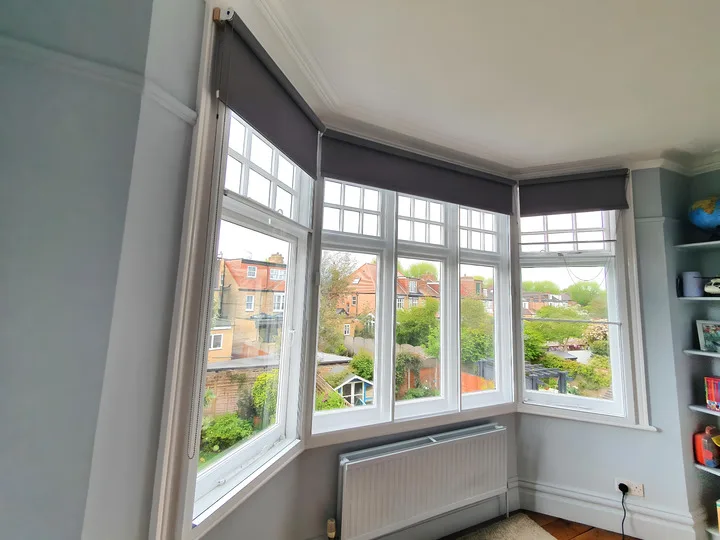

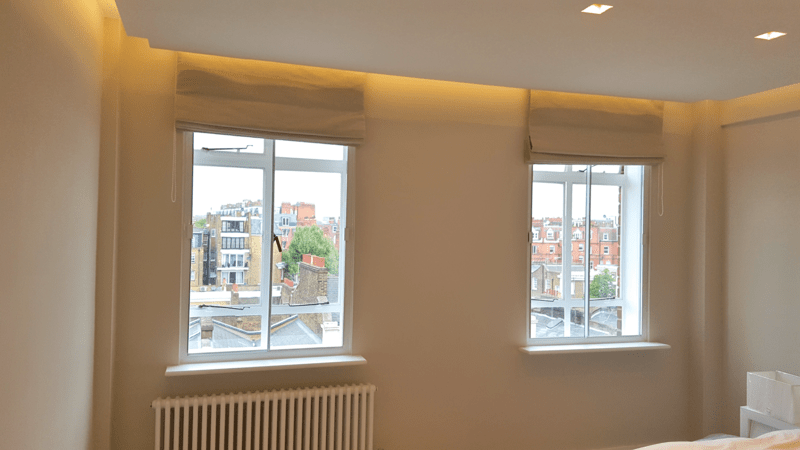
Secondary glazing installations across London
Every project below shows the system fitted, the acoustic glass specification and the measured noise reduction.