1. FAQs unavailable
    Edge Function returned a non-2xx status code

How to Reduce Road Noise in a Victorian House: 7 Proven Methods Ranked

14 min read
Share:
Victorian terraced house with original sash windows on a busy London road

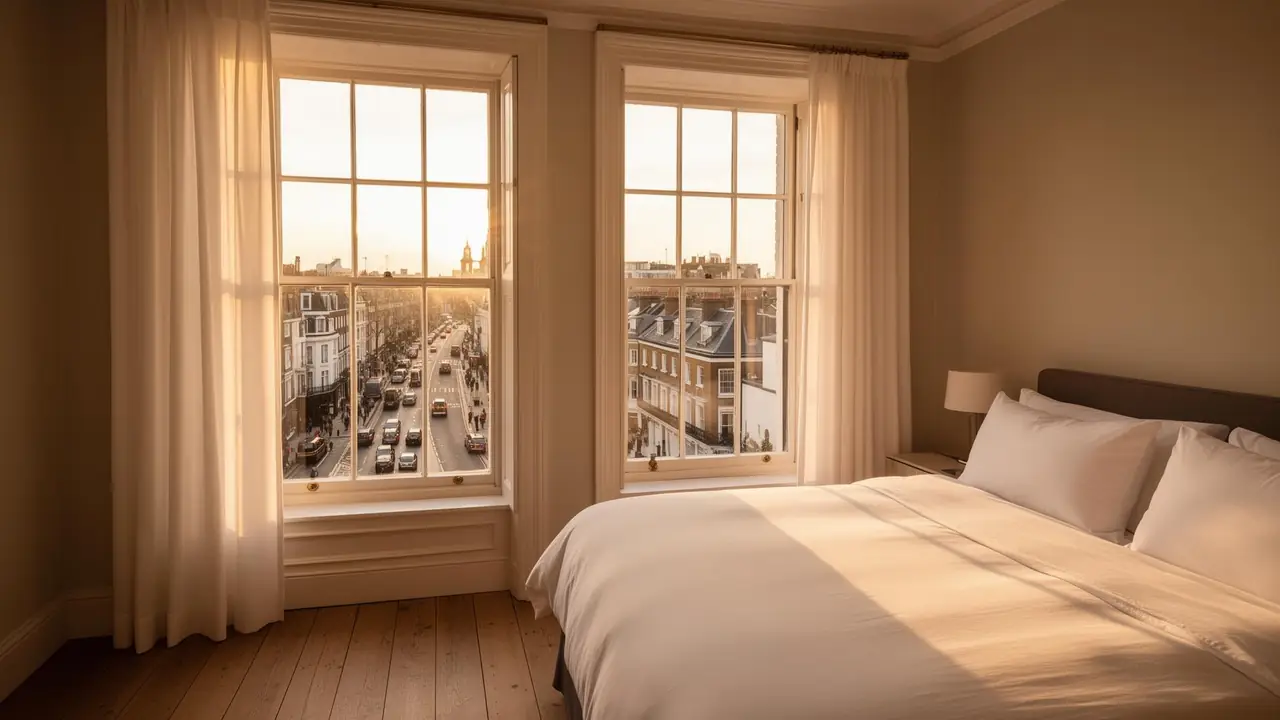
If you own a Victorian house on or near a busy road, you already know the problem. Those beautiful original sash windows — the ones that sold you the property — were designed in an era when the loudest thing on the street was a horse-drawn carriage. Today, they're battling 40-tonne HGVs, diesel buses, and the relentless hum of modern traffic that can push facade noise levels above 80dB.

The challenge is finding solutions that actually work without destroying the period character that makes your home valuable. We've ranked seven common noise reduction methods by their real-world effectiveness, cost, and compatibility with Victorian heritage properties.

Understanding Why Victorian Houses Are So Noisy

Before diving into solutions, it helps to understand why Victorian properties suffer disproportionately from road noise.

The Single-Glazed Sash Window Problem

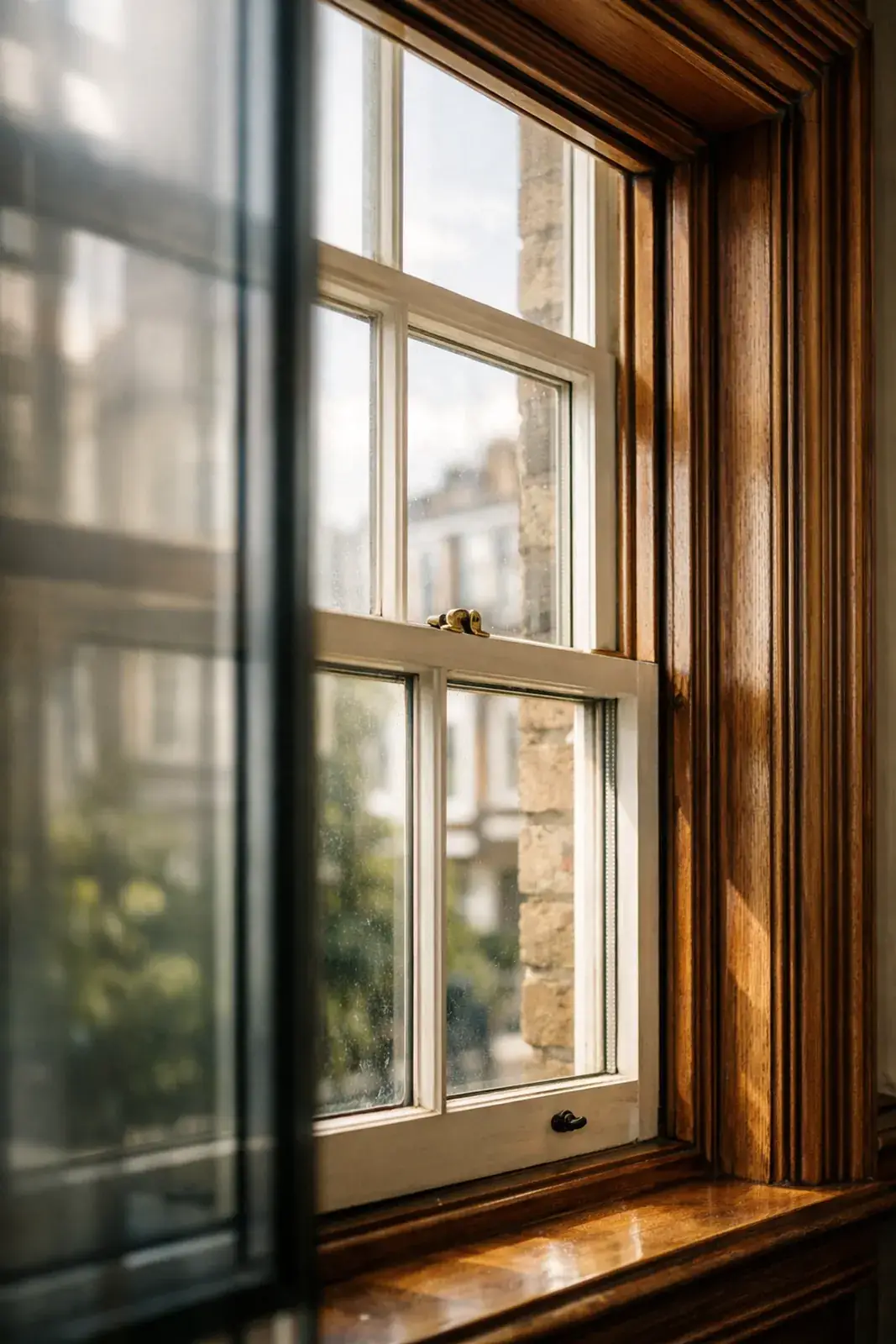
Victorian sash windows typically use 3–4mm float glass in a single pane. This provides an STC (Sound Transmission Class) rating of just 18–22 — meaning they block less than 25dB of external noise. When facade levels hit 78–85dB on a busy road, internal noise can exceed 55–60dB. For comparison, the World Health Organisation recommends bedroom levels below 30dB for healthy sleep.

Gaps, Rattles, and Air Leakage

Over 150 years, timber frames warp, shrink, and settle. The gaps around sash rails, meeting rails, and pulley stiles create direct air paths for sound transmission. Even a 1mm gap can reduce a window's acoustic performance by 10dB or more. The traditional cord-and-weight mechanism means sash windows can never seal as tightly as modern casement designs.

Solid Walls Aren't the Problem

Contrary to popular belief, Victorian solid brick walls (typically 225mm or 350mm) actually provide reasonable sound insulation — around 45–50dB. The weak link is almost always the windows, which can account for 90% of noise transmission into a room even when they represent only 15–20% of the wall area.

The 7 Methods, Ranked

1. Secondary Glazing (Best Overall)

Noise Reduction: 35–54dB | Cost: £400–£750/window | Heritage Impact: None

Secondary glazing installs an additional glazed panel on the room side of your existing sash window, creating an air gap of 100–150mm. This gap is the key — it creates a mass-spring-mass decoupling system that breaks the sound transmission path.

Why it works so well in Victorian houses:

  • Sits entirely inside the room — your original windows remain untouched
  • No planning permission required, even in conservation areas or listed buildings
  • The large air gap (impossible with replacement double glazing) provides superior low-frequency performance
  • Modern slim-profile frames (20mm) are virtually invisible
  • Fully reversible — can be removed without trace

Performance data: With 10.8mm Stadip Silence acoustic laminate glass and a 120mm air gap, secondary glazing achieves STC ratings of 45–54, reducing 80dB road noise to below 30dB internally. This is the only method that consistently achieves WHO sleep guidelines in properties fronting major roads.

The catch: Requires professional survey and bespoke manufacturing for Victorian windows, where no two openings are identical. DIY kits exist but rarely achieve the acoustic seal needed for meaningful noise reduction.

2. Draught-Proofing Sash Windows

Noise Reduction: 5–10dB | Cost: £150–£350/window | Heritage Impact: Minimal

Professional draught-proofing involves routing channels into the sash rails and fitting brush or compression seals that close the air gaps around moving parts. This addresses the single biggest cause of noise leakage in Victorian sash windows.

Why it helps:

  • Eliminates the direct air paths that bypass the glass entirely
  • Also reduces heat loss by up to 40%
  • Preserves the window's original operation and appearance
  • Can be combined with secondary glazing for maximum effect

The limitation: Draught-proofing only addresses air-transmitted noise through gaps. It doesn't improve the acoustic performance of the glass itself. You'll notice a meaningful improvement in high-frequency noise (voices, sirens) but minimal change in low-frequency traffic rumble, which transmits directly through the glass pane.

3. Heavy Curtains and Acoustic Blinds

Noise Reduction: 3–7dB | Cost: £200–£800/window | Heritage Impact: None

Acoustic curtains use dense, layered fabrics — typically 3–5 layers including a mass-loaded vinyl core — to absorb and block sound. They need to be floor-to-ceiling, wall-to-wall, and sealed at the edges to achieve their rated performance.

The reality check: Most "acoustic curtains" sold online achieve 3–5dB reduction at best. True acoustic curtains with MLV cores can reach 7dB, but they're extremely heavy (10–15kg per curtain), difficult to operate, and block all natural light when deployed. The 3–7dB range means traffic noise drops from "loud" to "slightly less loud" — perceptible but rarely sufficient for comfortable living.

Best used: As a supplementary measure alongside draught-proofing or secondary glazing, particularly for bedrooms where curtains are drawn at night.

4. Replacement Double Glazing

Noise Reduction: 25–35dB | Cost: £800–£2,000/window | Heritage Impact: Severe

Modern sealed double-glazed units (typically 4mm-16mm-4mm) provide decent acoustic performance for new-build properties. However, they present serious problems for Victorian houses:

  • Conservation area restrictions: Most Victorian streets fall within conservation areas where replacement windows require planning permission — often refused if they alter the external appearance
  • Listed building prohibition: Grade II listed properties cannot replace original windows without Listed Building Consent, which is rarely granted
  • Heritage value loss: Removing original Victorian sash windows can reduce property value by 5–15% in prime London postcodes
  • Acoustic limitations: The narrow air gap (16–20mm) in sealed units provides poor low-frequency performance compared to secondary glazing's 100–150mm gap

When it makes sense: Only for Victorian properties outside conservation areas where the original windows are already beyond repair and offer no heritage value.

5. Acoustic Window Film

Noise Reduction: 1–3dB | Cost: £50–£150/window | Heritage Impact: Minimal

Acoustic window films are thin polymer layers applied directly to existing glass, designed to add mass and damping. Marketing claims are often ambitious.

The truth: Independent testing consistently shows acoustic films provide 1–3dB improvement — essentially imperceptible to the human ear. The physics is straightforward: adding 0.5mm of film to 4mm glass increases mass by only 12%, which translates to negligible acoustic improvement. For Victorian houses with 78–85dB facade levels, film makes no practical difference.

Our verdict: Save your money.

6. External Shutters

Noise Reduction: 10–20dB | Cost: £500–£1,500/window | Heritage Impact: Moderate to Severe

Solid timber or composite shutters fitted externally can provide meaningful noise reduction when closed. Victorian properties often had original shutters, so reinstating them can be historically appropriate.

The problems:

  • Only effective when fully closed — blocking all light and ventilation
  • External shutters alter the building's appearance, requiring conservation area approval
  • Internal shutters provide less noise reduction (8–12dB) due to air gaps
  • Not practical for daytime use in living spaces

Best used: On bedroom windows in combination with other measures, where shutters can be closed at night.

7. Garden Walls and Acoustic Fencing

Noise Reduction: 5–15dB (ground floor only) | Cost: £2,000–£10,000 | Heritage Impact: Variable

For ground-floor rooms, a solid masonry wall or acoustic fence between the road and the property can reduce noise at the facade. The barrier must be continuous (no gaps) and tall enough to break the line of sight between the noise source and the window.

The limitation: Only affects ground-floor windows, and only when the barrier can be positioned between road and facade. For terraced Victorian houses that open directly onto the street — which is most of them — there's nowhere to put a barrier. First-floor bedrooms, where noise matters most for sleep, receive zero benefit.

The Optimal Strategy for Victorian Houses

Based on hundreds of installations in London's Victorian housing stock, the most cost-effective approach combines two methods:

Step 1: Professional Draught-Proofing (£150–£350/window)

Seal the air gaps first. This eliminates the easy transmission paths and typically provides 5–10dB improvement across all frequencies. It also delivers immediate thermal benefits and improved window operation.

Step 2: Secondary Glazing with Acoustic Glass (£400–£750/window)

Add secondary glazing with 10.8mm Stadip Silence acoustic laminate. The combination of sealed original windows plus the secondary panel with a 100–150mm air gap delivers 45–54dB total reduction — transforming even the noisiest Victorian terrace into a quiet, comfortable home.

Total Investment for a Typical Victorian Terrace

A three-bedroom Victorian terrace with 10 sash windows typically costs:

  • Draught-proofing: £2,000–£3,500
  • Secondary glazing: £4,500–£7,500
  • Total: £6,500–£11,000

This investment delivers:

  • Internal noise levels below 30dB (WHO sleep standard)
  • Heating bill reduction of 40–60%
  • Property value increase of 2–5% in conservation areas
  • No planning permission required
  • Fully reversible — original windows completely preserved

Common Questions

"Will secondary glazing make my rooms feel smaller?"

Modern secondary glazing uses 20mm slim-profile frames set within the window reveal. The visual impact is minimal — most visitors won't notice it's there. The panels sit 100–150mm inside the original window, which is less depth than a typical window sill.

"Can I still open my sash windows?"

Yes. Secondary glazing panels are designed to slide, hinge, or lift out independently of the original sash windows. You retain full access for ventilation and cleaning. Many systems include trickle ventilation options for background air circulation without opening the main panels.

"What about condensation?"

When properly installed with adequate seals and ventilation, condensation is rarely an issue. The key is ensuring the secondary panel seals tightly (preventing warm moist room air reaching the cold outer pane) while the original window provides natural ventilation to the cavity. Professional installers manage this through careful specification of seal types and ventilation provision.

"How long does installation take?"

A typical Victorian terrace with 8–12 windows is completed in a single day. Each window takes 30–45 minutes to install. There's no scaffolding, no external work, and no mess — the original windows aren't touched.

Next Steps

If your Victorian house suffers from road noise, the most effective first step is a professional noise survey. This measures your actual facade and internal noise levels, identifies the primary noise sources and transmission paths, and determines the right glass specification and air gap depth for your specific situation.

The survey is free, takes 30–45 minutes, and provides a detailed report with specific recommendations and costs for your property.

Sources & References

Citations could not be generated at this time.

People Also Ask

Related questions could not be generated at this time.

Frequently Asked Questions

FAQs could not be generated at this time.

About the Author

John Smith

John Smith

Chief Acoustic Engineer

Acoustic engineer with 15+ years of experience in noise reduction and soundproofing solutions.

Notification FAQs unavailableEdge Function returned a non-2xx status code