Acoustic Secondary Glazing: The Complete Technical Guide to Maximum Noise Reduction
Key Takeaways
- 1Acoustic secondary glazing reduces noise by up to 80% without requiring original window replacement.
- 2An air gap of 100mm or more between panes is essential for maximum sound energy dissipation.
- 3Laminated glass with a PVB interlayer provides superior noise damping compared to standard 4mm glass.
- 4Premium acoustic systems achieve STC ratings above 55, making shouting barely audible from outside.
- 5Decoupling the secondary frame from the primary window prevents sound vibrations from transferring between panes.
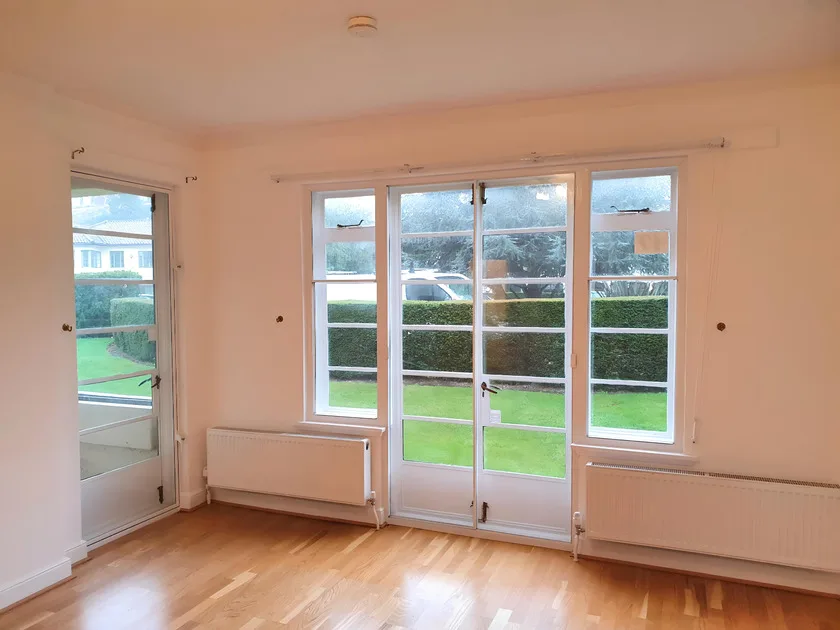
Living with constant noise pollution can seriously impact your quality of life. Whether it's traffic roar, airplane noise, or noisy neighbors, unwanted sound can affect your sleep, concentration, and overall wellbeing. That's where acoustic secondary glazing comes in - a specialized solution that can reduce noise levels by up to 80%, transforming your home into a peaceful sanctuary.
What is Acoustic Secondary Glazing?
Acoustic secondary glazing is a specialized window treatment that goes beyond standard secondary glazing to provide maximum noise reduction. While regular secondary glazing focuses primarily on thermal insulation, acoustic versions are specifically engineered to block sound waves using advanced materials and precise installation techniques.
The key difference lies in the details. Standard secondary glazing typically uses 4mm glass with basic sealing, while acoustic secondary glazing employs thicker laminated glass (usually 6.38mm or more), specialized acoustic seals, and optimized air gap spacing to create a superior sound barrier.
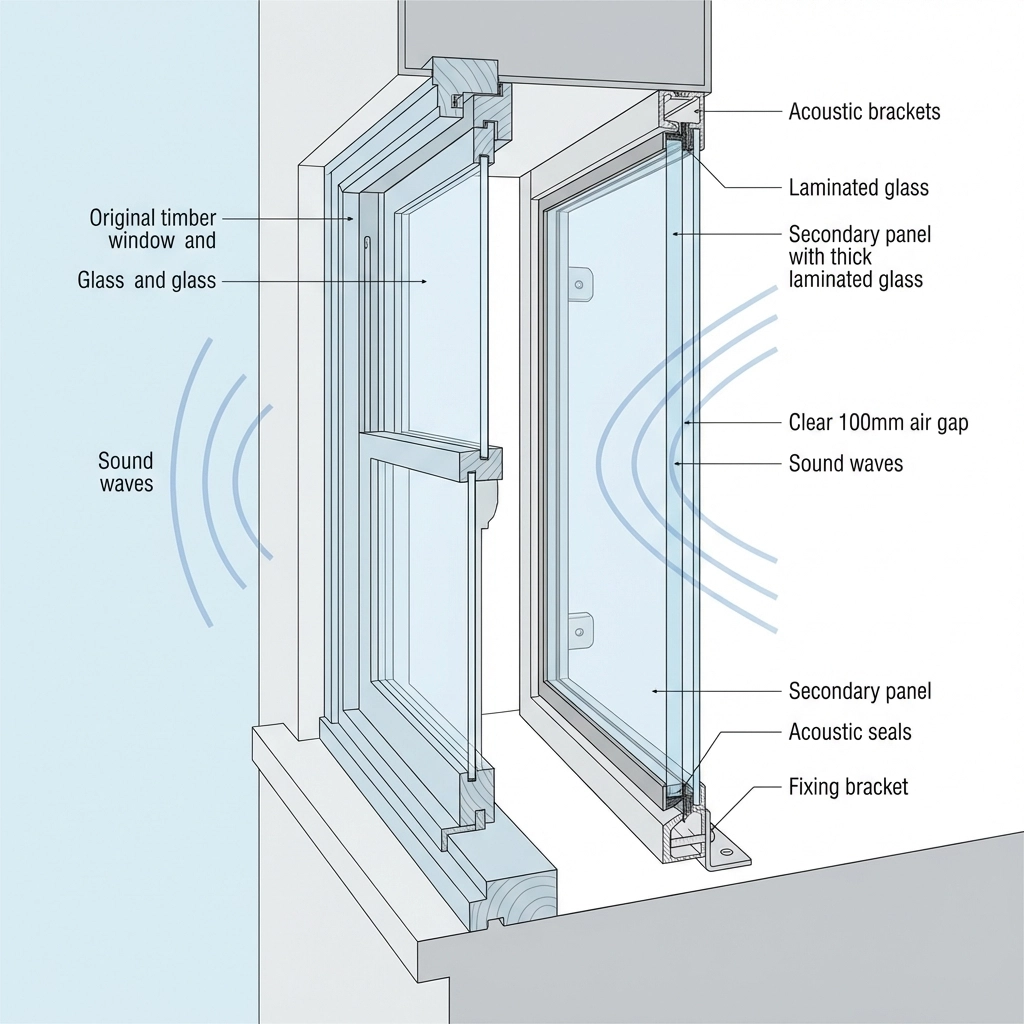
Unlike replacement windows, acoustic secondary glazing is installed on the interior side of your existing windows, creating a double-barrier system that's incredibly effective at stopping noise. This makes it perfect for listed buildings, conservation areas, or anywhere you can't replace the original windows.
The Science Behind Noise Reduction
Understanding how acoustic secondary glazing blocks sound helps explain why it's so effective. Sound travels as vibrations through the air, and these vibrations need to be either absorbed, reflected, or disrupted to reduce noise levels.
The Air Gap Principle
The space between your original window and the secondary pane acts as a crucial buffer zone. When sound waves hit the first glass pane, they cause vibrations. These vibrations then travel through the air gap before reaching the second pane. During this journey, the sound energy dissipates significantly.
The wider the air gap, the more effective the noise reduction becomes. While standard double glazing has gaps of 12-20mm, acoustic secondary glazing systems typically feature gaps of 100mm or more. This larger cavity allows sound waves to lose much more energy before reaching the inner pane.
Mass and Damping
Thicker, heavier glass is naturally better at blocking sound. Acoustic secondary glazing uses laminated glass with a plastic interlayer (typically PVB - polyvinyl butyral) that acts as a damping material. When sound waves hit this laminated glass, the plastic layer absorbs vibrations and prevents them from passing through.
This is why 6.38mm laminated glass dramatically outperforms standard 4mm glass - it's not just thicker, it's specifically designed to dampen sound vibrations.
Decoupling Effect
One of the most important principles is decoupling - ensuring the two glass panes operate independently. If vibrations can travel directly from the outer pane to the inner pane through the frame or fixings, much of the acoustic benefit is lost. Quality acoustic secondary glazing systems use resilient mounting methods to prevent this vibration transfer.
Understanding STC Ratings
Sound Transmission Class (STC) ratings provide a standardized way to measure how effectively a barrier blocks sound. The higher the STC number, the better the noise reduction performance.
Here's how to interpret STC ratings:
- STC 25-30: Loud speech can be understood through the barrier
- STC 35-40: Loud speech is audible but not easily understood
- STC 45-50: Loud speech is barely audible
- STC 50-55: Shouting is barely audible
- STC 55-60: Very good sound isolation for most applications
- STC 60+: Excellent sound isolation for critical applications
Typical STC Ratings for Window Systems
| Window Type | STC Rating |
|---|---|
| Single glazing (4mm) | 25-28 |
| Standard double glazing | 28-32 |
| High-performance double glazing | 32-36 |
| Standard secondary glazing | 42-48 |
| Acoustic secondary glazing | 50-58 |
| Premium acoustic systems | 55-65 |
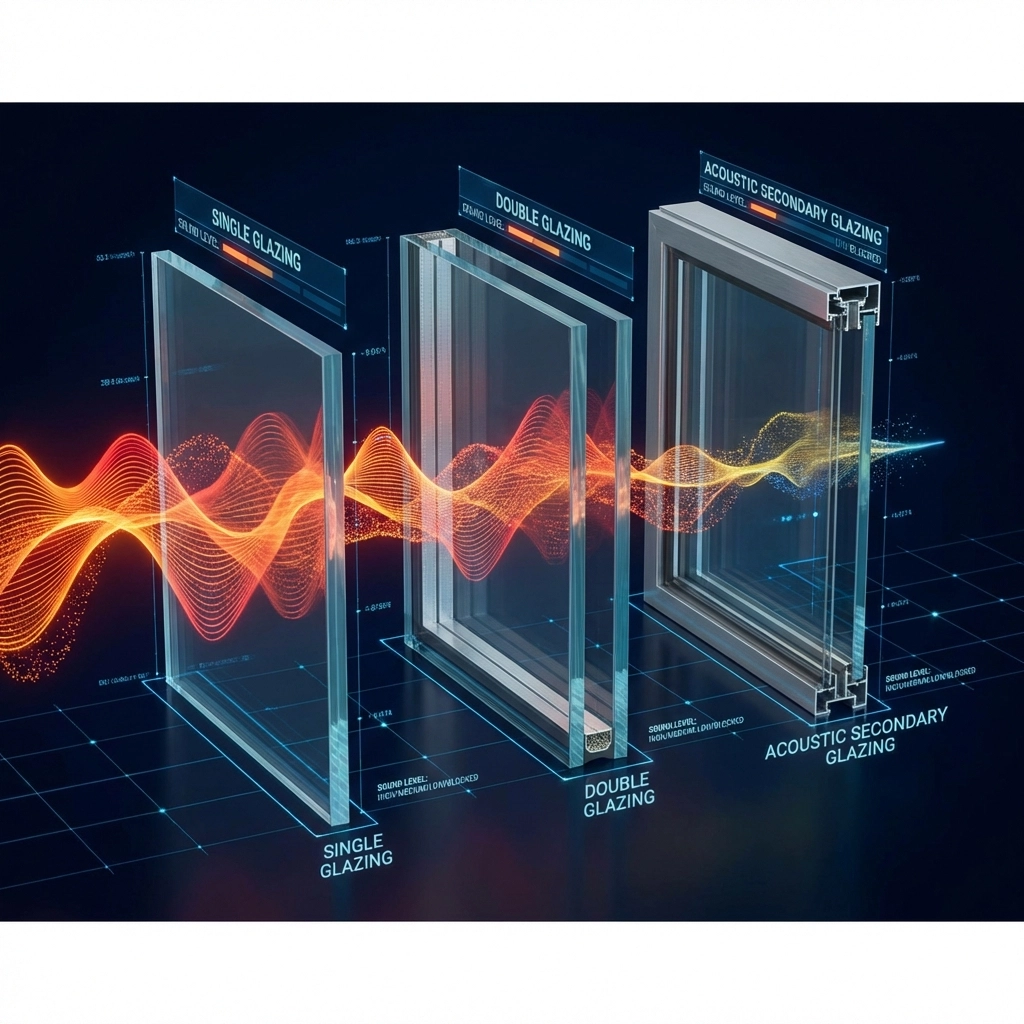
The dramatic improvement from standard double glazing (STC 32) to acoustic secondary glazing (STC 55) represents a noise reduction of approximately 15-20 decibels - equivalent to reducing traffic noise from a busy road to the sound of a quiet residential street.
Performance by Noise Type
Different types of noise require different approaches, and acoustic secondary glazing performs differently depending on the sound frequency and characteristics.
Traffic Noise Reduction
Traffic noise is predominantly low-frequency, rumbling sound mixed with higher frequency tire and engine noise. Acoustic secondary glazing with a 100mm+ air gap can reduce traffic noise by:
- Heavy traffic (70-80dB): Reduced to 35-45dB (quiet residential area)
- Motorway noise (80-85dB): Reduced to 40-50dB (normal conversation level)
- Urban road noise (65-75dB): Reduced to 30-40dB (library quiet)
Aircraft Noise
Airplane noise combines low-frequency engine rumble with high-frequency turbulence sounds. Properties near airports benefit significantly from acoustic secondary glazing:
- Aircraft takeoff (140dB): Reduced to 60-70dB at typical distances
- Approach noise (80-90dB): Reduced to 40-50dB
- Distant aircraft (60-70dB): Reduced to 25-35dB (very quiet)
For homeowners near Heathrow, Gatwick, or other major airports, this represents the difference between sleep disruption and peaceful rest.
Railway Noise
Train noise is particularly challenging due to its sudden onset and combination of wheel-on-track sounds, engine noise, and ground vibrations:
- Passing freight train (90-95dB): Reduced to 45-55dB
- High-speed passenger train (85-90dB): Reduced to 40-50dB
- Distant rail noise (70-75dB): Reduced to 30-35dB
Neighbor Noise
Domestic noise from neighboring properties, including voices, music, and household activities:
- Loud music/TV (75-80dB): Reduced to 35-40dB
- Raised voices (70-75dB): Reduced to 30-35dB
- General household noise (60-65dB): Reduced to 25-30dB
Industrial Noise
Manufacturing, construction, and commercial activities produce complex noise patterns:
- Construction equipment (85-95dB): Reduced to 45-55dB
- Factory operations (75-85dB): Reduced to 35-45dB
- Commercial ventilation (65-75dB): Reduced to 30-40dB
Glass Types for Maximum Acoustic Performance
The choice of glass significantly impacts acoustic performance. Here's a breakdown of options and their characteristics:
Standard Float Glass
Basic float glass provides minimal acoustic benefit:
- 4mm glass: Limited sound reduction (STC 28-30)
- 6mm glass: Marginally better but still insufficient for serious noise issues
Laminated Acoustic Glass
The gold standard for acoustic applications:
- 6.38mm laminated: Good acoustic performance (STC 35-40)
- 8.38mm laminated: Better performance (STC 40-45)
- 10.38mm laminated: Excellent performance (STC 45-50)
The plastic interlayer acts as a damping material, absorbing vibrations and preventing sound transmission.
Specialized Acoustic Glass
Premium options for maximum performance:
- Acoustic grade laminated glass: Specially formulated interlayers for enhanced damping
- Asymmetric laminated glass: Different thickness panes to disrupt resonant frequencies
- Triple-laminated glass: Multiple interlayers for ultimate performance
Optimal Air Gap Sizing
The air gap between panes is crucial for acoustic performance:
- 50-75mm: Minimum for noticeable improvement
- 100-150mm: Optimal for most applications
- 150mm+: Maximum benefit for critical applications
- 200mm+: Diminishing returns, mainly for extreme cases
Larger gaps work better because they allow more space for sound energy to dissipate and reduce the coupling effect between panes.

Acoustic vs Standard Secondary Glazing
Understanding when to invest in acoustic-grade systems helps ensure you get the best value:
Performance Comparison
| Feature | Standard Secondary Glazing | Acoustic Secondary Glazing |
|---|---|---|
| Typical noise reduction | 15-25dB | 25-35dB |
| STC rating | 42-48 | 50-58 |
| Glass thickness | 4mm standard | 6.38mm+ laminated |
| Air gap | 50-100mm | 100-200mm |
| Sealing quality | Standard | Acoustic-grade seals |
Cost Differences
Acoustic secondary glazing typically costs 30-50% more than standard systems due to:
- Thicker laminated glass (more expensive to manufacture)
- Specialized acoustic seals and gaskets
- Precision installation requirements
- Enhanced frame systems
However, for properties with serious noise issues, the additional cost is usually justified by the dramatic improvement in quality of life.
When Acoustic Upgrade is Worth It
Consider acoustic secondary glazing if you experience:
- Traffic noise above 65dB (busy road, motorway proximity)
- Flight path noise (near airports, regular aircraft overhead)
- Railway noise (within 500m of train lines)
- Industrial/commercial noise (factories, 24/7 operations nearby)
- Neighbor noise issues (thin walls, party walls, flats)
Installation Considerations for Maximum Performance
Proper installation is crucial for achieving the promised acoustic performance. Even the best acoustic glass will underperform if installation details are overlooked.
Critical Sealing Points
Every gap represents a potential sound leak:
- Perimeter seals: Must be continuous around the entire frame
- Corner joints: Often the weakest point, requiring careful attention
- Hardware penetrations: Any screws or fixings through the seal
- Opening mechanisms: Hinges and handles need acoustic sealing
Frame Mounting
The way the secondary frame attaches to your existing window affects acoustic performance:
- Resilient mounting: Rubber pads or gaskets prevent vibration transfer
- Rigid mounting: Can create a direct vibration path, reducing effectiveness
- Frame material: Aluminum frames may transmit vibrations more than uPVC
Professional vs DIY Installation
While DIY secondary glazing kits exist, acoustic performance depends heavily on installation precision. Professional installation ensures:
- Accurate measurement and manufacturing
- Proper seal application and compression
- Correct frame mounting techniques
- Performance testing and adjustment
Real Acoustic Testing Results
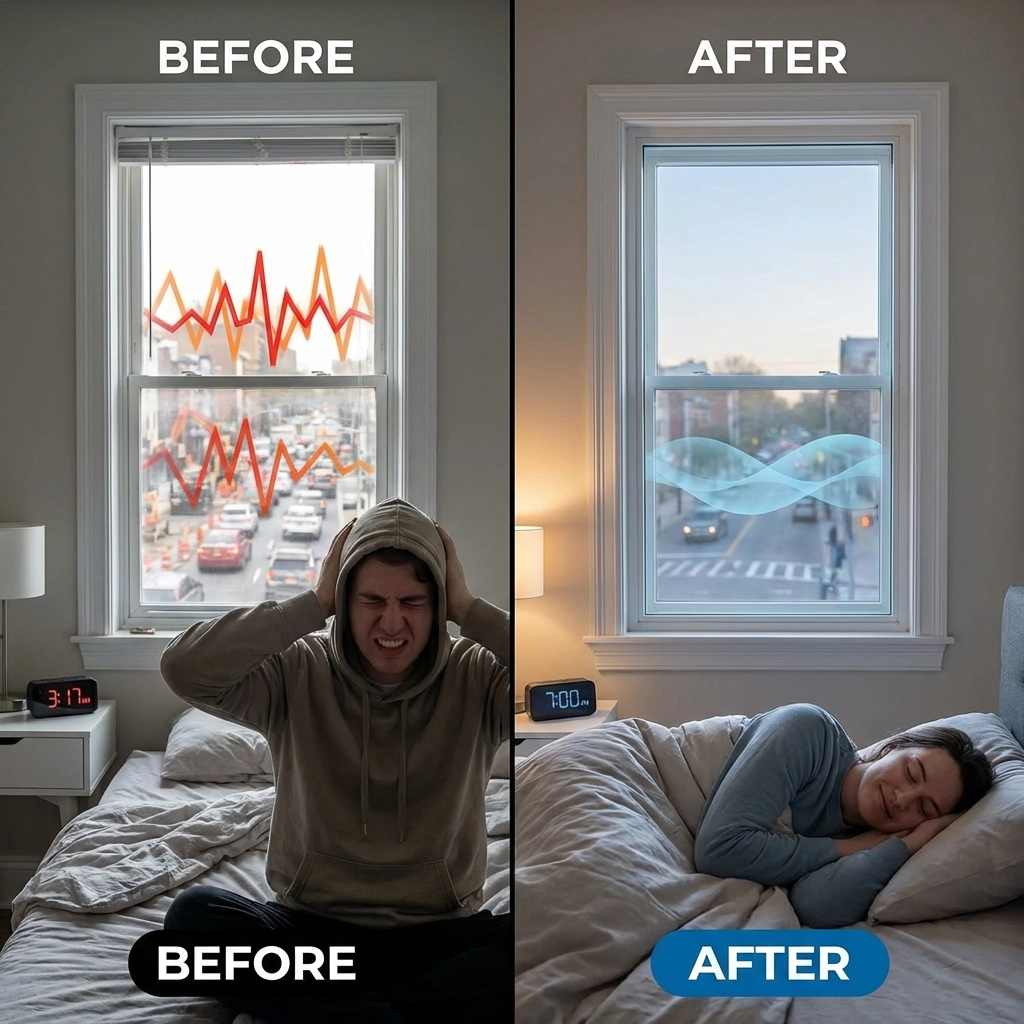
Acoustic testing provides objective evidence of performance. Here are real-world results from recent installations:
Case Study 1: Victorian Terrace near A40 (London)
Before installation:
- Peak traffic noise: 78dB
- Average daytime noise: 72dB
- Sleep disruption: Regular
After acoustic secondary glazing:
- Peak traffic noise: 42dB
- Average daytime noise: 38dB
- Noise reduction: 34dB average
Customer feedback: "The difference is incredible. We can finally have conversations without raising our voices, and sleep through the night."
Case Study 2: Apartment near Heathrow Flight Path
Before installation:
- Aircraft noise peaks: 85dB
- Frequency: Every 2-3 minutes during peak hours
- Impact: Impossible to watch TV during flight times
After acoustic secondary glazing:
- Aircraft noise peaks: 48dB
- Perceived noise reduction: 37dB
- Impact: Aircraft barely noticeable indoors
Case Study 3: Office Building near Railway
Before installation:
- Train pass noise: 92dB
- Duration: 30-45 seconds per train
- Frequency: 12 trains per hour
After acoustic secondary glazing:
- Train pass noise: 52dB
- Noise reduction: 40dB
- Impact: Meetings no longer interrupted
How to Measure Noise Levels in Your Home
Understanding your current noise levels helps determine whether acoustic secondary glazing will provide sufficient improvement.
Using a Sound Level Meter
Professional sound level meters provide accurate readings:
- Position the meter 1-2 meters from the window
- Set to A-weighted scale (dBA) for human hearing response
- Record peak levels during noisy periods
- Note average levels over 10-15 minutes
- Test different times (rush hour, nighttime, weekends)
Smartphone Apps
While not as accurate as professional meters, smartphone apps can provide useful estimates:
- Recommended apps: NIOSH Sound Level Meter, Decibel X
- Limitations: Built-in microphones vary in quality
- Calibration: Compare with known reference sounds
What the Numbers Mean
Understanding decibel levels helps interpret measurements:
| dB Level | Description | Example |
|---|---|---|
| 30dB | Very quiet | Whisper, library |
| 40dB | Quiet | Residential area at night |
| 50dB | Moderate | Normal conversation |
| 60dB | Moderately loud | Office environment |
| 70dB | Loud | Traffic, vacuum cleaner |
| 80dB | Very loud | Garbage disposal, city traffic |
| 90dB | Extremely loud | Motorcycle, power tools |
What dB Reduction Actually Means
Decibel reduction has real-world implications for comfort:
- 10dB reduction: Sound appears half as loud
- 20dB reduction: Major improvement, much quieter
- 30dB reduction: Dramatic change, transforms the acoustic environment
- 40dB+ reduction: Exceptional improvement, noise becomes background
For example, reducing 80dB traffic noise to 50dB transforms a "very loud" environment to normal conversation levels - the difference between stress and comfort.

Specialized Applications and Case Studies
Airport Proximity Solutions
Properties near airports face unique acoustic challenges. Heathrow, for instance, sees over 1,300 flights daily, with approach paths creating regular noise exposure of 70-85dB.
Solution approach:
- 6.38mm acoustic laminated glass minimum
- 150mm air gap for low-frequency engine noise
- Full perimeter acoustic sealing
- Consideration of building vibration from heavy aircraft
Railway Corridor Properties
Rail noise combines multiple challenges:
- Sudden onset (trains appear quickly)
- Ground vibration transmitted through building structure
- Mixed frequencies (wheel noise, engine noise, horn signals)
Specialized considerations:
- Asymmetric glass thicknesses to disrupt resonant frequencies
- Enhanced structural isolation to reduce vibration transfer
- Sound absorption materials in the air gap for some applications
Urban Commercial Areas
City center properties face complex noise environments:
- 24/7 traffic patterns
- Emergency vehicle sirens
- Commercial delivery vehicles
- Pedestrian and nightlife noise
Maintenance and Longevity
Acoustic secondary glazing systems require minimal maintenance but benefit from regular attention:
Annual Maintenance
- Seal inspection: Check for gaps or deterioration
- Cleaning: Both sides of glass for optimal clarity
- Hardware lubrication: Hinges, locks, and opening mechanisms
- Performance check: Note any changes in noise reduction
Signs of Performance Degradation
- Increased noise levels: May indicate seal failure
- Condensation between panes: Suggests air gap contamination
- Rattling or vibration: Hardware may need adjustment
- Difficulty opening/closing: Hinges or seals may need attention
Expected Lifespan
Quality acoustic secondary glazing systems typically last:
- Glass units: 20-25 years
- Seals and gaskets: 10-15 years (replaceable)
- Frame systems: 25+ years
- Hardware: 15-20 years with proper maintenance
Technical FAQ
Q: How does acoustic secondary glazing compare to triple glazing for noise reduction? A: Acoustic secondary glazing with a 100mm+ air gap typically outperforms triple glazing because the larger air gap provides better acoustic separation. Triple glazing focuses on thermal performance rather than acoustic optimization.
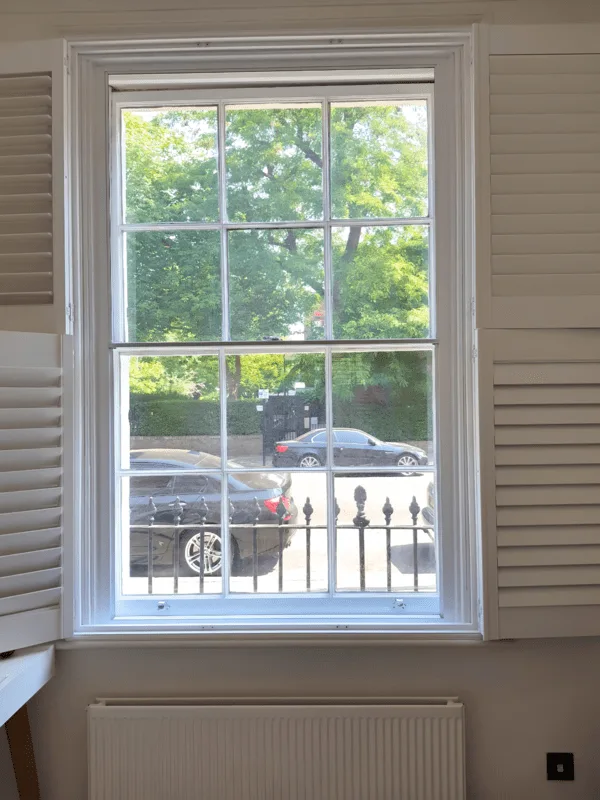
Q: Can I use acoustic secondary glazing with sash windows? A: Absolutely. Acoustic secondary glazing works excellently with sash windows, particularly in period properties where replacement isn't possible. The systems can be designed to match the vertical sliding operation of the original sashes.
Q: Will acoustic secondary glazing affect natural light? A: Modern acoustic laminated glass has excellent optical clarity. While any additional glass layer slightly reduces light transmission (typically 5-10%), this is rarely noticeable in practice and is far outweighed by the acoustic benefits.
Q: How do I know if the 100mm air gap will fit in my window reveal? A: Most Victorian and Edwardian properties have reveals of 150-200mm+, easily accommodating acoustic systems. Georgian properties may have shallower reveals requiring assessment. We provide free surveys to determine feasibility.
Q: Can acoustic secondary glazing be removed if needed? A: Yes, quality systems are designed to be reversible. This is particularly important for listed buildings where any modifications must be removable without damaging the original windows.
Q: Does acoustic secondary glazing provide thermal benefits too? A: Absolutely. The large air gap provides excellent thermal insulation, often reducing heat loss by 60-70%. You get both acoustic and thermal improvements in one solution.
Acoustic secondary glazing represents the pinnacle of window noise reduction technology. By understanding the science behind sound blocking, choosing appropriate glass specifications, and ensuring professional installation, you can achieve dramatic noise reductions that transform your living environment. Whether you're dealing with traffic, aircraft, trains, or neighbors, acoustic secondary glazing offers a proven solution that delivers measurable results and lasting peace of mind.
Sources & References
Government & Regulatory
- Department for Environment, Food & Rural Affairs (Defra). "Noise Policy Statement for England (NPSE)". GOV.UK, 2010.Link
This government guidance details the impact of environmental noise on health and the importance of mitigation strategies in residential planning.
- HM Government. "Approved Document E". Building Regulations: Approved Document E - Resistance to the passage of sound, 2015.Link
This document outlines the requirements for sound insulation in UK buildings, providing the regulatory framework for internal and external noise reduction.
- Historic England. "Making Changes to Heritage Assets". Historic England Advice Note 2, 2016.Link
Provides specific guidance for homeowners in protected areas on how to improve thermal and acoustic performance without compromising historical integrity.
Scientific & Technical
- J. S. Bolton, N.-M. Shiau, and J. H. Rife. "Sound transmission through multi-panel structures lined with elastic porous materials". Journal of Sound and Vibration, 1996.
A seminal study detailing how laminated glass with PVB interlayers improves sound insulation by shifting the coincidence frequency.
- World Health Organization (WHO). "Environmental Noise Guidelines for the European Region". WHO Regional Office for Europe, 2018.Link
The definitive international guidelines on the health impacts of noise, establishing the link between noise pollution and sleep disturbance.
Industry Standards
- British Standards Institution (BSI). "Guidance on sound insulation and noise reduction for buildings". BS 8233:2014, 2014.
The British Standard providing guidance on sound insulation and noise reduction for buildings, specifically mentioning the effectiveness of large air gaps.
- International Organization for Standardization (ISO). "Acoustics — Laboratory measurement of sound insulation of building elements — Part 2: Measurement of airborne sound insulation". ISO 10140-2:2021, 2021.
Provides the standard laboratory methods for measuring the sound insulation of building elements, including secondary glazing units.
Citations generated with AI assistance. Please verify sources independently.
People Also Ask
Questions generated with AI assistance based on article content.
Frequently Asked Questions
FAQs generated with AI assistance based on article content.
Related Articles

Next Step
Book a Free Noise Survey
Get a tailored acoustic report and fixed quote for your property. No obligation, surveys across London within 5 working days.