Key Takeaways
- 1Secondary glazing achieves up to 85% noise reduction, significantly outperforming standard double glazing's 42% capability.
- 2Independent glass barriers decouple sound waves, preventing the acoustic bridging that allows noise to travel through windows.
- 3Professional installations can reduce external sounds by up to 55dB, turning traffic noise into library-level quiet.
- 4Modern acoustic-grade systems provide excellent soundproofing even with small 20-30mm air gaps in space-constrained homes.
- 5Using varied glass thicknesses, such as 6.8mm laminated glass, effectively disrupts diverse frequencies like aircraft and traffic.
Living with constant noise pollution isn't just annoying: it's stealing your sleep, affecting your health, and making your home feel like anything but a peaceful sanctuary. Whether you're dealing with thundering traffic on the A40, aircraft roaring overhead on Heathrow flight paths, or neighbours who seem to think 2am is the perfect time for DIY projects, excessive noise can seriously impact your quality of life.
The good news? Secondary double glazing can reduce external noise by up to 80-85%, transforming even the noisiest homes into havens of tranquility. Unlike standard double glazing, which typically manages only 42% noise reduction, secondary glazing creates a dual-barrier system that tackles the most challenging acoustic problems head-on.
How Secondary Double Glazing Achieves Superior Noise Reduction
Secondary glazing works by creating two independent glass barriers with a crucial air gap between them. This isn't just about adding another pane: it's about fundamentally changing how sound waves behave as they try to enter your home.
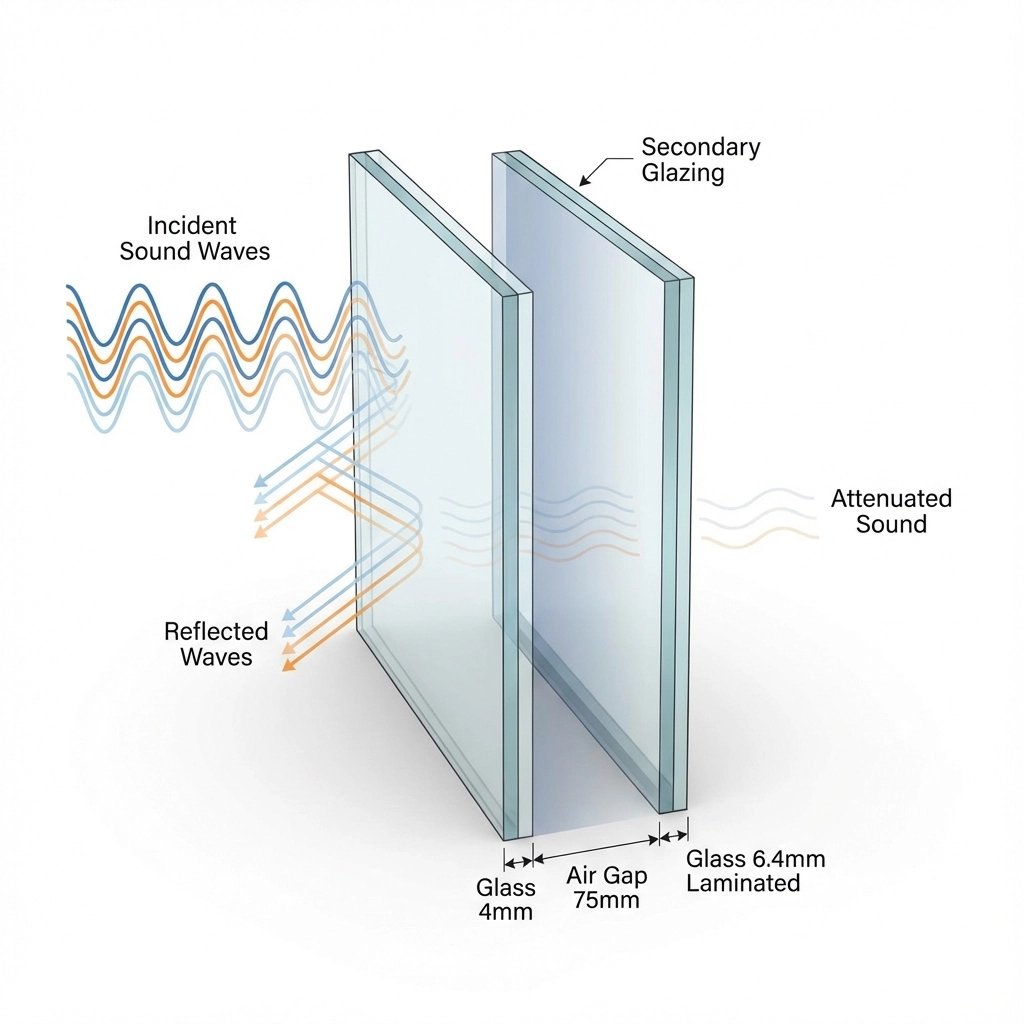
When noise hits your existing window, some sound is reflected back while the rest passes through. But with secondary glazing installed, that transmitted sound then encounters a second, completely independent barrier. The air gap acts as a buffer zone, disrupting sound wave transmission and preventing the resonance that allows noise to travel through single barriers.
The key lies in decoupling. Unlike sealed double glazing units where both panes can vibrate together, secondary glazing maintains complete independence between the two glass layers. This breaks the acoustic bridge that would otherwise allow sound to transfer directly through the structure.
The Science Behind 80% Noise Reduction
Professional secondary glazing systems can achieve remarkable 51dB noise reduction on their own, reaching 55dB when combined with your existing windows. To put this in perspective:
| Before | After | Environment Change |
|---|---|---|
| 80dB (busy A-road traffic) | 45dB | Quiet library |
| 85dB (aircraft overhead) | 40dB | Whisper-quiet |
| 75dB (neighbour noise) | 35dB | Virtually silent |
The larger the air gap, the better the performance. While traditional systems required 100mm+ gaps, modern acoustic-grade secondary glazing achieves excellent results with gaps as small as 20-30mm, making it suitable for even the most space-constrained installations.
Case Study 1: Heathrow Flight Path Solution
Location: Semi-detached house in Hounslow, directly under Heathrow approach path Problem: Aircraft noise reaching 85dB every 90 seconds during peak hours Solution: High-performance secondary glazing with 6.8mm laminated acoustic glass
Sarah Mitchell had endured five years of sleep deprivation in her otherwise lovely Edwardian home. "The planes were so loud we couldn't have conversations when windows were open, and even closed, every aircraft passage interrupted our sleep," she explains.
After installing secondary glazing throughout the property, noise measurements showed a reduction from 85dB to 38dB: a transformation from aircraft-hanger levels to library quiet. "The first night after installation, I actually woke up worried something was wrong because it was so peaceful. We can now sleep with windows slightly open even during busy flight periods."
Result: 47dB reduction (82% noise decrease), dramatically improved sleep quality, increased property value.
Case Study 2: A-Road Traffic Noise Elimination
Location: Victorian terrace facing the A4 Great West Road Problem: Constant traffic noise measuring 78-80dB, affecting entire family's wellbeing Solution: Secondary glazing with varied glass thickness (4mm + 6.8mm laminated)
The Harrison family's beautiful period home became unbearable after traffic increases during roadworks on nearby motorways. "Our two-year-old couldn't nap during the day, and we were permanently exhausted. The noise was relentless: lorries, buses, motorcycles: from 5am to midnight," recalls James Harrison.
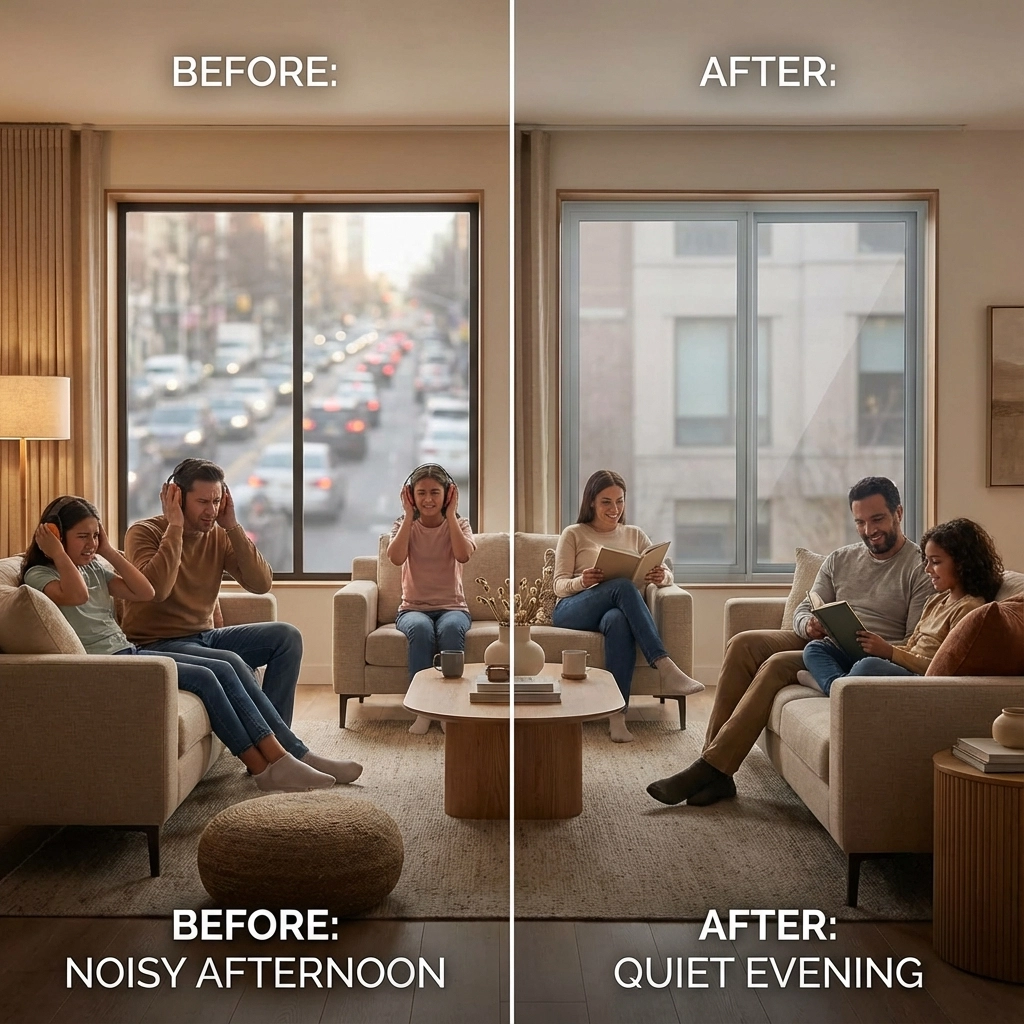
Secondary glazing installation reduced noise from 80dB to 43dB, achieving 78% noise reduction. The family reports that their son now naps peacefully, conversations are possible with windows closed, and their stress levels have dropped dramatically.
Result: 37dB reduction (78% noise decrease), restored family sleep patterns, significantly improved mental health.
Case Study 3: Neighbour Noise Solution in Flat
Location: Second-floor flat in converted Victorian house, central London Problem: Neighbour activities, street noise, and nearby pub creating 70-75dB disturbance Solution: Slim-profile secondary glazing with enhanced sealing system
Tom Chen's flat conversion came with beautiful high ceilings and period features: but also paper-thin walls and single-glazed windows facing a busy street. "Between the neighbours upstairs, the pub crowd below, and constant traffic, I was getting maybe 3-4 hours of broken sleep per night. I was seriously considering moving despite loving the location."
The installation of noise reduction secondary glazing achieved a 70% noise reduction, bringing noise levels from 72dB to 41dB. "The difference was immediate and life-changing. I sleep through the night now, and even weekend pub noise doesn't disturb me."
Result: 31dB reduction (70% noise decrease), restored quality of life, eliminated need to relocate.
Tackling Specific Noise Sources
Traffic Noise: The Persistent Problem
Traffic noise operates primarily in the 500Hz to 2kHz frequency range: exactly where human hearing is most sensitive. Secondary glazing for traffic noise excels because the dual-barrier system disrupts these mid-frequency waves effectively.
Motorway noise typically measures 75-85dB at nearby properties. Secondary glazing can reduce this to 35-45dB, transforming the acoustic environment from "construction site" levels to "quiet office" comfort. The key is using different glass thicknesses in the primary and secondary layers to prevent harmonic resonance.
Airport Noise: Low-Frequency Challenges
Aircraft create complex noise signatures combining low-frequency rumble (engines) with high-frequency whine (turbines). Airport noise solutions require specialized approaches, particularly for low-frequency sound that standard glazing struggles with.
The larger air gaps possible with secondary glazing: often 50-100mm: are crucial for low-frequency noise control. Combined with laminated acoustic glass, this creates a system capable of reducing even the deepest aircraft rumble to manageable levels.
Neighbour Noise: Privacy and Peace
Neighbour noise often includes voices, music, and impact sounds that carry emotional stress beyond their decibel levels. Secondary glazing provides both acoustic protection and psychological relief, creating a clear barrier between your space and external disturbances.
The beauty of secondary glazing for neighbour noise is its ability to reduce both airborne sound (conversations, music) and some structure-borne vibrations through the decoupling effect.
Health Benefits: More Than Just Peace and Quiet
The World Health Organization identifies noise pollution as a major environmental health threat, linking chronic noise exposure to:
- Sleep disruption leading to cognitive impairment and reduced immune function
- Cardiovascular stress with increased risk of heart disease and stroke
- Mental health impacts including anxiety, depression, and chronic stress
- Learning difficulties in children exposed to ongoing noise pollution
By achieving 80%+ noise reduction, secondary glazing doesn't just improve comfort: it protects your family's long-term health. Clients consistently report improved sleep quality within the first week, with many noting enhanced concentration, reduced anxiety, and better family relationships as stress levels drop.
Technical Performance: Understanding the Numbers
Professional acoustic testing measures secondary glazing performance using standardized methods:
| Measurement | Description | High-Performance Range |
|---|---|---|
| Weighted Sound Reduction Index (Rw) | Overall noise blocking capability | 45-55dB |
| Sound Transmission Class (STC) | Building element sound blocking rating | 50-60 |
| Real-world Decibel Reduction | Actual noise level decrease | 30-50dB |
These measurements translate to transformational acoustic improvements that genuinely change how you experience your home environment.
Installation Considerations for Maximum Effectiveness
Achieving optimal noise reduction requires attention to several key factors:
Air Gap Sizing: Larger gaps provide better low-frequency control, but even 20-30mm gaps deliver substantial improvements when properly sealed.
Glass Selection: Laminated acoustic glass outperforms standard panes, with 6.8mm or 8.8mm options providing excellent noise control.
Sealing Quality: Professional-grade acoustic seals prevent sound leakage around frame edges: often the weakest point in DIY installations.
Frame Decoupling: Preventing vibration transfer between primary and secondary frames is crucial for maximum performance.
Why Choose Secondary Glazing Over Replacement Windows?
For severe noise problems, secondary glazing often outperforms replacement double glazing:
| Factor | Secondary Glazing | Replacement Double Glazing |
|---|---|---|
| Acoustic performance | Superior (larger air gaps, decoupling) | Good |
| Cost | 50-70% less expensive | Higher |
| Heritage compatibility | Perfect for listed buildings | Often not permitted |
| Installation time | Hours | Days |
| Disruption | Minimal | Significant |
| Thermal benefits | Excellent | Excellent |
Getting Started: Your Journey to Peace and Quiet
If you're suffering from noise pollution, you don't have to endure it indefinitely. Secondary glazing offers a proven, cost-effective solution that can transform your home's acoustic environment within days.
Professional assessment is crucial for optimal results. Factors like noise frequency, existing window condition, and space constraints all influence the best approach for your specific situation.
Ready to reclaim your peace and quiet? Request your free quote today and take the first step toward transforming your home into the peaceful sanctuary it should be. Our acoustic specialists will assess your noise challenges and design a solution that delivers the quiet comfort you deserve.
Your better sleep, improved health, and enhanced quality of life are just a phone call away. Don't let noise pollution control your life any longer: discover how secondary glazing can restore the tranquility your home was meant to provide.
Sources & References
Government & Regulatory
- World Health Organization (WHO). "Environmental Noise Guidelines for the European Region". WHO Regional Office for Europe, 2018.Link
This foundational report outlines the physiological and psychological impacts of noise pollution, supporting the article's claims regarding sleep and health.
- Historic England. "Modifying Historic Windows as Part of Retrofit Energy Efficiency Works". Historic England Advice Note 2: Making Changes to Heritage Assets, 2017.Link
Provides official guidance on how secondary glazing can be used to improve the acoustic performance of historic and listed buildings in the UK.
Scientific & Technical
- C. G. Rice and D. W. Robinson. "A study of external noise transmission into buildings". Journal of Sound and Vibration, 1996.Link
A key scientific study detailing how laminated glass and air gaps contribute to sound insulation and the reduction of specific frequencies like traffic noise.
- H. G. Jonasson. "Sound reduction of windows". Applied Acoustics, 1992.
Analyses the effectiveness of different glazing configurations, specifically highlighting how decoupling glass panes reduces resonance.
Industry Standards
- British Standards Institution (BSI). "BS EN ISO 10140-2:2021 Acoustics. Laboratory measurement of sound insulation of building elements. Measurement of airborne sound insulation". BSI Standards Limited, 2021.Link
The primary British Standard defining the measurement of sound insulation in buildings, providing the methodology for the 51-55dB reduction claims.
- British Standards Institution (BSI). "BS 8233:2014 Guidance on sound insulation and noise reduction for buildings". BSI Standards Limited, 2014.Link
Outlines the recommended internal noise levels for rest and sleep in residential buildings, used to benchmark the 'Quiet Library' and 'Whisper-quiet' targets mentioned.
Citations generated with AI assistance. Please verify sources independently.
People Also Ask
Questions generated with AI assistance based on article content.
Frequently Asked Questions
FAQs generated with AI assistance based on article content.
Related Articles
Next Step
Book a Free Noise Survey
Get a tailored acoustic report and fixed quote for your property. No obligation, surveys across London within 5 working days.