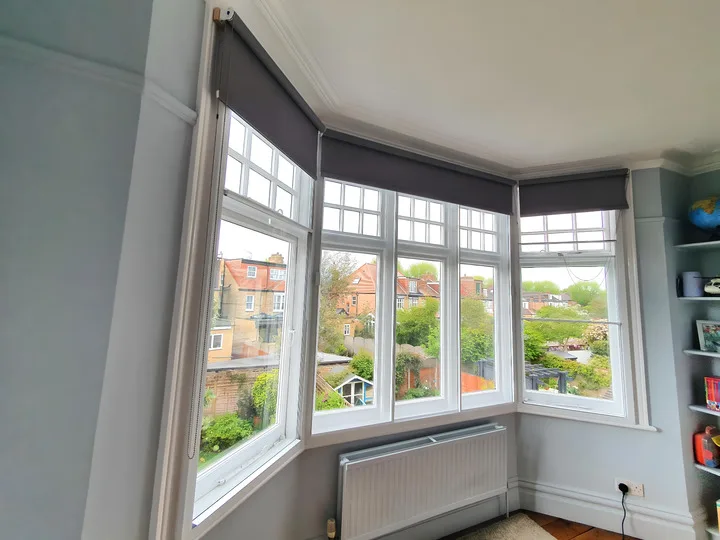
Keeping a London heritage home quiet should not mean losing the windows that give it character. If buses interrupt your sleep or aircraft drown out conversation, start with the affected room—not a promise that one glass type will solve everything.
Start with the noise and the original windows
Note what you hear, when it happens and which rooms face it. Traffic on Cromwell Road, evening voices around Upper Street and Heathrow-related aircraft noise in Richmond are different problems. Check sash edges, loose fittings and draughty gaps as well as the glass.
Repairing sound original timber and improving seals may be a sensible first step. Curtains can soften a room, but should not be treated as a substitute for addressing noise entering through windows. Sound travelling through walls, floors or vents needs a different assessment.
Compare the whole system, not just glass thickness
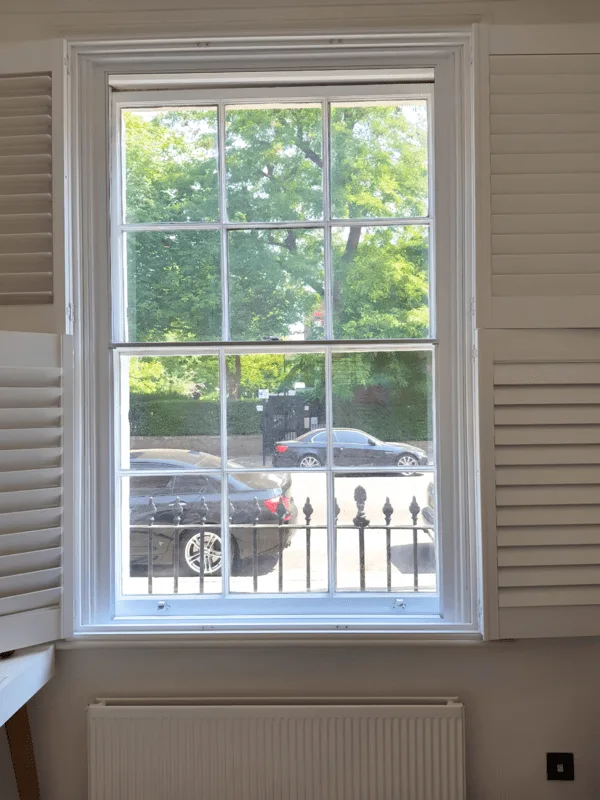
Acoustic secondary glazing adds an independent internal pane while retaining the existing window. For a heritage home, ask how it will fit around shutters, decorative reveals and glazing bars, and how you will open it for ventilation and cleaning.
Discuss acoustic glass options, airtight seals and the available gap between the windows together. Ask what any quoted noise-reduction figure measures and whether it comes from laboratory testing or a comparable installation. Your room's result depends on the complete installation and other noise paths; no glazing makes a home completely silent.
Check heritage permissions before committing
Historic England recommends assessing the significance of old windows and considering sensitive upgrades rather than assuming replacement is necessary. Its guidance covers repairs, secondary glazing and consent considerations. 1
If your home is listed, ask your borough's conservation team whether your proposed work needs listed-building consent—even for an internal addition. Conservation-area controls and lease or freeholder approval may also matter. A survey is not permission to proceed.
Read the guide for your part of London
Use these local guides to prepare questions about your street and windows:
- Westminster: bus traffic, sirens and period flats around Pimlico and Victoria.
- Camden: nightlife, Kentish Town Road traffic and nearby railway noise.
- Kensington & Chelsea: Cromwell Road traffic and sash-window townhouses.
- Richmond: aircraft, A205 traffic and original sashes or casements.
- Hammersmith & Fulham: bridge-approach traffic, matchdays and bay-window terraces.
- Islington: Upper Street nightlife, Holloway Road buses and Georgian homes.
Choose after a survey
Prioritise the room where quiet matters most, then compare a written specification covering window condition, opening style, glass, seals and installation details. Request a free London soundproofing survey and include your property postcode, the main noise source and any known heritage restrictions.
Related Articles
Next Step
Book a Free Noise Survey
Get a tailored acoustic report and fixed quote for your property. No obligation, surveys across London within 5 working days.