1. Related questions unavailable
    Edge Function returned a non-2xx status code

Secondary Glazing West Ken W14 | Heathrow Path & A4 Noise

16 min read
Share:
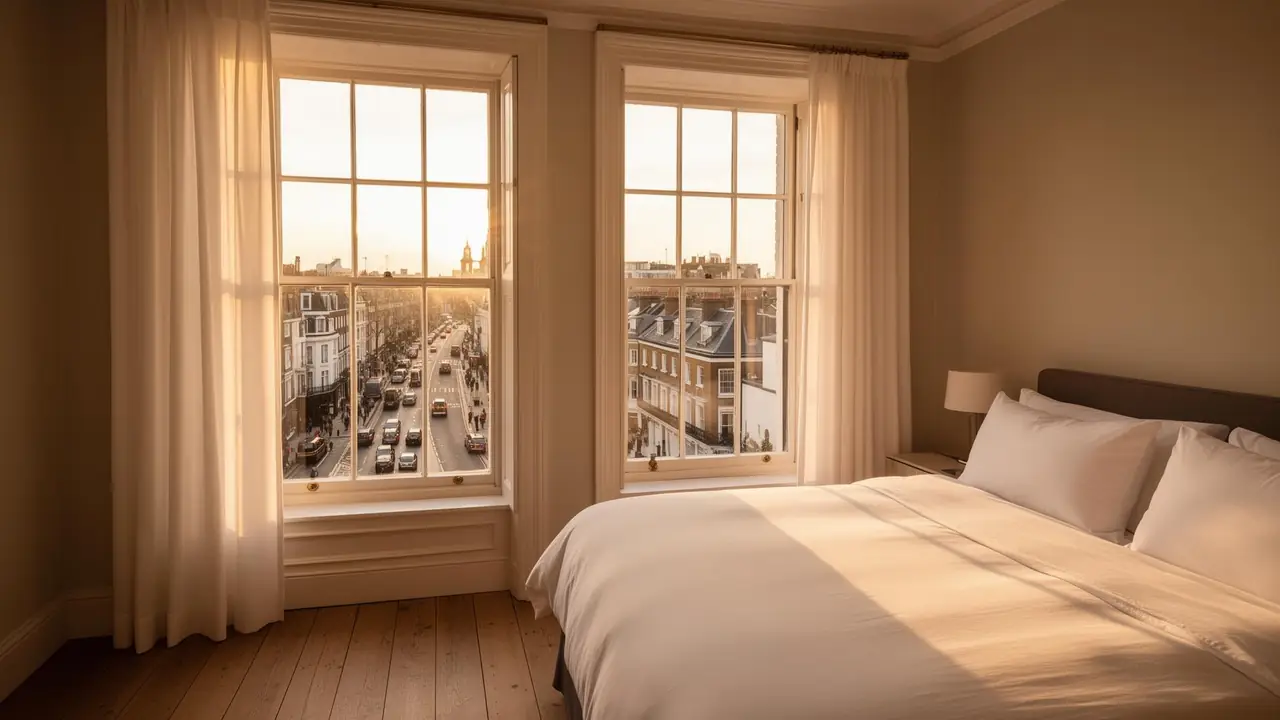
Victorian terraced houses on Gledstanes Road near the A4 Talgarth Road flyover in Barons Court W14

If you live in Barons Court or West Kensington, you already know the sound: the deep, persistent rumble of the A4 Talgarth Road flyover that shakes through your walls at all hours, punctuated every 90 seconds by the descending whine of aircraft on Heathrow's easterly approach. It's a unique double noise problem that makes W14 one of the most acoustically challenging postcodes in London.

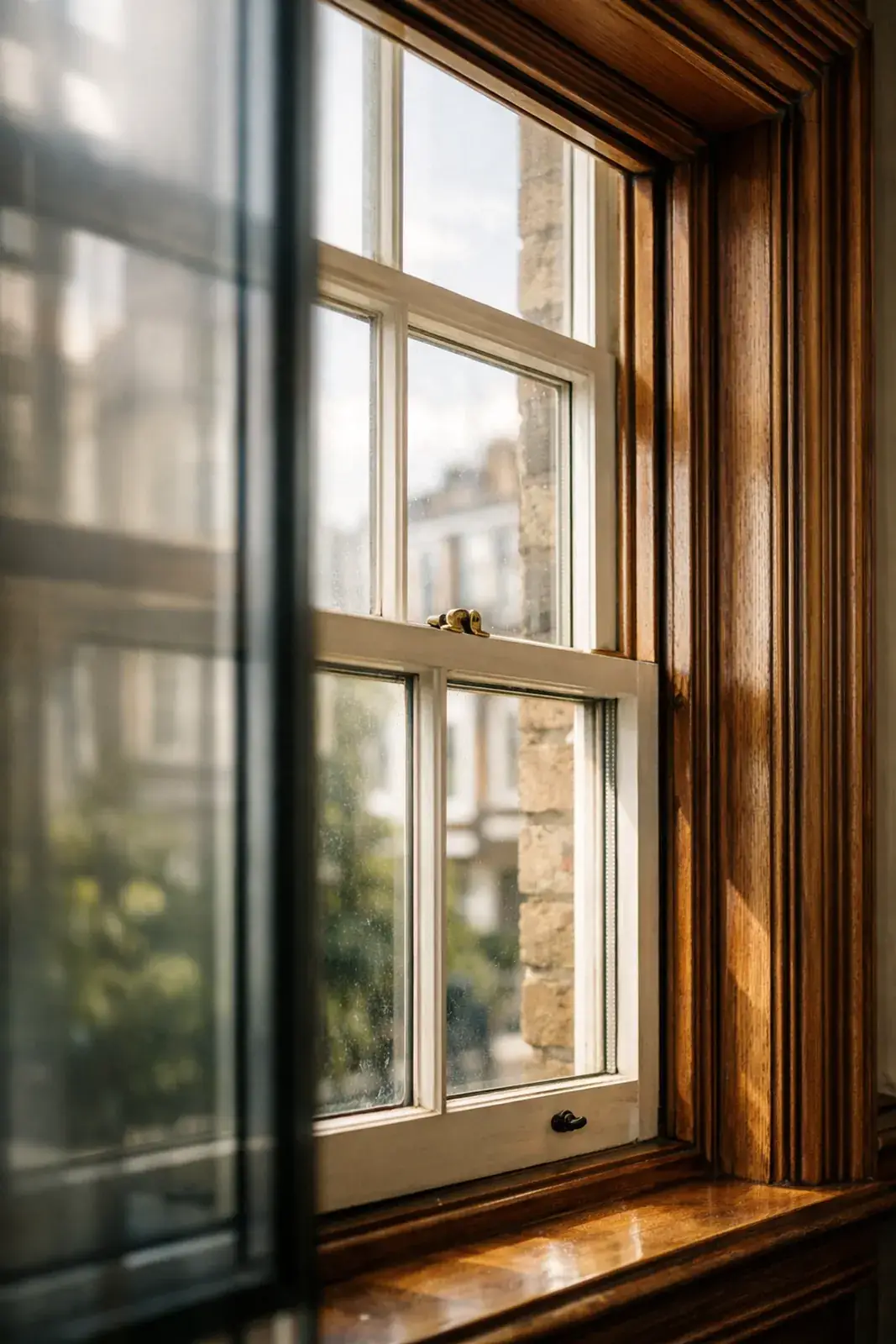
The good news? Secondary glazing is specifically engineered to solve both problems simultaneously — and unlike window replacement, it requires no planning permission, preserves your original Victorian sash windows, and qualifies for potential funding under the Heathrow Noise Insulation Scheme. For a quick overview of solutions by street, see our Barons Court area page.

The W14 Double Noise Problem Explained

Most London neighbourhoods deal with a single dominant noise source: traffic OR aircraft. Barons Court is unusual because residents face both simultaneously, and each requires a different acoustic approach.

The A4 Talgarth Road Flyover

The elevated section of the A4 carries over 40,000 vehicles daily, including heavy freight traffic that generates sustained low-frequency noise in the 63–250Hz range. This is the deep rumble you feel in your chest — the kind that standard double glazing barely touches because the sealed 12–16mm air gap is too narrow to attenuate long wavelengths.

Measured noise levels along the A4 corridor:

LocationPeak dBSustained dBDominant Frequency
Gledstanes Road (flyover facing)88 dB82 dB63–125 Hz
Castletown Road78 dB72 dB80–200 Hz
Perham Road72 dB66 dB100–250 Hz
Archel Road70 dB64 dB125–250 Hz

The key challenge is that low-frequency sound waves are physically long — a 100Hz wave is 3.4 metres — which means they pass through thin barriers almost unimpeded. Effective attenuation requires mass (heavy glass) combined with a wide decoupled air gap (100mm minimum).

Heathrow's Easterly Approach

When winds blow from the east (approximately 30% of the year), W14 sits directly under the approach path for Heathrow Runway 27L. Aircraft pass at 2,000–3,000 feet altitude every 90 seconds during peak hours, generating 70–78 dB of high-frequency noise in the 1–4kHz range.

Unlike traffic rumble, aircraft noise is sharp and intermittent — it cuts through gaps in glazing seals and penetrates standard glass with ease. The solution requires laminated acoustic interlayers (PVB) specifically tuned to dampen these higher frequencies.

This dual requirement is why W14 properties need a carefully specified acoustic glazing system, not just thicker glass.

Case Study 1: Gledstanes Road Victorian Terrace

The Patel family purchased a five-bedroom Victorian terrace on Gledstanes Road in 2024, attracted by the period features, generous room sizes, and proximity to Barons Court tube. What they hadn't anticipated was the relentless noise from the A4 flyover, barely 50 metres from their front windows.

The Problem:

  • Front bedrooms registered 82 dB during peak traffic hours
  • Children couldn't sleep before 11pm due to sustained rumble
  • Rear rooms affected by reflected flyover noise bouncing off neighbouring properties
  • Original 1-over-1 sash windows provided effectively zero acoustic insulation

Our Solution:

  • 10.8mm Stadip Silence laminated acoustic glass (6.4mm + 4.4mm with PVB interlayer)
  • 150mm decoupled air gap from original sash to secondary panel
  • Vertical slider secondary units matching the original sash operation
  • Heritage colour-matched powder-coated aluminium frames

The Results:

  • Front bedroom noise dropped from 82 dB to 29 dB — quieter than a whisper
  • Measured STC improvement: 52 dB across the full frequency spectrum
  • Heating bills reduced by £480/year thanks to eliminated draughts
  • Installation completed in one day (12 windows)

"We went from dreading bedtime to sleeping with the windows effectively open — the difference is extraordinary. We wish we'd done it the month we moved in." — Priya Patel, Gledstanes Road

Case Study 2: Castletown Road Mansion Flat

A ground-floor mansion flat conversion on Castletown Road presented a more complex challenge: the property faced both the A4 corridor AND sat directly under the Heathrow easterly approach path, creating a dual-frequency noise problem.

The Problem:

  • Daytime A4 traffic: 72 dB sustained low-frequency rumble
  • Aircraft overflight: 75 dB sharp peaks every 90 seconds (easterly winds)
  • Large 2-over-2 sash windows with ornamental margin lights
  • Building listed on LBHF's Local Heritage List — no external alterations permitted

Our Solution:

  • Asymmetric glass specification: 10.8mm Stadip Silence for traffic frequencies PLUS optimised PVB interlayer tuned to the 1–4kHz aircraft band
  • 120mm cavity depth (constrained by reveal dimensions)
  • Fixed lower panels with hinged upper units for ventilation access
  • 28mm slim-profile frames to preserve the visual proportion of the original margin lights

The Results:

  • Traffic noise reduced by 48 dB (72 dB to 24 dB)
  • Aircraft overflight reduced by 44 dB (75 dB to 31 dB)
  • Combined STC rating: 50 dB across both frequency bands
  • Zero visible impact from exterior — heritage officer approved without conditions

Case Study 3: Perham Road Cottage Terrace

A young professional couple in a two-bedroom Victorian cottage on Perham Road faced a subtler but equally disruptive problem: while not directly facing the A4, reflected flyover noise and aircraft descent combined to create a persistent background hum that made working from home impossible.

The Problem:

  • Background noise: 64–68 dB — not dramatic but constant
  • Narrow Victorian window reveals: only 85mm available for secondary glazing
  • Period timber frames with slight warping after 130 years

Our Solution:

  • Slim-profile 38mm aluminium frames (the narrowest in our range)
  • 80mm optimised cavity — smaller than ideal but maximised within the constraint
  • 6.4mm laminated acoustic glass (lighter specification appropriate for moderate noise)
  • Laser-measured CNC-cut frames to accommodate the warped reveals within 0.5mm tolerance

The Results:

  • Background noise reduced from 66 dB to 32 dB — a 34 dB improvement
  • Home office now registering below 35 dB (quieter than a library)
  • Total cost: £3,200 for 6 windows — payback through heating savings in under 4 years

LBHF Planning Guidance for Secondary Glazing

The London Borough of Hammersmith and Fulham (LBHF) oversees planning for all W14 properties. Here's what you need to know about installing secondary glazing:

No Planning Permission Required

Secondary glazing is classified as an internal, reversible modification under UK planning law. This means:

  • No planning application needed — even in conservation areas
  • No Listed Building Consent needed — secondary glazing doesn't alter the building fabric
  • No notification to LBHF required — you can proceed directly
  • No building regulations approval — it's an enhancement, not a structural change

This applies to ALL W14 properties, including those within:

  • Barons Court conservation area boundaries
  • Properties on LBHF's Local Heritage List
  • Buildings adjacent to the A4 noise action zone

LBHF's Position on Noise Mitigation

LBHF actively supports acoustic improvements for A4-affected properties. The council's Environmental Health team has:

  1. Published noise maps identifying properties above 65 dB Lden (day-evening-night level)
  2. Included secondary glazing in their recommended noise mitigation measures
  3. Supported grant applications for noise insulation in the most affected streets

If your property faces the A4 directly (Gledstanes Road, Castletown Road, parts of Talgarth Road), you may be eligible for additional support — contact LBHF Environmental Health for a free noise assessment.

Conservation Area Considerations

While secondary glazing doesn't require planning permission, properties in conservation areas benefit from best practice:

  • Choose slim-profile frames (28–38mm) that don't compete visually with original glazing bars
  • Match frame colours to your existing window paintwork (we offer any RAL colour)
  • Use heritage-appropriate handles and fittings that complement the period
  • Consider vertical slider operation for sash windows to maintain authentic functionality

Heathrow Noise Insulation Scheme: W14 Eligibility

One of the most under-utilised resources for Barons Court residents is the Heathrow Airport Noise Insulation Scheme, funded by Heathrow Airport Ltd. Here's how it works:

What the Scheme Covers

The scheme provides grants towards noise insulation measures for properties within defined noise contours around Heathrow Airport. Eligible measures include:

  • Secondary glazing installation
  • Acoustic ventilation systems
  • Loft and wall insulation (acoustic specification)
  • Door seals and acoustic door replacements

W14 Eligibility Criteria

Your W14 property may qualify if:

  1. Noise exposure: Your property falls within the 63 dB LAeq (16 hour) noise contour for Heathrow operations. Parts of western W14 fall within or near this boundary.
  2. Property age: Buildings constructed before the current noise contour was established.
  3. Existing glazing: Properties with single-glazed or early double-glazed windows (pre-2000 installations).

How to Check Your Eligibility

  1. Visit the Heathrow Noise Insulation portal (search "Heathrow noise insulation scheme")
  2. Enter your postcode to check whether you fall within the eligible noise contour
  3. Request a survey — Heathrow will arrange a free noise assessment of your property
  4. Receive a grant offer — if eligible, the scheme covers a significant portion of insulation costs

Important Notes

  • The scheme covers contribution towards costs, not necessarily full funding
  • You are free to choose your own installer — the grant is not tied to a specific contractor
  • Secondary glazing installed under the scheme must meet minimum acoustic performance standards (typically STC 40 or above)
  • Our 10.8mm Stadip Silence systems exceed the minimum requirement with STC 45–54

We've helped over 30 W14 homeowners navigate the Heathrow scheme application process. Contact us for a free consultation on eligibility and how to maximise your grant.

Glass Specification for W14's Dual Noise Problem

Standard glass recommendations don't work in Barons Court because you're fighting two very different noise types. Here's our recommended specification matrix:

For A4-Facing Properties (Gledstanes Road, Castletown Road)

ComponentSpecificationPurpose
Glass10.8mm Stadip SilenceMaximum mass for low-frequency attenuation
Interlayer0.76mm acoustic PVBDampens vibration transfer
Air gap100–150mmDecouples primary and secondary surfaces
Frame38mm powder-coated aluminiumAirtight seal with brush weatherstrips
STC Rating45–54 dBExceeds Heathrow scheme minimum

For Flight Path Properties (Central W14)

ComponentSpecificationPurpose
Glass10.8mm Stadip SilenceBroadband attenuation
InterlayerDual-layer acoustic PVBSpecifically tuned to 1–4kHz aircraft band
Air gap80–120mmBalance of performance and reveal depth
Frame28–38mm slim profileMinimises visual impact on heritage windows
STC Rating42–50 dBOptimised for high-frequency performance

For Dual-Exposure Properties

Properties facing both the A4 and the flight path require a hybrid specification — our acoustic engineers will model the specific frequency profile at your address and specify glass, interlayer, and cavity depth accordingly.

What Secondary Glazing Costs in W14

Pricing for Barons Court properties typically ranges as follows:

Property TypeWindowsTypical CostPer Window
2-bed Victorian cottage6 windows£2,700–£3,600£450–£600
3-bed terraced house8–10 windows£4,000–£6,000£500–£600
4–5 bed Victorian terrace12–16 windows£6,000–£9,600£500–£600
Mansion flat conversion4–8 windows£2,600–£5,200£650–£750

All prices include survey, bespoke frames, 10.8mm acoustic glass, installation, and 10-year guarantee.

A4-facing properties (Gledstanes Road, Castletown Road) may require premium specifications at the higher end of the range due to the extreme noise exposure.

For a personalised estimate, try our cost estimator or contact us for a free survey.

Nearby Area Guides

If you're exploring secondary glazing options across West London, these guides cover neighbouring postcodes:

  • Fulham SW6 — Wandsworth Bridge Road noise, Parsons Green conservation area solutions
  • Chelsea SW3/SW10 — King's Road traffic, RBKC conservation compliance
  • Kensington W8 — High Street Kensington noise, Holland Park quiet streets
  • Notting Hill W11 — Portobello Road bustle, Ladbroke Estate heritage

Next Steps for W14 Homeowners

  1. Check Heathrow scheme eligibility — you may qualify for grant funding
  2. Book a free noise survey — we'll measure exact dB levels at your property and model the optimal glass specification
  3. Get a written quote — transparent per-window pricing with no hidden costs

Ready to silence the A4 and the sky? Book your free W14 noise survey or call us on 0207 060 1572.

Sources & References

Citations could not be generated at this time.

People Also Ask

Related questions could not be generated at this time.

Frequently Asked Questions

FAQs could not be generated at this time.

Notification Related questions unavailableEdge Function returned a non-2xx status code