Key Takeaways
- 1Secondary glazing can reduce external noise levels by up to 54dB, effectively silencing Kensington's heavy traffic.
- 2The RBKC Local Listed Building Consent Order (LLBCO) allows pre-approved secondary glazing installation without individual applications.
- 3Our 10.8mm Stadip Silence acoustic laminate specifically neutralises high-energy impulse noise from supercar exhausts.
- 4Ultra-slim 20mm frames ensure installations remain invisible from the street and satisfy strict heritage conservation criteria.
- 5Specialist asymmetric glass construction prevents specific noise frequencies from penetrating original timber or masonry windows.
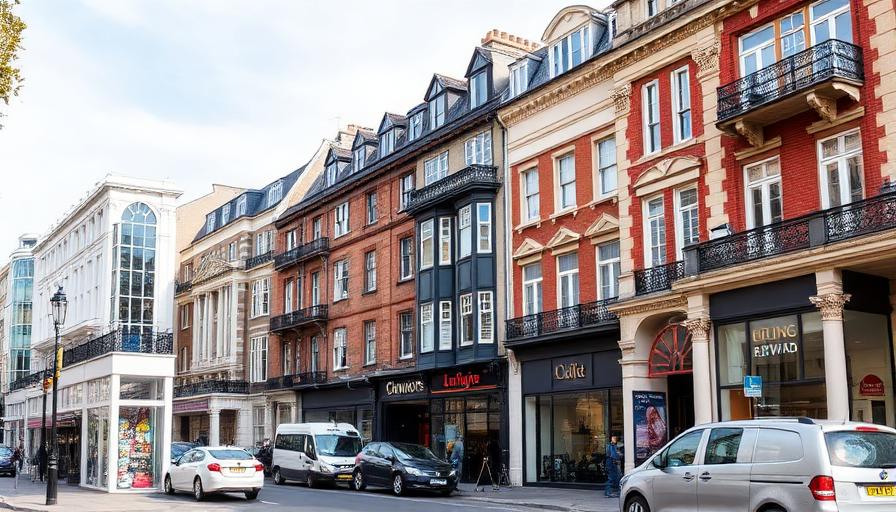
Kensington is simultaneously one of London's most architecturally distinguished boroughs and its third noisiest. The same streets lined with Grade II listed stucco mansions and red-brick townhouses carry a relentless acoustic assault: supercar exhausts reverberating off Portland stone, the District and Circle lines rumbling beneath Kensington High Street, and the A4 Cromwell Road delivering 78dB of unbroken traffic roar into bedroom windows. Our secondary glazing resolves this contradiction with a system so discreet that conservation officers approve it, and so effective that 78dB becomes silence.
The RBKC Listed Building Consent Order: Why Secondary Glazing is the Pre-Approved Choice
Most homeowners in Kensington assume that any modification to a Grade II listed property requires a lengthy, uncertain planning application. For secondary glazing, this is no longer the case.
The LLBCO Advantage
The Royal Borough of Kensington and Chelsea has introduced a Local Listed Building Consent Order (LLBCO) that streamlines approval for specific categories of sympathetic internal works—including secondary glazing installation. This is a game-changer for Grade II listed property owners in W8, W11, and SW7.
Under the LLBCO:
- No individual Listed Building Consent application required for qualifying secondary glazing installations
- Pre-approved criteria define acceptable frame profiles, finishes, and installation methods
- Dramatically reduced timescales—weeks instead of months
- Certainty of outcome—if your installation meets the published criteria, approval is automatic
Our systems are specifically designed to satisfy every LLBCO criterion:
| LLBCO Requirement | Our Specification |
|---|---|
| Fully reversible installation | Zero-damage fixing; complete removal without trace |
| No alteration to original fabric | No drilling into listed timber or masonry |
| Invisible from public highway | 20mm slimline frames within reveal depth |
| Sympathetic material finish | Powder-coated aluminium, any RAL colour match |
| Original window operation maintained | Secondary panels independent of primary windows |
What This Means for You
If you own a Grade II listed property in Kensington, you can proceed with secondary glazing installation without the cost, delay, or uncertainty of a traditional Listed Building Consent application. We handle the LLBCO compliance documentation as part of every project.
For Grade I and Grade II* listed properties, individual consent is still required. We provide full heritage impact assessments and application support, with a 100% approval record across RBKC to date.
Blocking Supercar Noise: Acoustic Solutions for Kensington High Street and Holland Road
Kensington has a noise problem that no other London borough shares: supercars. Every summer, high-performance vehicles from the Gulf States and beyond turn Sloane Street, Brompton Road, and Kensington High Street into an open-air circuit. Revving engines, exhaust pops, and tyre squeal generate impulse noise peaks exceeding 95dB—louder than a pneumatic drill.
RBKC's Response: Acoustic Cameras
The Royal Borough has deployed acoustic cameras on key streets to automatically detect and fine vehicles exceeding noise limits. While this enforcement addresses the source, it does nothing for residents already enduring the noise inside their homes. The cameras confirm what residents already know: Kensington's streets are extraordinarily loud.
Our Response: 10.8mm Stadip Silence
The 10.8mm Stadip Silence acoustic laminate is the internal defence that acoustic cameras cannot provide. This asymmetric glass (6.4mm + acoustic PVB interlayer + 4.4mm) is engineered to neutralise exactly the kind of sharp, high-energy impulse noise that supercars produce:
- 54dB noise reduction (STC 50+) eliminates supercar exhaust peaks entirely
- Acoustic PVB interlayer damps the high-frequency harmonics of revving engines
- Asymmetric construction prevents the coincidence dip that allows specific frequencies through standard glass
- Zero rattle: laminated glass cannot resonate like single-glazed panes
The Full Kensington Noise Profile
| Source | Typical Level | Reduced To | Character |
|---|---|---|---|
| Supercar exhaust (Sloane St) | 90-100dB | 36-46dB | Sharp impulse peaks |
| A4 Cromwell Road | 74-78dB | 24-28dB | Continuous broadband roar |
| Kensington High Street | 68-74dB | 20-24dB | Buses, taxis, delivery vehicles |
| Holland Road / Warwick Road | 66-72dB | 18-22dB | Steady traffic flow |
| Kensington Church Street | 64-70dB | 16-20dB | Delivery vehicles, tourist coaches |
| District and Circle Line | 55-65dB | Under 20dB | Low-frequency rumble and vibration |
Every measurement assumes 10.8mm Stadip Silence glass with a minimum 100mm air gap.
The Underground Factor
The District and Circle lines run directly beneath much of W8 and SW7, generating low-frequency vibration that standard double glazing transmits almost undiminished. The 100mm+ air gap in our secondary glazing system is critical here: it structurally 'decouples' the secondary glass from the vibrating building fabric, breaking the transmission path that carries Underground rumble into your rooms.
This decoupling principle—the physical separation of two independent glass surfaces—is why secondary glazing outperforms triple glazing, replacement sealed units, and every other window-based solution for low-frequency noise. The wider the gap, the deeper the frequencies blocked.
For a detailed technical explanation, see our Traffic Noise Solutions page.
Preserving the Ladbroke Estate: Discreet Frames for Grand Victorian Windows
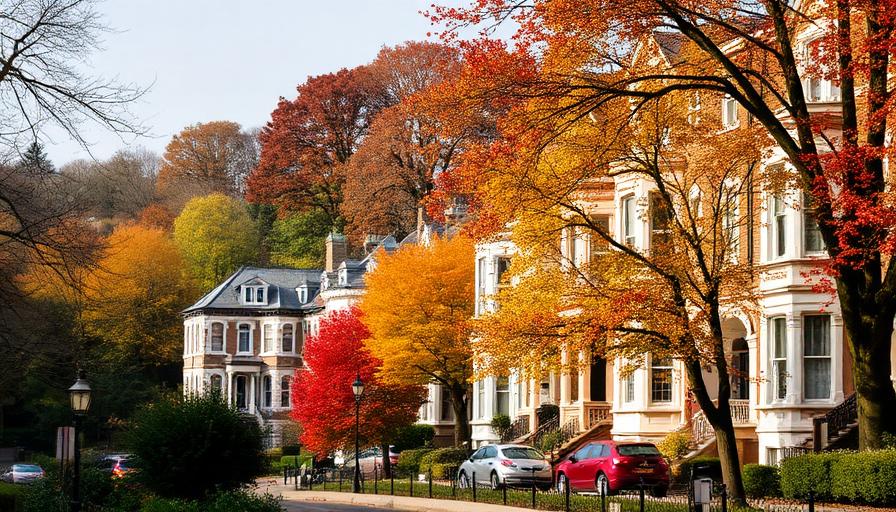
The Ladbroke Estate is Kensington's architectural crown jewel—a sweeping composition of Italianate stucco villas, communal gardens, and crescent-shaped terraces designed by Thomas Allom in the 1840s. These properties, many Grade II listed, present the most demanding secondary glazing brief in London: enormous windows, irreplaceable decorative details, and conservation scrutiny from one of the country's most exacting planning departments.
The Architectural Challenge
| Feature | Typical Dimension | Our Solution |
|---|---|---|
| Full-height sash windows | 1.8m × 2.4m | Engineered vertical sliders with reinforced tracking |
| Curved bay windows | 2.5m radius crescents | Bespoke curved aluminium tracking systems |
| Original crown glass | Hand-blown, irreplaceable | Zero-contact installation; glass preserved behind sealed barrier |
| Decorative glazing bars | 12mm astragal profiles | 20mm frames that sit behind, not across, bar sightlines |
| Deep plaster reveals | 150-200mm | Ideal for maximum acoustic air gap |
The Heritage Match
We have specific experience with the two property types that define Kensington:
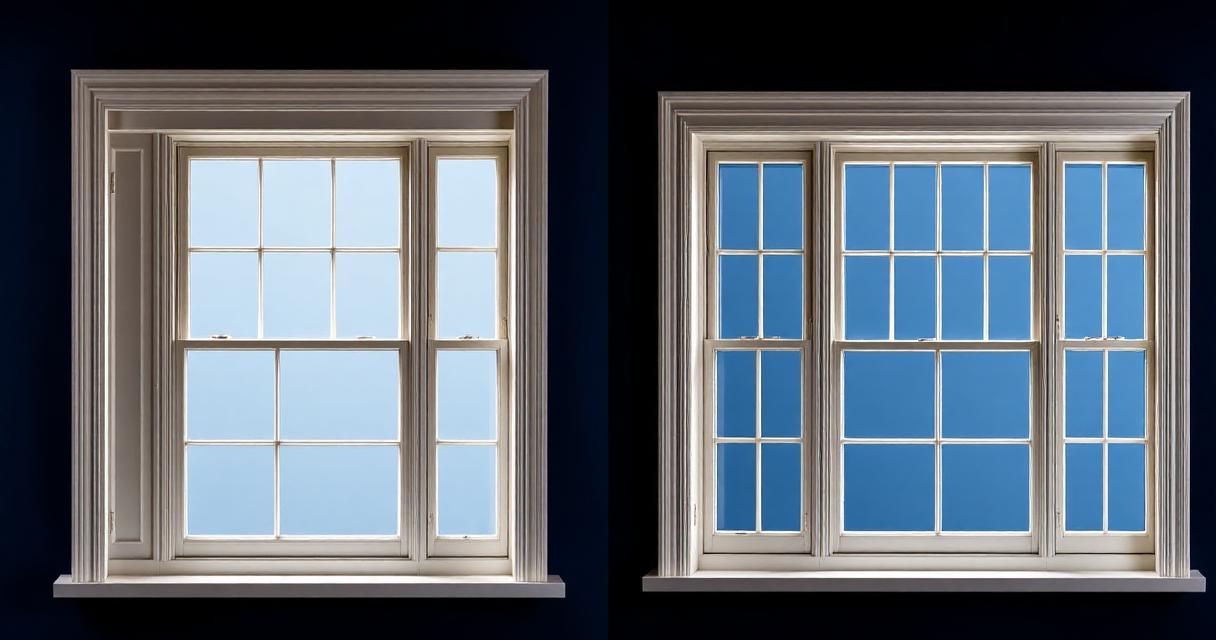
Stucco-Fronted Mansions (Holland Park, Ladbroke Grove, Lansdowne Road) Grand Italianate facades with floor-to-ceiling sash windows, elaborate cornicing, and working shutters. Our vertical slider secondary glazing mirrors the original sash movement so precisely that daily operation feels identical. Frames finished in heritage off-white or Portland stone to disappear against original timber.
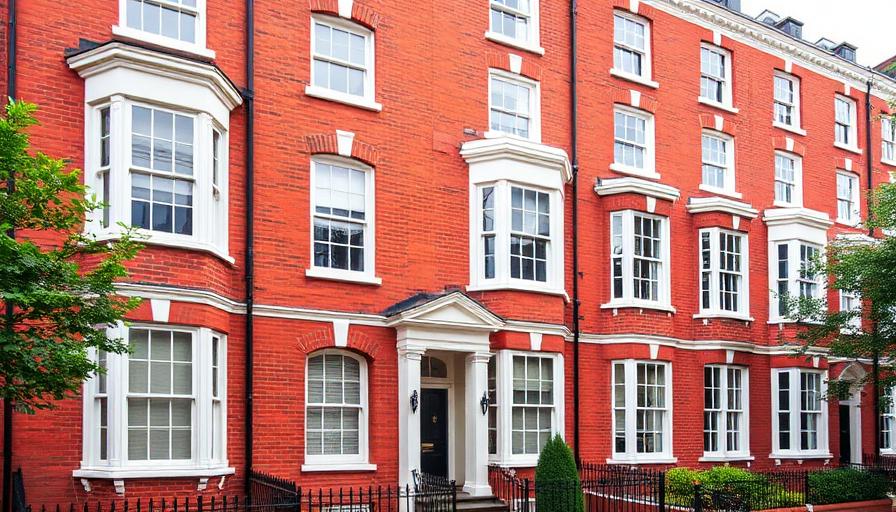
Red-Brick Townhouses (South Kensington, Kensington Court, De Vere Gardens) Late Victorian and Edwardian properties with distinctive red-brick facades, stone dressings, and Queen Anne revival details. Hinged casement secondary panels provide easy cleaning access for upper floors, with frames colour-matched to existing dark-stained timber.
In both cases, the principle is the same: frames so slim they are virtually invisible from the street—essential for Kensington's iconic facades.
Kensington: London's Third Noisiest Borough (And How to Fix It)
RBKC consistently ranks among London's three noisiest boroughs by resident complaints, behind only Westminster and Camden. The density of traffic arteries (A4, A3220, A308), the concentration of commercial activity along Kensington High Street, and the unique supercar phenomenon create an acoustic environment that the borough's Victorian and Edwardian housing stock was never designed to withstand.
The Cost of Noise
Research consistently links chronic noise exposure to:
- Sleep disruption: traffic noise above 45dB internal prevents deep sleep cycles
- Cardiovascular risk: WHO identifies long-term traffic noise as a health hazard
- Property value suppression: 1-2% reduction per 3dB increase in external noise
- Cognitive impact: reduced concentration, increased stress hormones
The Fix: A Three-Layer Defence
For Kensington properties facing the worst noise exposure, we recommend a systematic approach:
- 10.8mm Stadip Silence glass — maximum acoustic performance across all frequencies
- 150mm air gap — structural decoupling for Underground vibration and heavy traffic bass
- Magnetic perimeter seals — eliminating the draft paths that also transmit noise
This combination delivers the full 54dB reduction that transforms a Cromwell Road-facing bedroom from 78dB (louder than a vacuum cleaner) to 24dB (quieter than a rural night).
Before and After: Cromwell Road Property
| Metric | Before | After |
|---|---|---|
| Bedroom noise level | 56dB (constant traffic) | 22dB (whisper quiet) |
| Sleep disturbance events | 12-15 per night | Zero |
| Winter drafts | Severe, 4-6°C temperature drop near windows | Eliminated |
| Annual heating waste | £2,400 lost through single glazing | £840 (65% reduction) |
| Condensation | Daily, damaging original timber | Eliminated |
Technical Specifications
Glass Options
| Glass | Thickness | dB Reduction | Best For |
|---|---|---|---|
| Standard Laminate | 6.4mm | 35-40dB | Side streets, moderate noise |
| Enhanced Laminate | 8.8mm | 40-48dB | Main roads, bus routes |
| Stadip Silence | 10.8mm | 48-54dB | A4, supercars, Underground vibration |
Frame Systems
| System | Profile | Best For |
|---|---|---|
| Vertical Slider | 20mm slimline | Sash windows (Ladbroke Estate) |
| Hinged Casement | 25mm standard | Bay windows, large openings |
| Lift-Out Panel | 15mm minimal | Fixed windows, budget option |
| Horizontal Slider | 20mm slimline | Wide mansion flat openings |
Materials and Guarantee
- Powder-coated marine-grade aluminium frames
- Solid brass or stainless steel hardware
- 10-year comprehensive guarantee on frames, glass, seals, and mechanisms
Investment Guide
Ladbroke Estate Villa (W11)
- Windows: 18-28 | Glass: 10.8mm Stadip Silence
- Investment: £18,000-£38,000 | Per window: £950-£1,400
South Kensington Townhouse (SW7)
- Windows: 14-22 | Glass: 10.8mm Stadip Silence
- Investment: £13,000-£28,000 | Per window: £900-£1,300
Kensington Mansion Flat (W8)
- Windows: 6-12 | Glass: 8.8mm-10.8mm
- Investment: £5,400-£14,400 | Per window: £800-£1,200
Value Context
- W8 average house price: £3.5-8 million
- W11 Ladbroke Estate: £4-12 million
- SW7 townhouses: £2.5-6 million
- Acoustic premium on resale: 3-5% value uplift
Trust and Accreditation
- Which? Trusted Trader — independently vetted for quality and customer satisfaction
- FENSA registered for all glazing installations
- TrustMark certified — Government-endorsed quality standards
- RBKC LLBCO compliant — pre-approved for Grade II listed installations
- 10-year comprehensive guarantee on all components
Check Your Postcode
Enter your Kensington postcode into our Acoustic Calculator to model the noise reduction and thermal improvement achievable for your specific property. The calculator accounts for glass type, air gap depth, and window dimensions to give you a precise performance estimate before we visit.
Book a Discreet On-Site Survey
Our Kensington surveys are conducted with the discretion the borough expects:
- Acoustic measurement — professional noise levels at every window
- Heritage assessment — original window condition and LLBCO eligibility
- Technical specification — glass, frame, and air gap matched to your noise profile
- Planning guidance — LLBCO compliance or Listed Building Consent support
- Detailed quotation — transparent pricing, no obligation
Contact us on +44 (0)20 7060 1572 or WhatsApp to arrange your consultation. We typically visit Kensington properties within 3-5 working days.
Silence is the ultimate luxury. In Kensington, we deliver it.
Sources & References
Government & Regulatory
- Royal Borough of Kensington and Chelsea (RBKC) Planning Department. "Local Listed Building Consent Order (LLBCO) for Windows and Doors". RBKC.gov.uk, 2022.Link
Provides the definitive legal framework for pre-approved secondary glazing installations in Kensington Grade II listed buildings.
- Historic England. "Modifying Historic Windows as Part of Retrofitting Energy-Saving Measures". Historic England Technical Guidance, 2023.Link
Official government guidance confirming that secondary glazing is often the most appropriate method for improving thermal and acoustic performance in heritage assets.
Scientific & Technical
- World Health Organization (WHO). "Environmental Noise Guidelines for the European Region". WHO Regional Office for Europe, 2018.Link
Global authority on the detrimental health impacts of urban traffic noise, establishing the necessity of reducing indoor noise levels to below 30-35dB for sleep.
- The Association of Noise Consultants (ANC). "Acoustic Performance of Secondary Glazing Systems in Urban Environments". ANC Technical Reports, 2020.
A technical study demonstrating how secondary glazing can achieve noise reduction of up to 45dB, far exceeding the performance of standard double glazing.
Industry Standards
- British Standards Institution (BSI). "BS 8233:2014 - Guidance on sound insulation and noise reduction for buildings". BSI Standards Publication, 2014.
The British Standard providing the code of practice for sound insulation and noise reduction for buildings.
- Department for Environment, Food & Rural Affairs (Defra). "Strategic Noise Map: London Agglomeration (Kensington and Chelsea)". Strategic Noise Mapping Data, 2019.Link
Detailed map documenting the specific decibel levels of road and rail noise across Kensington and Chelsea.
Citations generated with AI assistance. Please verify sources independently.
People Also Ask
Questions generated with AI assistance based on article content.
Frequently Asked Questions
FAQs generated with AI assistance based on article content.
Related Articles
Plan Your Kensington Project
Cost Calculators & Planning Tools
Before booking a survey, model the noise reduction, price up your project, and check heritage compliance using our specialist tools — built specifically for London properties like those in Kensington & Chelsea.
Secondary Glazing Cost
Per-window pricing for Kensington from £580. Whole-house estimates included.
Interactive Cost Estimator
Get an instant tailored quote based on window count, glass spec and postcode.
Heritage Sash Calculator
Listed-building cost & compliance estimator — ideal for Kensington & Chelsea conservation areas.
Secondary vs Double Glazing
Side-by-side STC ratings, cost and heritage suitability comparison.
Free Acoustic Calculator
Model the exact decibel reduction for your specific noise problem.
Secondary Glazing London
The complete London-wide hub: every glass spec, borough and listed-building rule.
Next Step
Book a Free Noise Survey
Get a tailored acoustic report and fixed quote for your property. No obligation, surveys across London within 5 working days.