Key Takeaways
- 1Secondary glazing provides essential thermal and acoustic upgrades without violating strict Hampstead Garden Suburb Trust (HGST) design rules.
- 2Slimline secondary frames are invisible from the exterior, preserving the original heritage appearance of NW3 period properties.
- 3Internal installation allows residents to bypass the HGST’s near-total ban on external window replacements or uPVC materials.
- 4The system effectively blocks punishing wind chill and heat loss caused by Hampstead's high elevation and exposed location.
- 5Specialised designs accommodate unique features like Lutyens-designed leaded lights and traditional Arts and Crafts timber casements.
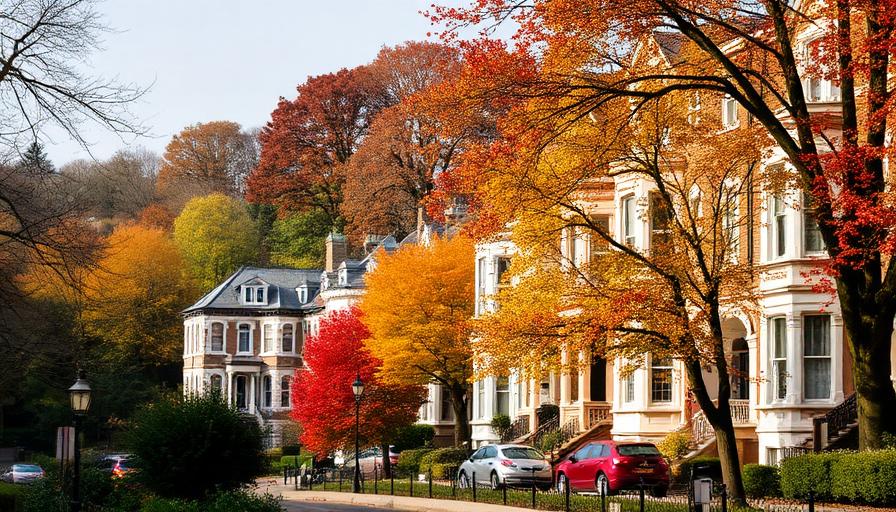
Hampstead sits 134 metres above sea level—one of the highest points in London. The views are extraordinary. The wind chill is punishing. The Victorian and Edwardian homes that line its streets were built for elegance, not for the thermal demands of modern living, and their original single-glazed sash windows haemorrhage heat at a rate that no amount of radiator output can compensate. Our secondary glazing eliminates the drafts, retains the heat, blocks the noise, and does so without altering a single detail of the heritage that makes NW3 irreplaceable.
Navigating the Hampstead Garden Suburb Trust (HGST) Guidelines
The Hampstead Garden Suburb is one of the most architecturally controlled residential estates in Europe. The Hampstead Garden Suburb Trust (HGST) exercises design authority that goes far beyond standard conservation rules, governing everything from window profiles and paint colours to garden fences and satellite dishes. For residents, this means any visible external modification—including window replacement—requires Trust approval that is rarely granted.
Why the HGST Makes Window Replacement Almost Impossible
The Trust's Design Guidance is explicit: original windows must be retained wherever possible. Replacement windows, even in matching timber, require a full application demonstrating that repair is not viable. uPVC is prohibited outright. Aluminium replacement frames are refused in almost all circumstances. The result is that thousands of Suburb residents live with original single-glazed windows that are thermally inadequate and acoustically poor—with no conventional route to improvement.
Secondary Glazing: The Trust-Compliant Solution
Our secondary glazing is the Trust-compliant way to upgrade windows without replacing original timber. Because the system is installed entirely on the interior of the window reveal, it falls outside the HGST's external design control:
| HGST Concern | Our Response |
|---|---|
| External appearance | Zero change—installation invisible from outside |
| Original window retention | Original windows untouched and fully operational |
| Material authenticity | Original timber frames preserved; no replacement materials |
| Reversibility | Complete removal without trace; no damage to original fabric |
| Proportional integrity | 20mm slimline frames sit behind original glazing bars |
Barnet Council Conservation Requirements
The Hampstead Garden Suburb also falls within a Barnet Council Conservation Area, adding a second layer of heritage protection. For listed properties within the Suburb, Listed Building Consent from Barnet is required for internal works affecting special character. Our systems satisfy both HGST design requirements and Barnet conservation policies simultaneously.
For properties in Hampstead Village itself, Camden Council is the conservation authority. We have extensive experience working with both Camden and Barnet planning departments, with a proven approval record across NW3.
Specific Solutions for Suburb Properties
Lutyens-Designed Properties Edwin Lutyens' original houses on Erskine Hill and Hampstead Way feature distinctive casement windows with leaded lights and handmade hardware. Our secondary panels sit behind the leaded glass without obscuring it, providing thermal and acoustic performance while preserving the Arts and Crafts aesthetic that defines these exceptional homes.
Parker and Unwin Cottages The Suburb's characteristic cottage-style properties feature small-pane casement windows with timber mullions. Our lift-out secondary panels provide maximum thermal improvement with minimal visual impact, and can be removed entirely for summer ventilation.
Interwar and Later Properties Post-1920s Suburb homes feature larger window openings more suited to horizontal sliding or hinged casement secondary glazing, with frames colour-matched to existing dark-stained timber.
Eliminating Drafts in Victorian Villas and Edwardian Mansions
Hampstead's elevation is not merely a scenic advantage—it is a thermal liability. Properties at 134 metres experience measurably higher wind speeds than low-lying London, and the prevailing westerly wind drives cold air through every gap in century-old timber sash frames with relentless efficiency. The result is a phenomenon every NW3 resident knows: the cold spot.
The Cold Spot Problem
Stand within a metre of any original sash window in a Hampstead Victorian villa on a January evening. The temperature drops 4-6°C compared to the centre of the room. This is not imagination—it is physics. Single-glazed windows with unsealed timber frames create three simultaneous heat-loss mechanisms:
- Conduction: heat passes directly through 3-4mm of glass (U-value 5.0 W/m²K)
- Radiation: the cold glass surface radiates chill into the room
- Infiltration: gaps around sash rails, meeting rails, and pulley stiles admit cold air directly
The combined effect makes window-adjacent seating unusable, bedside tables uncomfortably cold, and home offices next to windows a daily endurance test from November to March.
How Secondary Glazing Eliminates Every Cold Spot
Our system addresses all three heat-loss mechanisms simultaneously:
| Mechanism | Before | After Secondary Glazing | Improvement |
|---|---|---|---|
| Conduction | U-value 5.0 W/m²K | U-value 1.8 W/m²K | 64% reduction |
| Cold radiation | Glass surface at 4-8°C | Inner glass at 16-19°C | Radiant chill eliminated |
| Air infiltration | 2-5mm gaps around sashes | Magnetic perimeter seals | 100% draft elimination |
| Heat loss per window | 340W | 120W | 65% saving |
| Room temperature uniformity | 4-6°C variation | Under 1°C variation | Cold spots eliminated |
The Financial Impact
For a substantial Hampstead Victorian villa with 16-24 single-glazed windows, draft elimination and thermal improvement translate directly to reduced heating costs:
| Property Type | Annual Heat Waste (Before) | Annual Cost (After) | Annual Saving |
|---|---|---|---|
| Georgian villa (Well Walk, Church Row) | £2,800-£3,600 | £980-£1,260 | £1,820-£2,340 |
| Victorian family house (South Hill Park) | £2,200-£3,000 | £770-£1,050 | £1,430-£1,950 |
| Belsize Park mansion flat | £1,200-£1,800 | £420-£630 | £780-£1,170 |
| Hampstead Garden Suburb cottage | £1,600-£2,400 | £560-£840 | £1,040-£1,560 |
Payback period: typically 5-8 years from heating savings alone. Acoustic comfort and property value uplift are immediate.
Condensation: The Hidden Damage
Single-glazed windows in Hampstead's cold, damp winters produce daily condensation that pools on sills, penetrates timber frames, and causes progressive rot that threatens the structural integrity of irreplaceable heritage windows. Secondary glazing eliminates condensation by keeping the inner glass surface warm—above the dew point—preventing moisture formation entirely. This preservation benefit alone justifies the investment for many listed property owners.
Soundproofing for Heath Street and Belsize Lane
Despite its village atmosphere, Hampstead faces acoustic challenges that are intensifying year on year. The narrow streets that give NW3 its charm also amplify and contain noise, creating concentrated sound corridors that affect adjacent properties disproportionately.
The NW3 Noise Map
| Source | Typical Level | Peak Hours | Character |
|---|---|---|---|
| Heath Street | 68-74dB | 8-9:30am, 3-4pm | School-run surges, delivery vans |
| Hampstead High Street | 66-72dB | 9am-6pm | Buses, taxis, village bustle |
| Finchley Road corridor | 75-82dB | 7am-8pm | Heavy traffic, HGVs, continuous roar |
| Belsize Lane / Haverstock Hill | 65-72dB | 8am-7pm | Bus routes, school traffic |
| Northern Line (underground) | 50-62dB | 5:30am-12:30am | Low-frequency rumble |
| Overground / Thameslink | 60-68dB | 6am-11pm | Surface rail, passing trains |
The School-Run Phenomenon
Hampstead's concentration of outstanding schools—UCS, South Hampstead High, Devonshire House, The Hall, Heathside—creates intense twice-daily traffic surges through residential streets that were designed for horse-drawn carriages. Engines idling on Flask Walk, doors slamming on Gayton Road, the amplified chatter bouncing off hard Georgian walls: this is the acoustic reality of 8:15am in NW3.
Our Acoustic Solution
10.8mm Stadip Silence glass with a 100-150mm air gap delivers up to 54dB of noise reduction (STC 50+). The asymmetric laminate (6.4mm + acoustic PVB interlayer + 4.4mm) addresses the full NW3 frequency spectrum:
- Low-frequency Northern Line rumble: the 100mm+ air gap decouples the secondary glass from building-borne vibration
- Mid-frequency traffic roar: the acoustic PVB interlayer damps the dominant frequencies of engine and tyre noise
- High-frequency school-run chaos: the mass of 10.8mm glass blocks voices, door slams, and horn blasts
For the full science behind acoustic decoupling, visit our Traffic Noise Solutions page.
Before and After: Belsize Park Gardens
| Metric | Before | After |
|---|---|---|
| Street-facing bedroom | 58dB at school-run peak | 24dB (quieter than a library) |
| Home office concentration | Disrupted 8am-10am daily | Undisturbed throughout the day |
| Sleep disturbance | Woken by 7am deliveries | No audible intrusion |
| Winter drafts | Severe, curtains moving | Eliminated completely |
Thermal Efficiency: Reducing Heat Loss in Hampstead's Period Homes
This is the section that changes the economics of living in a Hampstead period home. The thermal performance of secondary glazing is not a secondary benefit—for many NW3 homeowners, it is the primary motivation, with acoustic improvement as a welcome bonus.
The Numbers That Matter
| Specification | Value |
|---|---|
| Heat loss reduction | Up to 65% through windows |
| U-value improvement | 5.0 → 1.8 W/m²K |
| Draft elimination | 100% via magnetic perimeter seals |
| EPC improvement | Typically one band (e.g., E→D or D→C) |
| Condensation | Eliminated—warm inner surface above dew point |
| UV protection | 99% reduction, protecting furnishings and artwork |
Why It Matters More in Hampstead
Three factors make thermal performance disproportionately valuable in NW3:
- Elevation: at 134m, Hampstead experiences wind speeds 15-20% higher than central London, increasing convective heat loss through gaps around windows
- Window-to-wall ratio: Georgian and Victorian design prioritised light—windows comprise 30-40% of the facade, making them the dominant source of heat loss
- Property scale: with 3-3.5m ceilings and 3,000-6,000 sq ft floor areas, the volume of air to be heated is enormous, and every degree of heat lost through windows is expensive to replace
EPC Compliance
With Minimum Energy Efficiency Standards (MEES) increasingly relevant for rental properties, and buyer expectations rising, EPC improvement is a tangible asset. Secondary glazing typically delivers a one-band EPC uplift—achieved without the external alterations that conservation and Trust rules prohibit.
Belsize Park: Curved Bays and Non-Standard Windows
Belsize Park's grand stucco-fronted properties present some of NW3's most technically demanding glazing challenges. The sweeping curved bay windows of Belsize Park Gardens, the arched fanlights of Eton Avenue, and the oversized sash windows of Adamson Road all require bespoke engineering that off-the-shelf solutions cannot provide.
Our Bespoke Capabilities
| Window Type | Challenge | Our Solution |
|---|---|---|
| Curved bay windows | Radius tracking for 3-sided projection | Bespoke curved aluminium tracking, CNC-machined to exact radius |
| Arched fanlights | Non-rectangular glazing geometry | Individually templated arched panels with radius-matched frames |
| Oversized sashes | 1.8m × 2.4m+ requiring structural support | Reinforced vertical slider frames with concealed counterbalances |
| Decorative leaded lights | Visual preservation of stained glass | Lift-out panels positioned behind decorative glazing without contact |
| Bay window seats | Integration with built-in seating | Shallow-profile horizontal sliders maintaining seat functionality |
Every non-standard window is surveyed, templated, and manufactured individually. There is no compromise on fit, no visible gap, and no concession to the mass-produced.
Investment Guide
Georgian Villa (Well Walk, Church Row, Flask Walk)
- Windows: 16-24 | Glass: 10.8mm Stadip Silence
- Investment: £16,000-£34,000 | Annual heating saving: £1,820-£2,340
Victorian Family House (South Hill Park, Belsize Park Gardens)
- Windows: 12-18 | Glass: 8.8mm-10.8mm
- Investment: £10,800-£23,400 | Annual heating saving: £1,430-£1,950
Belsize Park Mansion Flat
- Windows: 6-10 | Glass: 6.4mm-8.8mm
- Investment: £4,800-£9,500 | Annual heating saving: £780-£1,170
Hampstead Garden Suburb Property
- Windows: 10-16 | Glass: 8.8mm, timber-effect frames
- Investment: £9,000-£19,200 | Annual heating saving: £1,040-£1,560
Value Context
- Hampstead Village average: £3-8 million
- Well Walk / Church Row: £5-15 million
- Belsize Park family houses: £2-5 million
- Hampstead Garden Suburb: £2-6 million
- Acoustic/thermal premium on resale: 3-5% uplift
Trust and Accreditation
- Which? Trusted Trader — independently vetted for quality and satisfaction
- FENSA registered for all glazing installations
- TrustMark certified — Government-endorsed quality standards
- HGST-compliant — designed to satisfy Hampstead Garden Suburb Trust guidelines
- 10-year comprehensive guarantee on all components
- Cross-borough expertise: Hampstead, Kensington, and Chelsea
Calculate Your Savings
Use our Acoustic Calculator to model the noise reduction and thermal improvement for your NW3 property—accounting for glass type, air gap depth, window dimensions, and orientation.
Protect Your NW3 Heritage Home – Get a Quote
Our NW3 surveys combine acoustic and thermal assessment in a single visit:
- Acoustic measurement — professional noise levels at every window
- Thermal imaging — infrared survey identifying heat loss and draft paths
- Heritage evaluation — window condition, HGST/conservation implications
- Bespoke specification — glass, frame, and air gap recommendations for your property
- Detailed quotation — transparent pricing with no obligation
Contact us on +44 (0)20 7060 1572 or WhatsApp to arrange your survey. We typically visit NW3 properties within 5 working days.
Your heritage home deserves warmth, silence, and preservation in equal measure. We deliver all three.
Sources & References
Government & Regulatory
- Historic England. "Traditional Windows: Their Care, Repair and Upgrading". Historic England Guidance, 2017.Link
Provides definitive national guidance on why secondary glazing is the preferred thermal upgrade for heritage assets over window replacement.
- Hampstead Garden Suburb Trust. "Design Guidance Documents for Hampstead Garden Suburb". HGST Design Guidance, 2023.Link
Official design guidelines for NW3 residents detailing the strict requirements for retaining original window fabric and the limitations on external alterations.
- London Borough of Barnet. "Hampstead Garden Suburb Conservation Area Character Appraisal". Planning Policy Documents, 2010.Link
Outlines the conservation area policies for NW3, emphasizing the protection of the character and appearance of the London Borough of Barnet's heritage assets.
Scientific & Technical
- Baker, P.. "Thermal Performance of Traditional Windows and Low-cost Energy-saving Measures". Glasgow Caledonian University / Historic Scotland, 2008.Link
A technical study demonstrating that secondary glazing can reduce heat loss through single-glazed windows by over 60%.
- World Health Organization. "WHO Housing and Health Guidelines". WHO Guidelines, 2018.Link
Establishes the link between poor thermal insulation in housing and negative health outcomes, supporting the need for effective draft proofing and glazing.
Industry Standards
- British Standards Institution. "Guidance on sound insulation and noise reduction for buildings". BS 8233:2014, 2014.
The British Standard providing specific recommendations for the use of secondary glazing to improve the sound insulation of existing windows.
Citations generated with AI assistance. Please verify sources independently.
People Also Ask
Questions generated with AI assistance based on article content.
Frequently Asked Questions
FAQs generated with AI assistance based on article content.
Related Articles
Plan Your Hampstead & Belsize Park Project
Cost Calculators & Planning Tools
Before booking a survey, model the noise reduction, price up your project, and check heritage compliance using our specialist tools — built specifically for London properties like those in Camden.
Secondary Glazing Cost
Per-window pricing for Hampstead & Belsize Park from £580. Whole-house estimates included.
Interactive Cost Estimator
Get an instant tailored quote based on window count, glass spec and postcode.
Heritage Sash Calculator
Listed-building cost & compliance estimator — ideal for Camden conservation areas.
Secondary vs Double Glazing
Side-by-side STC ratings, cost and heritage suitability comparison.
Free Acoustic Calculator
Model the exact decibel reduction for your specific noise problem.
Secondary Glazing London
The complete London-wide hub: every glass spec, borough and listed-building rule.
Next Step
Book a Free Noise Survey
Get a tailored acoustic report and fixed quote for your property. No obligation, surveys across London within 5 working days.