Secondary Glazing in St John's Wood & Primrose Hill: Quiet Luxury for NW8's Finest Villas
Key Takeaways
- 1Secondary glazing provides effective noise reduction without altering the external appearance of heritage villas in NW8.
- 2Conservation officers in Westminster and Camden typically approve secondary glazing as a discreet, reversible internal improvement.
- 3Acoustic glass effectively mitigates heavy traffic noise from major arterial routes like Finchley Road and Wellington Road.
- 4Secondary glazing addresses modern living issues like Jubilee Line vibrations and drafts while preserving original sash windows.
Secondary Glazing in St John's Wood & Primrose Hill: Quiet Luxury for NW8's Finest Villas
St John's Wood has always been London's best-kept secret—if you can call a neighbourhood where a semi-detached villa costs north of £5 million a "secret." It's the rare corner of the city that genuinely feels like a village: tree-lined avenues, detached houses with actual gardens, the sound of leather on willow drifting from Lord's on a summer afternoon.
Primrose Hill, just to the east, trades the cricket for a panoramic view of the entire London skyline and a high street so charming it practically hums with smugness. The pastel-painted Regency terraces along Chalcot Crescent have launched a thousand Instagram posts.
But here's the thing nobody photographs: the draft whistling through a six-foot sash window at 2am. The rumble of the Jubilee Line beneath Hamilton Terrace. The relentless hum of Finchley Road carrying 50,000 vehicles a day past the back of your garden.
Secondary glazing brings the quiet luxury that NW8 deserves—and it does it without altering a single detail of the architecture that makes this neighbourhood so special.
The NW8 Heritage Challenge: Protecting the Villa Tradition
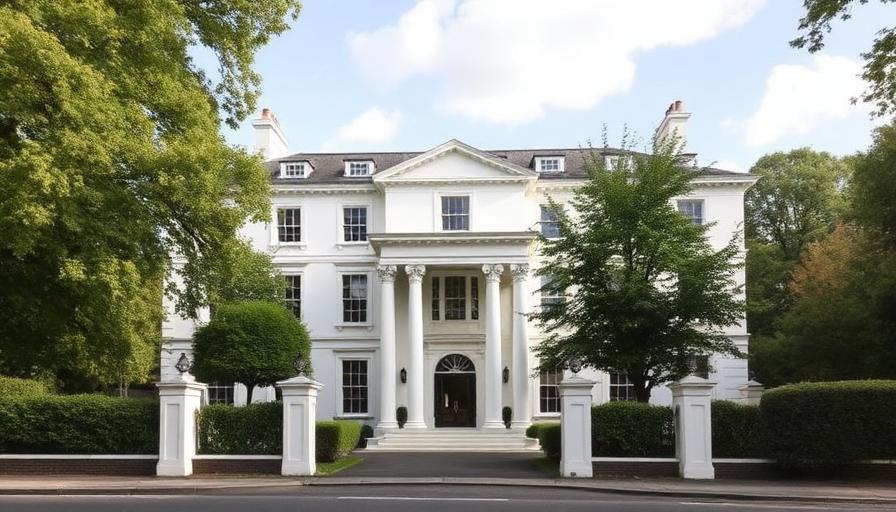
St John's Wood is architecturally unique in London. While most of the city was built as terraces, NW8 developed as a neighbourhood of detached and semi-detached villas—spacious, individual, set in their own grounds. It's the reason the area feels so different from Hampstead or Mayfair, and it's why the heritage protections are so carefully enforced.
The neighbourhood straddles two local authorities—Camden to the east (covering Primrose Hill and parts of the southern fringe) and Westminster to the west and south. Both maintain strict conservation area designations across much of NW8, and the concentration of Grade II listed properties is among the highest in North London.
For these villas, replacing original windows with double glazing is almost always problematic. The windows aren't just functional—they're defining architectural features. The proportions, the glazing bar patterns, the way the sashes sit within deep brick or stucco reveals—all of it contributes to the character that the listing is designed to protect.
Secondary glazing works because it respects every one of these constraints:
- Fully internal. Your original windows remain completely untouched. The street-facing appearance doesn't change by a millimetre.
- Completely reversible. No permanent fixings into original timber or stonework. Remove the panels and there's zero evidence of the installation.
- Conservation-officer friendly. Both Camden and Westminster recognise secondary glazing as an internal improvement rather than an external alteration. It's the path of least resistance through the planning system.
We've worked on properties along Avenue Road, Hamilton Terrace, Acacia Road, and throughout the Primrose Hill conservation area. The local conservation teams know our installations. They know they're sympathetic, discreet, and fully reversible. That makes the planning conversation very short indeed.
Silencing the City Hum: Acoustic Engineering for NW8
St John's Wood's village atmosphere is remarkable given what surrounds it. To the west, Finchley Road is one of the busiest arterial routes in North London—a constant river of traffic connecting Swiss Cottage to Golders Green. To the south, Wellington Road and Park Road carry heavy volumes towards Marylebone and the West End. The A41 clips the eastern edge of the neighbourhood.
And running beneath it all, the Jubilee Line traces a path from Baker Street through St John's Wood station and onwards to Swiss Cottage. If your property sits above the tunnel alignment—common along Acacia Road and parts of Marlborough Place—you'll recognise the low-frequency vibration that surfaces during peak hours.
Then there's Abbey Road. Yes, that Abbey Road. The zebra crossing outside the studios draws a steady stream of tourists, and while the noise isn't industrial, the stop-start traffic, the car horns, and the general commotion are a far cry from the quiet residential street the Beatles walked across in 1969.
Our 10.8mm Stadip Silence acoustic laminate glass addresses every layer of NW8's noise profile:
- 54dB noise reduction (STC 50+) with the complete system
- 150mm air gap creates structural decoupling between your original glass and the secondary panel—critical for neutralising the low-frequency rumble of Finchley Road traffic and Jubilee Line vibration
- Asymmetric construction (6.4mm + 4.4mm) disrupts sound transmission across the full frequency spectrum
In practical terms: if Finchley Road registers 76dB at your garden wall during rush hour, your interior drops to approximately 22dB with our system installed. That's quieter than a whisper. That's the silence you assumed you were buying when you chose NW8—and now you actually have it.
For properties on Abbey Road itself, we've developed particular expertise in managing the intermittent noise peaks—horns, revving engines, groups of tourists—that punctuate an otherwise residential soundscape. The PVB interlayer in our Stadip Silence glass absorbs these sudden spikes rather than transmitting them, smoothing the acoustic profile inside your home.
Insulating Large Detached Villas: The Thermal Envelope
Here's a number that makes NW8 homeowners wince: the average St John's Wood villa has 25-35 windows. Some of the grander properties along Hamilton Terrace and Avenue Road have closer to 50. Every single one of those original sash windows is a point of heat loss.
When your home is 4,000 to 8,000 square feet across three or four floors, with ceilings pushing 3.5 metres, heating costs aren't a minor line item. They're a significant household expense. And most of that expense is literally going out the window—single-glazed original sashes with U-values around 5.0 W/m²K are about as thermally efficient as a colander.
Secondary glazing creates what we call a thermal envelope—a continuous insulating layer across every window in the property:
65% reduction in heat loss. Each window's U-value drops from approximately 5.0 to 1.8 W/m²K. Across 30 windows, the cumulative effect is transformative.
Complete draft elimination. Our magnetic perimeter seals create an airtight closure around every secondary panel. The micro-draughts that seep through aged sash joints—the ones that make curtains twitch on a still day—disappear entirely.
Condensation control. By keeping the inner glass surface warmer, secondary glazing dramatically reduces the condensation that damages original timber frames and surrounding plasterwork. In listed properties, preventing moisture damage to original fabric is as important as any comfort benefit.
Even temperature distribution. Without cold air cascading from windows, your heating system works efficiently. Rooms maintain consistent temperatures from floor to ceiling. The "cold zone" within two metres of the windows—a universal complaint in large period properties—simply ceases to exist.
Homeowners in NW8 typically report heating bill reductions of 20-30% after full-property installation. In a villa where winter energy costs might run to £980-£1,400 per month, that's a saving of £100-240 every month through the cold season. The investment pays for itself faster than you'd think.
Boutique Aesthetics for Primrose Hill: Invisible by Design
Primrose Hill has a look, and everyone who lives there knows it. The pastel-painted Regency terraces of Chalcot Crescent and Chalcot Square. The elegant stucco of Regent's Park Road. The colourful shopfronts along the high street. This is a neighbourhood where aesthetics aren't just appreciated—they're practically a religion.
Adding secondary glazing to a Primrose Hill interior requires a level of finesse that standard products simply can't deliver:
20mm slimline profiles sit within the window reveal, aligned with existing sash bars so precisely that they read as part of the original window rather than an addition to it.
Exact colour matching to any RAL reference, Farrow & Ball shade, or Little Greene palette. If your window surrounds are painted in Hague Blue or your joinery is finished in Wimborne White, our frames match it. Not approximately. Exactly. The installation dissolves into the interior rather than announcing itself.
Bespoke panel geometry for every window configuration. Primrose Hill's Regency terraces feature elegant, tall sashes with slim glazing bars. Our panels mirror these proportions and profiles, maintaining the architectural rhythm of the original fenestration.
Vertical sliding operation replicates the movement of your original sashes. Lift the secondary panel, access the original window for cleaning or ventilation, close it again. Seamless, intuitive, and—crucially—silent in operation.
For properties overlooking Primrose Hill park, where the view is half the reason you bought the house, visual clarity is paramount. Our glass delivers optical performance that's indistinguishable from having no secondary panel at all. The park stays pin-sharp. The noise stays outside.
Investment Guide: St John's Wood and Primrose Hill
| Property Type | Windows | Typical Investment | Annual Energy Saving |
|---|---|---|---|
| Primrose Hill terrace | 8-12 | £5,600 – £8,400 | £440 – £660 |
| Semi-detached villa (NW8) | 14-20 | £9,800 – £14,000 | £760 – £1,080 |
| Detached villa (Hamilton Terrace) | 22-35 | £15,400 – £24,500 | £1,180 – £1,880 |
| Mansion flat (Avenue Road) | 6-10 | £4,200 – £7,000 | £320 – £540 |
Prices include survey, bespoke manufacture, and installation. VAT applies.
NW8 property values are driven by the combination of village character and prime London location. Secondary glazing enhances both—preserving the period character that buyers covet while adding the modern comfort they expect. Estate agents consistently note a 3-5% valuation uplift for properties with sympathetic acoustic and thermal upgrades.
From the Cricket Ground to the Hilltop—Bring Silence to Your Home
Whether you're in a grand villa on Hamilton Terrace or a pastel-painted terrace overlooking the Hill, your NW8 home deserves windows that perform as beautifully as they look. Our secondary glazing preserves every detail of your original architecture while delivering the warmth, silence, and energy efficiency that modern living demands.
No planning battles. No heritage compromises. No visible changes to the streetscape that makes this neighbourhood one of London's finest. Just a better home.
Trusted by homeowners across NW8, NW1, and NW3. Fully compliant with Camden and Westminster conservation area requirements. Free survey and no-obligation quote for all St John's Wood and Primrose Hill properties.
Related Resources:
- Sash Window Solutions — Engineered for period properties
- Acoustic Calculator — Quantify your noise reduction potential
- Hampstead Guide — More heritage solutions for North London
Sources & References
Government & Regulatory
- Historic England. "Traditional Windows: Their Care, Repair and Upgrading". Historic England Advice Note 2: Making Changes to Heritage Assets, 2017.Link
Provides essential guidance on the use of secondary glazing as a preferred method for improving thermal and acoustic performance in listed buildings.
- Westminster City Council. "Policy 39: Heritage and Conservation". City Plan 2019-2040, 2021.Link
Outlines local planning policy and the requirement to maintain the 'special architectural or historic interest' of listed buildings in Westminster.
- London Borough of Camden. "CPG Heritage: Conservation Areas and Listed Buildings". Camden Planning Guidance (CPG), 2021.Link
Details the specific protections for heritage assets within the Primrose Hill and St John's Wood areas under Camden's jurisdiction.
Scientific & Technical
- BRE (Building Research Establishment). "Sound Insulation of Windows". BRE Information Paper IP 12/89, 1989.
A definitive study demonstrating that secondary glazing can reduce noise ingress by over 45dB, far exceeding the performance of standard double glazing.
- World Health Organization (WHO). "Environmental Noise Guidelines for the European Region". Regional Office for Europe, 2018.Link
Provides international guidelines on acceptable noise levels in residential environments, supporting the need for soundproofing in high-traffic urban areas like Finchley Road.
Industry Standards
- British Standards Institution (BSI). "Guidance on sound insulation and noise reduction for buildings". BS 8233:2014, 2014.
The UK standard for sound insulation in buildings, providing the benchmarks for the acoustic performance described in the article.
Citations generated with AI assistance. Please verify sources independently.
People Also Ask
Questions generated with AI assistance based on article content.
Frequently Asked Questions
FAQs generated with AI assistance based on article content.
Related Articles
Plan Your St John's Wood & Primrose Hill Project
Cost Calculators & Planning Tools
Before booking a survey, model the noise reduction, price up your project, and check heritage compliance using our specialist tools — built specifically for London properties like those in Westminster & Camden.
Secondary Glazing Cost
Per-window pricing for St John's Wood & Primrose Hill from £580. Whole-house estimates included.
Interactive Cost Estimator
Get an instant tailored quote based on window count, glass spec and postcode.
Heritage Sash Calculator
Listed-building cost & compliance estimator — ideal for Westminster & Camden conservation areas.
Secondary vs Double Glazing
Side-by-side STC ratings, cost and heritage suitability comparison.
Free Acoustic Calculator
Model the exact decibel reduction for your specific noise problem.
Secondary Glazing London
The complete London-wide hub: every glass spec, borough and listed-building rule.
Next Step
Book a Free Noise Survey
Get a tailored acoustic report and fixed quote for your property. No obligation, surveys across London within 5 working days.