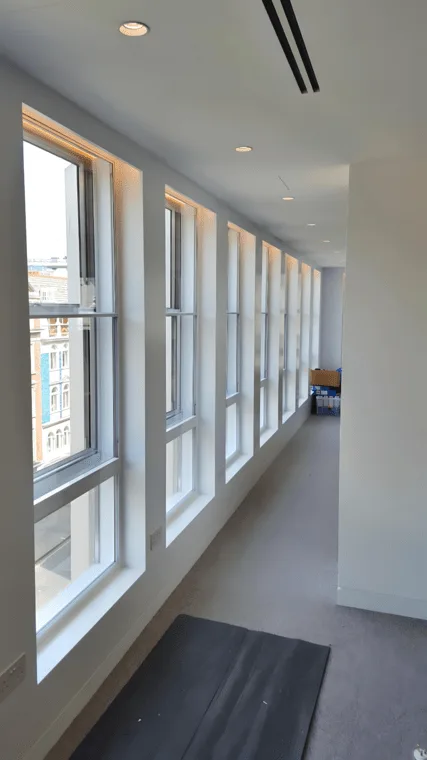
Tired of traffic noise, barking dogs, or noisy neighbours ruining your peace at home? You're not alone. Window soundproofing is one of the most effective ways to create a quieter living space, but with so many methods available, it's easy to get confused about what actually works.
The truth is, not all soundproofing solutions are created equal. Some methods can reduce noise by 50-80%, while others barely make a dent. After testing various approaches and working with hundreds of homeowners, we've ranked the 7 most effective window soundproofing methods from best to worst.
Here's what actually works (and what doesn't) when it comes to keeping unwanted noise out.
Understanding Window Noise: Why Windows Are the Weak Link
Before diving into solutions, let's understand why windows let so much noise through. Glass is naturally poor at blocking sound – especially single-pane windows. Sound travels through:
- Gaps and cracks around window frames (biggest culprit)
- Glass vibration from sound waves hitting the surface
- Thin glass that doesn't have enough mass to block noise
- Poor window construction with minimal insulation
Most homes have windows with Sound Transmission Class (STC) ratings of just 18-25. To put that in perspective, you need an STC rating of at least 40-50 to significantly reduce street noise.
Now, let's look at the 7 proven methods to fix this problem.
Method 1: Secondary Glazing (Most Effective - 70-80% Noise Reduction)
Effectiveness Rating: 9/10 Cost: £300-800 per window Installation: Professional recommended
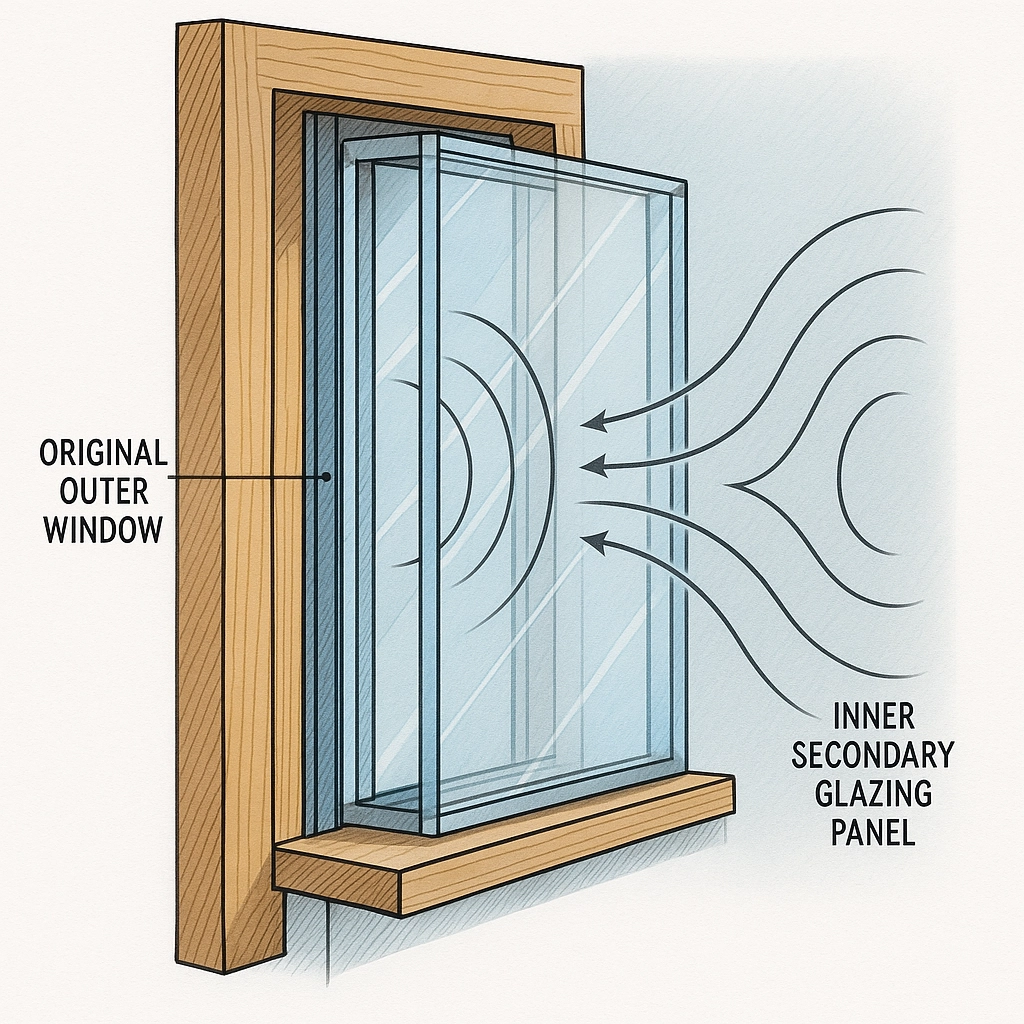
Secondary glazing is hands-down the most effective window soundproofing solution. It involves installing a second window inside your existing window frame, creating an air gap that dramatically reduces sound transmission.
Why Secondary Glazing Works So Well
- Dual barrier system: Two layers of glass with an air gap between
- Stops vibration transfer: Sound can't easily jump between the two panes
- Maintains window function: You can still open and close your original window
- No building alterations: Fits inside existing frames
Performance Data
Secondary glazing can achieve:
- STC ratings of 45-55 (compared to 18-25 for single glazing)
- 70-80% noise reduction when properly installed
- Reduction of 15-20 decibels (equivalent to halving perceived noise)
Who It's Best For
- Homeowners wanting permanent, maximum noise reduction
- Listed buildings where window replacement isn't allowed
- Properties with good-condition existing windows
- Anyone dealing with serious noise issues (busy roads, airports, train lines)
Method 2: Acoustic Window Film (Moderate Effectiveness - 30-40% Noise Reduction)
Effectiveness Rating: 6/10 Cost: £15-50 per window Installation: DIY friendly
Acoustic window film is a thick, transparent film that adds mass to your existing glass. While not as effective as secondary glazing, it's a budget-friendly option that can provide noticeable improvement.
How It Works
The film adds a dampening layer to the glass, reducing vibration and absorbing some sound frequencies. Modern acoustic films can be virtually invisible once applied.
Pros and Cons
Pros:
- Very affordable
- Easy DIY installation
- Doesn't change window appearance
- Can be combined with other methods
Cons:
- Limited effectiveness compared to other methods
- Won't help with gaps around frames
- May affect window clarity slightly
- Not suitable for very noisy environments
Method 3: Heavy Acoustic Curtains (Good for High Frequencies - 40-50% Reduction)
Effectiveness Rating: 7/10 Cost: £50-300 per window Installation: DIY
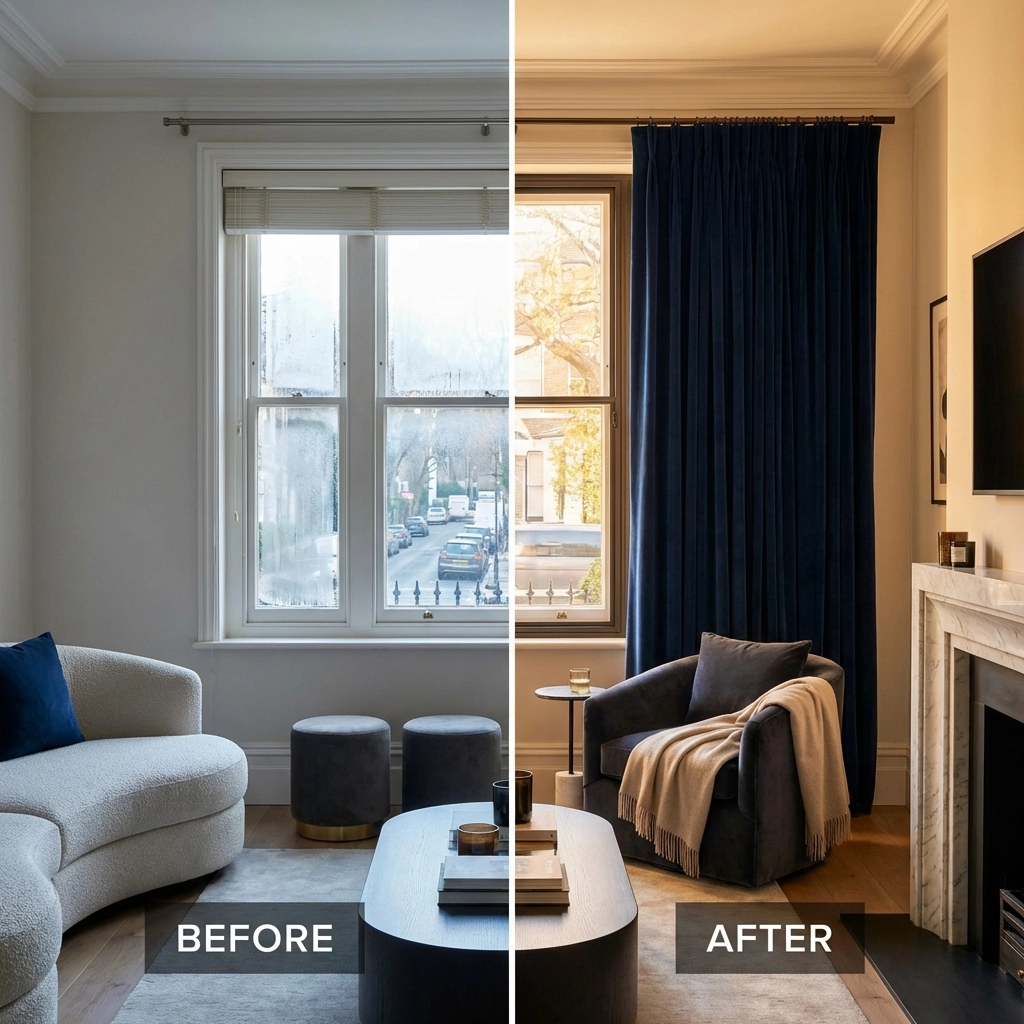
Quality acoustic curtains made from dense, heavy materials can significantly reduce noise, especially higher frequencies like voices and traffic sounds.
What Makes Acoustic Curtains Effective
- Mass: Heavy fabrics absorb sound energy
- Multiple layers: Creates air pockets that trap sound
- Tight seal: Extends beyond window frame to prevent sound leakage
Key Features to Look For
- Weight of at least 3-5kg per square meter
- Multiple fabric layers with different densities
- Thermal backing for additional mass
- Ability to mount close to wall for better seal
Best Acoustic Curtain Options
- NICETOWN Thermal Blackout Curtains: Good budget option
- Moondream Sound Absorbing Curtains: Specifically designed for noise reduction
- Custom-made options: Best performance, higher cost
Method 4: Window Seals and Weatherstripping (Essential First Step - 20-30% Improvement)
Effectiveness Rating: 5/10 Cost: £10-50 per window Installation: Easy DIY
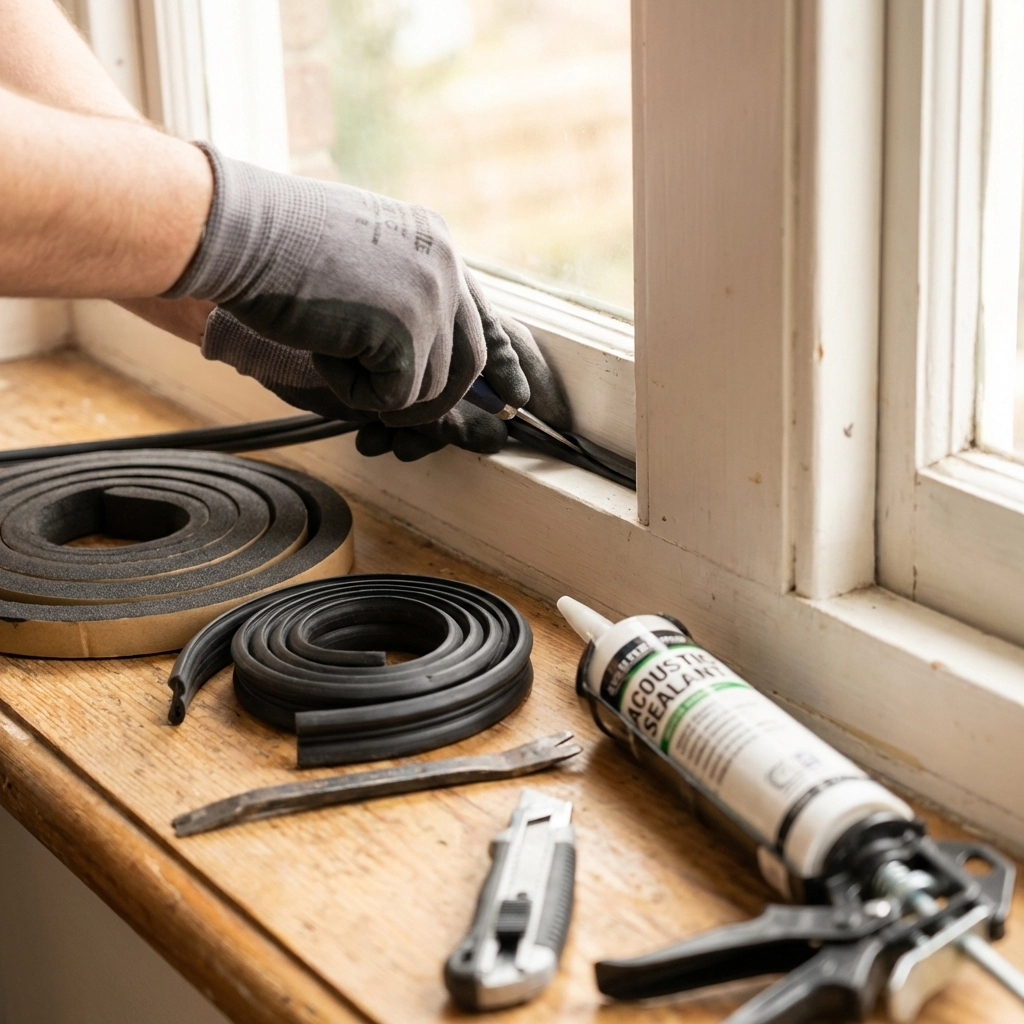
Before investing in expensive solutions, seal those gaps! This should be your first step regardless of what other methods you choose.
Types of Window Sealing
Acoustic Caulk:
- Permanently seals cracks and gaps
- Remains flexible to prevent cracking
- Best for non-opening windows
Weatherstripping:
- Foam, rubber, or vinyl strips
- Good for windows that need to open
- Choose high-density materials for better soundproofing
Draft Excluder Tape:
- Self-adhesive strips for quick fixes
- Multiple thickness options available
- Easy to replace when worn
Where to Apply Seals
- Around the entire window frame perimeter
- Between moving window parts (sash, casement)
- Where window meets wall
- Any visible gaps or cracks
Method 5: Window Plugs (Temporary Solution - 60-70% Reduction)
Effectiveness Rating: 8/10 (when in use) Cost: £20-80 per window Installation: DIY
Window plugs are removable inserts made from acoustic materials that completely block the window opening. They're highly effective but eliminate light and ventilation.
How Window Plugs Work
- Dense foam or fiberglass core wrapped in fabric
- Fits snugly into window frame
- Creates complete acoustic barrier
- Can be removed when not needed
When Window Plugs Make Sense
- Bedrooms during sleeping hours
- Home studios or practice rooms
- Temporary noise situations (construction nearby)
- Windows you rarely use anyway
DIY Window Plug Construction
- Measure window opening precisely
- Cut acoustic foam or rock wool to fit
- Wrap in acoustic fabric or dense cloth
- Add handles for easy removal
- Ensure tight fit with no gaps
Method 6: Double or Triple Glazing Replacement (Professional Solution - 50-60% Reduction)
Effectiveness Rating: 8/10 Cost: £400-1,200 per window Installation: Professional required
Replacing single-pane windows with double or triple glazing can dramatically improve soundproofing, though it's more expensive than secondary glazing.
Double Glazing Performance
- Standard double glazing: STC 28-32
- Acoustic double glazing: STC 35-40
- Laminated glass options: STC 40-45
Triple Glazing Performance
- Standard triple glazing: STC 33-38
- Acoustic triple glazing: STC 40-50
When Replacement Makes Sense
- Windows are old and need replacing anyway
- You want improved energy efficiency too
- Building regulations require new windows
- You can't install secondary glazing for some reason
Acoustic Glass Options
Laminated Glass:
- Plastic interlayer dampens vibration
- Excellent for low-frequency noise
- Safety benefit (won't shatter)
Asymmetric Glass:
- Different thickness panes (e.g., 6mm + 10mm)
- Reduces resonance frequency
- Better acoustic performance
Method 7: Combination Approaches (Maximum Effectiveness - 80-90% Reduction)
Effectiveness Rating: 10/10 Cost: Varies by combination Installation: Mix of DIY and professional
The most effective soundproofing often combines multiple methods. Here are proven combinations:
Combination 1: Secondary Glazing + Acoustic Curtains
- Effectiveness: 80-85% noise reduction
- Cost: £580-1,100 per window
- Best for: Maximum noise reduction with flexibility
Combination 2: Window Sealing + Acoustic Film + Heavy Curtains
- Effectiveness: 60-70% noise reduction
- Cost: £75-400 per window
- Best for: Budget-conscious homeowners
Combination 3: Acoustic Double Glazing + Weatherstripping + Curtains
- Effectiveness: 75-80% noise reduction
- Cost: £980-1,500 per window
- Best for: New construction or full renovation
Effectiveness Comparison: What Actually Works
| Method | Noise Reduction | Cost Range | Installation | Reversible | Aesthetics |
|---|---|---|---|---|---|
| Secondary Glazing | 70-80% | £300-800 | Professional | Yes | Excellent |
| Window Plugs | 60-70% | £20-80 | DIY | Yes | Blocks view |
| Heavy Curtains | 40-50% | £50-300 | DIY | Yes | Good |
| Window Replacement | 50-60% | £400-1,200 | Professional | No | Excellent |
| Acoustic Film | 30-40% | £15-50 | DIY | Yes | Good |
| Window Sealing | 20-30% | £10-50 | DIY | Partial | Invisible |
Which Method Is Right for You? Decision Guide
If You're Dealing With Heavy Traffic Noise:
Recommended: Secondary glazing or acoustic double glazing replacement Why: You need serious noise reduction (15+ decibel reduction)
If You're on a Tight Budget:
Recommended: Window sealing + acoustic film + heavy curtains Why: Gets you 50-60% improvement for under £400 per window
If You're in a Listed Building:
Recommended: Secondary glazing Why: No alterations to original windows, reversible, conservation-approved
If You Only Need Occasional Quiet:
Recommended: Window plugs + curtains Why: Maximum effectiveness when needed, removable when not
If Your Windows Need Replacing Anyway:
Recommended: Acoustic double/triple glazing Why: Solve two problems (noise + window condition) at once
Real-World Results: Case Studies
Case Study 1: Victorian Terrace in London
Problem: 75 dB traffic noise from busy road Solution: Secondary glazing installation Result: Reduced to 58 dB (65% reduction) Cost: £2,400 for three front windows Customer feedback: "Life-changing difference. Can finally sleep with windows closed."
Case Study 2: Modern Flat Near Airport
Problem: Aircraft noise every 3-4 minutes Solution: Combination approach (acoustic film + heavy curtains + sealing) Result: 55% noise reduction Cost: £180 total Customer feedback: "Amazing what you can achieve on a budget. Much more peaceful now."
Case Study 3: Period Property in Edinburgh
Problem: Listed building restrictions, traffic and wind noise Solution: Custom secondary glazing with acoustic glass Result: 72% noise reduction Cost: £3,200 for five windows Customer feedback: "Perfect solution - kept original windows, dramatic noise reduction."
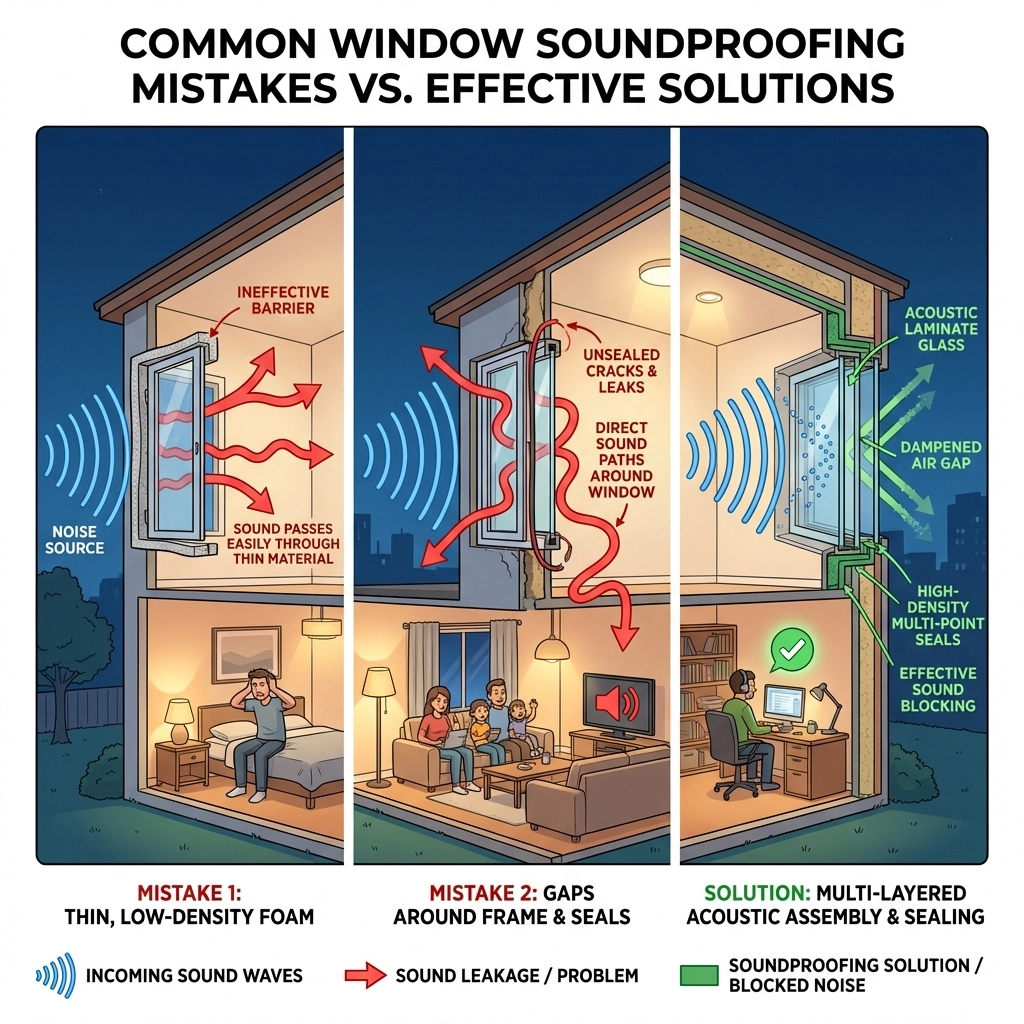
Common Mistakes That Waste Money
Mistake 1: Focusing Only on Glass
What people do: Buy expensive acoustic glass but ignore frame gaps Result: Minimal improvement because sound leaks through unsealed gaps Fix: Always seal gaps first, regardless of other methods chosen
Mistake 2: Using Thin Acoustic Foam
What people do: Stick thin foam around window frames Result: Almost no noise reduction Fix: Use dense materials with real mass (heavy curtains, proper insulation)
Mistake 3: Single-Solution Thinking
What people do: Expect one method to solve everything Result: Disappointment when 30% reduction isn't enough Fix: Combine methods for cumulative effect
Mistake 4: Ignoring Low-Frequency Noise
What people do: Choose solutions that only block high frequencies Result: Still bothered by traffic rumble, bass sounds Fix: Use mass-based solutions (secondary glazing, heavy curtains) not just absorption
Mistake 5: Poor Installation
What people do: DIY installation with gaps and poor sealing Result: Dramatically reduced effectiveness Fix: Follow instructions precisely, or hire professionals for complex solutions
How to Measure If Your Soundproofing Is Working
Before and After Testing
Use a decibel meter app (many free options available):
- Measure baseline noise levels at different times
- Install your soundproofing solution
- Measure again in same conditions
- Calculate percentage reduction
What to Expect
- 5-10 dB reduction: Noticeable improvement
- 10-15 dB reduction: Significant improvement (sounds half as loud)
- 15+ dB reduction: Dramatic improvement (professional-grade results)
Subjective Testing
- Can you have a normal conversation?
- Can you watch TV at comfortable volume?
- Can you sleep without earplugs?
- Do you notice the noise less throughout the day?
Frequently Asked Questions
Q: Will soundproof windows block 100% of noise? A: No window solution blocks 100% of noise. Even the best secondary glazing systems achieve 70-80% reduction. Complete silence requires room-within-room construction.
Q: Do I need planning permission for secondary glazing? A: Generally no for internal secondary glazing. Listed buildings may need conservation approval. Always check with your local council.
Q: Can I install secondary glazing myself? A: Simple systems can be DIY, but professional installation ensures proper fit and maximum effectiveness. Poor installation dramatically reduces performance.
Q: What's the difference between acoustic glass and regular glass? A: Acoustic glass uses laminated construction or special thickness combinations to reduce sound transmission. It typically offers 30-50% better noise reduction than standard glass.
Q: Will thick curtains really make a difference? A: Quality acoustic curtains can reduce noise by 40-50%, especially higher frequencies. They're most effective when mounted close to walls and extending beyond window frames.
Q: How long does secondary glazing installation take? A: Typically 2-4 hours per window for professional installation. Surveys and manufacturing time usually add 2-4 weeks to the process.
Q: Can I combine multiple soundproofing methods? A: Yes! Combining methods often provides the best results. Secondary glazing + curtains can achieve 80-85% noise reduction.
Q: What's the most cost-effective solution? A: For budget-conscious homeowners: proper window sealing + acoustic film + heavy curtains (under £100 per window for 50-60% improvement).
Q: Do window plugs really work? A: Yes, when properly made and fitted. They can achieve 60-70% noise reduction but eliminate light and ventilation while installed.
Q: How do I choose between secondary glazing and window replacement? A: Choose secondary glazing if your existing windows are in good condition or you're in a listed building. Choose replacement if windows are old, drafty, or you want improved energy efficiency too.
Getting Professional Help
While some soundproofing methods are suitable for DIY, others require professional expertise. If you're dealing with serious noise issues or want maximum effectiveness, consider getting expert advice.
A professional noise assessment can:
- Identify exactly where sound is entering
- Recommend the most effective solution for your specific situation
- Ensure proper installation for maximum performance
- Provide warranties and ongoing support
Ready to solve your noise problems? Get your free noise assessment and quote today. Our experts can help you choose the right solution and ensure professional installation for maximum effectiveness.
Remember: the key to successful window soundproofing is choosing the right method for your specific situation and ensuring proper installation. Don't let noise control your life – take action today and enjoy the peace and quiet you deserve.
People Also Ask
Related questions could not be generated at this time.
Frequently Asked Questions
FAQs could not be generated at this time.
Related Articles



Next Step
Book a Free Noise Survey
Get a tailored acoustic report and fixed quote for your property. No obligation, surveys across London within 5 working days.