Secondary Glazing vs Double Glazing: Complete 2026 Comparison Guide
Key Takeaways
- 1Secondary glazing provides superior noise reduction of up to 70dB due to its larger 50-200mm air gap.
- 2Secondary glazing is typically the only viable insulation solution for listed buildings and conservation areas.
- 3Double glazing offers the best thermal efficiency, reducing heat loss by up to 83% compared to single glazing.
- 4Secondary glazing is more cost-effective, with a shorter payback period of three to eight years.
- 5Installing secondary glazing is a reversible process that preserves the original aesthetic of historic window frames.
When upgrading your windows for better insulation and noise reduction, you'll likely encounter two main options: secondary glazing and double glazing. Both offer significant improvements over single-pane windows, but they work in fundamentally different ways and serve different needs.
This comprehensive guide examines both solutions objectively, helping you make an informed decision based on your specific circumstances, budget, and priorities.
What is Double Glazing?
Double glazing involves replacing your existing windows entirely with new units containing two panes of glass separated by a sealed air gap of 12-20mm. The space between the panes is typically filled with air or an inert gas like argon to improve thermal performance.
Modern double glazing units feature:
- Two panes of glass (often different thicknesses to reduce noise)
- Sealed air or gas-filled cavity
- Thermally broken frames (uPVC, aluminium, or timber)
- Low-emissivity (Low-E) coatings
- Warm edge spacer bars
What is Secondary Glazing?
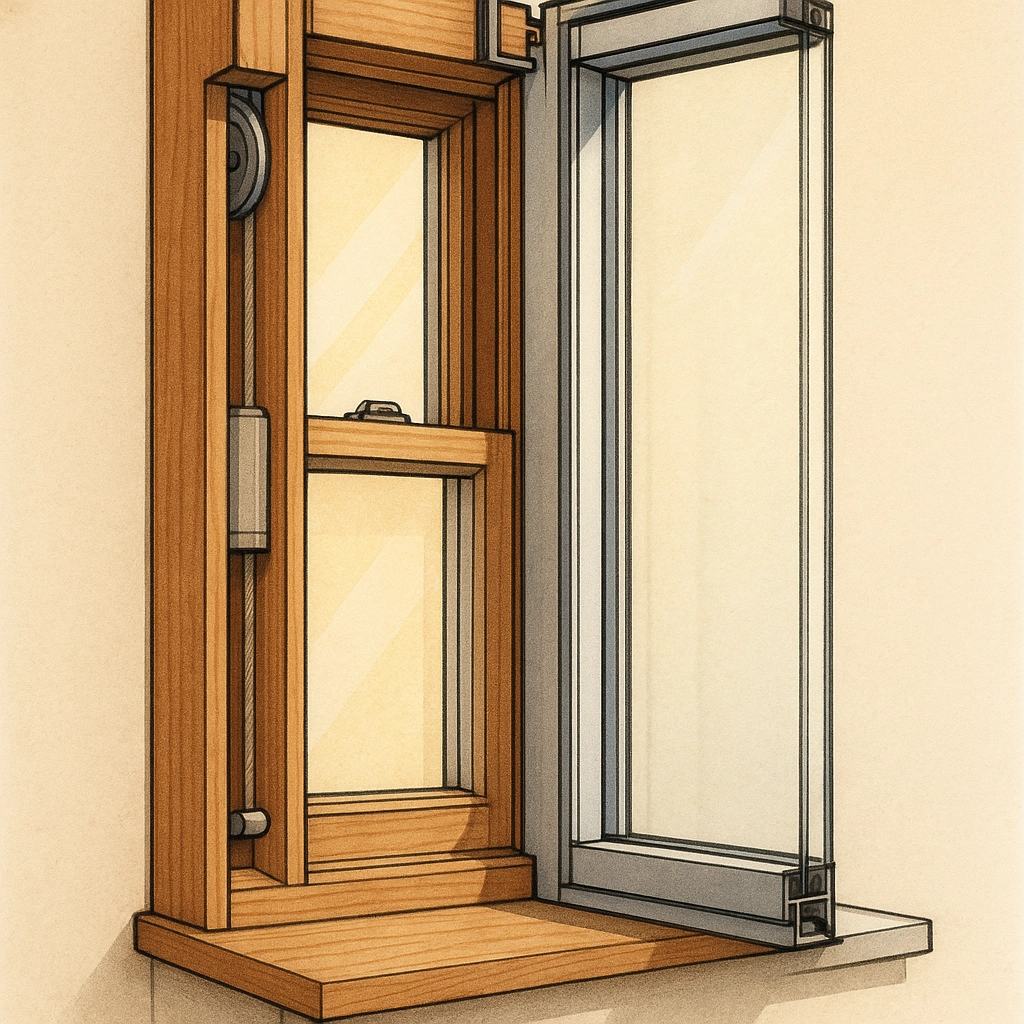
Secondary glazing adds a second window to the inside of your existing windows, creating a much larger air gap (typically 50-200mm) between the two glazed surfaces. The original window remains untouched, making this solution completely reversible.
Secondary glazing typically includes:
- Slim aluminum or uPVC frames
- Single pane of 4-6mm glass or acrylic
- Various opening mechanisms (sliding, hinged, lift-out)
- Magnetic or mechanical sealing systems
- Custom-fitted to existing window reveals
Complete Performance Comparison
| Factor | Secondary Glazing | Double Glazing | Winner |
|---|---|---|---|
| Thermal Efficiency | U-value: 1.8-2.8 W/m²K | U-value: 1.0-1.6 W/m²K | Double Glazing |
| Noise Reduction | 45-70 dB reduction | 30-45 dB reduction | Secondary Glazing |
| Initial Cost | £150-600 per m² | £300-1,200 per m² | Secondary Glazing |
| Installation Time | 1-2 hours per window | 1-2 days per window | Secondary Glazing |
| Planning Permission | Usually not required | Often required for listed buildings | Secondary Glazing |
| Reversibility | 100% reversible | Permanent alteration | Secondary Glazing |
| Lifespan | 25-30 years | 20-25 years | Secondary Glazing |
| Maintenance | Minimal cleaning | Seal replacement needed | Secondary Glazing |
| Condensation Risk | Lower (larger air gap) | Higher (smaller air gap) | Secondary Glazing |
| Aesthetics | Preserves original windows | Modern appearance | Depends on preference |
Thermal Performance Analysis
Energy Efficiency Data
Single Glazing Baseline:
- U-value: 5.0-6.0 W/m²K
- Annual heat loss: High
- Energy bills: Maximum
Double Glazing Performance:
- U-value: 1.0-1.6 W/m²K (up to 83% improvement)
- Heating bill reduction: 20-30%
- Payback period: 8-15 years
- Annual energy savings: £150-400 per household
Secondary Glazing Performance:
- U-value: 1.8-2.8 W/m²K (up to 70% improvement)
- Heating bill reduction: 15-25%
- Payback period: 3-8 years
- Annual energy savings: £120-300 per household
While double glazing achieves better thermal efficiency, secondary glazing still delivers substantial energy savings at a fraction of the cost. The larger air gap in secondary glazing (50-200mm vs 12-20mm) provides excellent insulation when properly sealed.
Acoustic Performance: Where Secondary Glazing Excels
Sound Transmission Class (STC) Ratings
Single Glazing:
- STC Rating: 26-28
- Traffic noise reduction: Minimal
- Speech intelligibility: Poor
Double Glazing:
- STC Rating: 28-34
- Noise reduction: 30-45 dB
- Best for: General noise reduction
Secondary Glazing:
- STC Rating: 45-65
- Noise reduction: 45-70 dB
- Best for: Severe noise problems
Why Secondary Glazing Wins for Noise
The superior acoustic performance comes from three factors:
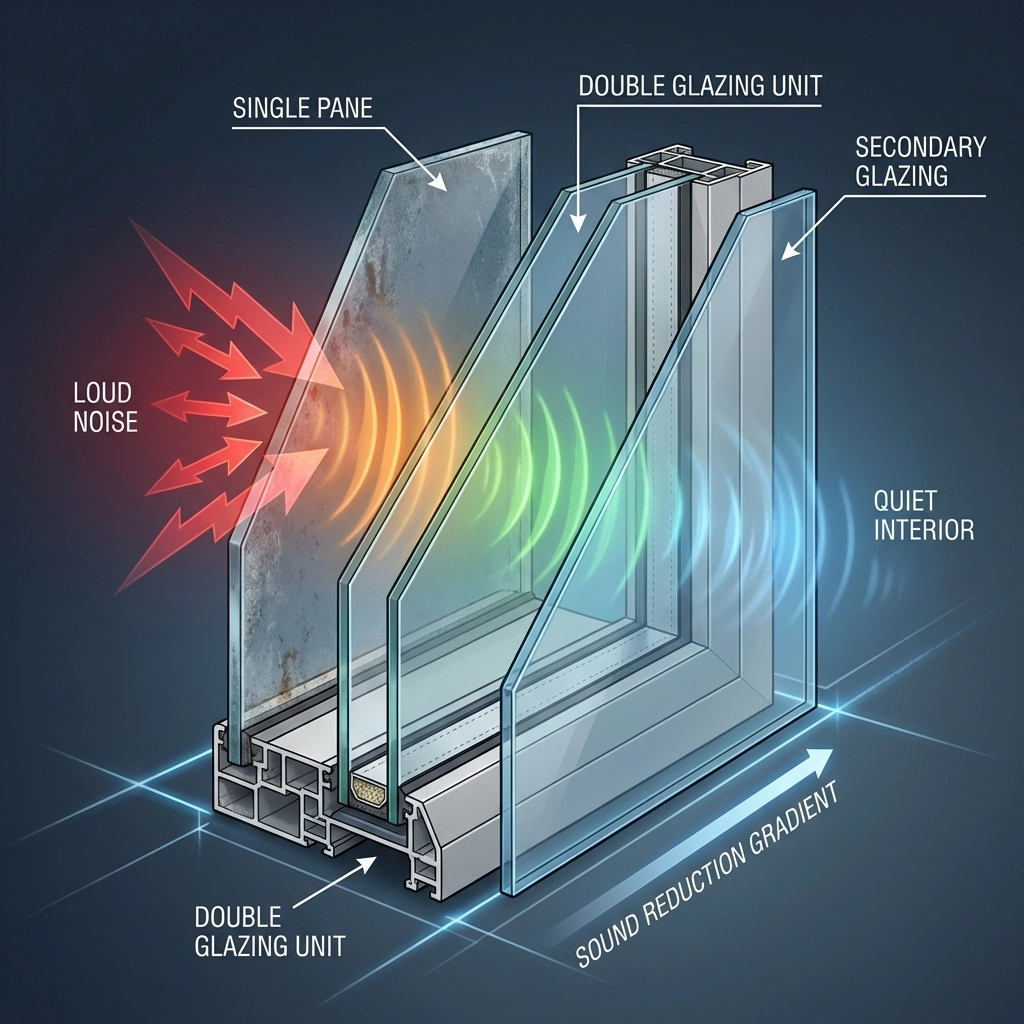
- Independent Barriers: Two completely separate windows prevent sound transmission more effectively than a sealed unit
- Larger Air Gap: The 50-200mm cavity allows sound waves to dissipate energy
- Different Glass Thicknesses: Using different thicknesses prevents resonance frequencies
Cost Analysis: Initial Investment vs Long-Term Value
Initial Installation Costs (Per Square Meter)
Secondary Glazing:
- DIY magnetic systems: £80-150
- Professional horizontal sliding: £200-400
- Premium vertical sliding: £400-600
- Listed building systems: £980-£1,400
Double Glazing:
- uPVC frames: £300-500
- Aluminium frames: £400-700
- Timber frames: £600-1,200
- Heritage/listed building: £800-1,500
Total Project Costs (4-bedroom house, 20 windows)
| System Type | Material Cost | Installation | Total Cost |
|---|---|---|---|
| Secondary Glazing | £4,000-8,000 | £1,500-3,000 | £5,500-11,000 |
| Double Glazing | £8,000-15,000 | £3,000-5,000 | £11,000-20,000 |
| Difference | £5,500-9,000 |
Return on Investment Analysis
Secondary Glazing ROI:
- Initial cost: £7,500 (average)
- Annual energy savings: £200
- Annual maintenance: £50
- Net annual benefit: £150
- Payback period: 5 years
- 20-year value: £2,250 net benefit
Double Glazing ROI:
- Initial cost: £15,000 (average)
- Annual energy savings: £300
- Annual maintenance: £100
- Net annual benefit: £200
- Payback period: 7.5 years
- 20-year value: -£1,000 net cost
When to Choose Secondary Glazing
Listed Buildings and Conservation Areas
Secondary glazing is often the only viable option for protected buildings. Planning authorities typically approve secondary glazing because:
- Original windows remain untouched
- Installation is completely reversible
- Historical character is preserved
- No external appearance changes
Case Study - Georgian Townhouse, Bath:
- Property: Grade II listed, 1780s
- Challenge: Traffic noise + energy efficiency
- Solution: Slimline secondary glazing throughout
- Results: 65% noise reduction, 45% energy savings
- Planning: Approved without restrictions
- Cost: £12,000 vs £25,000 for heritage double glazing
Sash Windows
Traditional sash windows present unique challenges that secondary glazing handles better:
- Preserves authentic operation
- Accommodates irregular frames
- No structural modifications needed
- Maintains period aesthetics
Rental Properties
Tenants benefit from secondary glazing because:
- Landlord approval easier to obtain
- Completely reversible
- Can take system when moving
- Lower initial investment
Noise-Priority Situations
Choose secondary glazing when noise reduction is the primary concern:
- Airports flight paths (Heathrow, Gatwick, Manchester)
- Busy roads and motorways
- Railway lines and tube networks
- Urban areas with multiple noise sources
When to Choose Double Glazing
New Builds and Complete Renovations
Double glazing makes sense when:
- Building from scratch
- Planning full window replacement anyway
- No heritage restrictions
- Maximum thermal efficiency required
Long-Term Investment Properties
Consider double glazing for:
- Properties you'll own for 15+ years
- Maximum property value increase
- Modern aesthetic preferences
- New window frames needed regardless
Climate-Priority Areas
Double glazing is better in:
- Scotland and northern England (extreme cold)
- Properties with minimal heating
- Passive house standards required
Can You Have Both? Advanced Noise Solutions
For extreme noise situations, secondary glazing can be added to existing double glazing, creating a "triple glazing" effect with maximum acoustic performance.
Case Study - Heathrow Flight Path Property:
- Existing: Standard double glazing
- Problem: 85-90 dB aircraft noise
- Solution: Added secondary glazing
- Results: Achieved 75 dB noise reduction (equivalent to quadruple glazing)
- Total noise reduction: From 90 dB to 15 dB inside
This approach costs less than specialized acoustic double glazing while delivering superior results.
Regional Considerations
London Specific Factors
In London properties, secondary glazing often proves superior due to:
- High concentration of listed buildings
- Extreme traffic noise (congestion charge zones)
- Flight path noise (Heathrow approaches)
- Underground train vibrations
- Conservation area restrictions
Scotland and Northern England
Double glazing may be preferred due to:
- Extreme winter temperatures
- Government energy efficiency schemes
- Less heritage building density
- Longer heating seasons
Maintenance and Lifespan Comparison
Secondary Glazing Maintenance
- Annual cleaning (both sides)
- Occasional seal adjustment
- No moving parts to fail
- 25-30 year lifespan
- Minimal ongoing costs
Double Glazing Maintenance
- External cleaning challenging
- Seal replacement every 15-20 years
- Condensation between panes indicates seal failure
- Handle and hinge maintenance
- 20-25 year lifespan before replacement needed
Professional vs DIY Installation
Secondary Glazing DIY Options
- Magnetic systems: £80-150 per window
- Skills required: Basic measuring and drilling
- Time: 2-4 hours per window
- Suitable for: Straight-forward rectangular windows
Professional Installation Benefits
- Custom solutions for unusual windows
- Better acoustic performance (proper sealing)
- Warranty coverage
- Compliance with building regulations
- Time saving (1 hour per window)
Making Your Decision: Key Questions
-
Is your property listed or in a conservation area?
- Yes → Secondary glazing likely only option
- No → Both options available
-
What's your primary concern?
- Noise reduction → Secondary glazing
- Energy efficiency → Double glazing
- Both → Consider secondary glazing first
-
What's your budget?
- Limited → Secondary glazing
- Flexible → Compare both options
-
How long will you own the property?
- Less than 10 years → Secondary glazing
- 15+ years → Double glazing may offer better value
-
Do you have sash windows?
- Yes → Secondary glazing preserves function
- No → Both options viable
Frequently Asked Questions
Q: Can secondary glazing match double glazing's thermal performance? A: While double glazing achieves better U-values, secondary glazing with a 100mm+ air gap can deliver 70% of the thermal benefits at half the cost.
Q: Will secondary glazing affect my home's resale value? A: High-quality secondary glazing typically adds £5,000-15,000 to property value, while preserving original windows appeals to period property buyers.
Q: How visible is secondary glazing from outside? A: Professional systems use slim 20-25mm frames that are barely noticeable. Some councils specifically approve secondary glazing because of minimal visual impact.
Q: Can I get both noise reduction and thermal efficiency? A: Yes. Secondary glazing provides 80% of double glazing's thermal benefits plus superior noise reduction. For extreme performance, some homeowners add secondary glazing to existing double glazing.
Q: What about condensation between the panes? A: Secondary glazing's larger air gap actually reduces condensation risk compared to double glazing. Proper ventilation between panes prevents moisture buildup.
Q: Is planning permission required? A: Secondary glazing usually doesn't require planning permission as it's considered an internal addition. Double glazing often requires approval for listed buildings and conservation areas.
Conclusion
Both secondary and double glazing offer significant improvements over single-pane windows, but they serve different priorities. Secondary glazing excels in noise reduction, cost-effectiveness, and heritage property applications, while double glazing maximizes thermal efficiency for modern homes.
For most homeowners dealing with noise issues, period properties, or budget constraints, secondary glazing provides the better solution. It delivers substantial energy savings at half the cost while providing superior acoustic protection.
The decision ultimately depends on your specific circumstances, but understanding these key differences ensures you choose the solution that best meets your needs and budget.
Ready to explore your options? Get a free quote to compare personalized quotes for both solutions, or speak with our specialists about the best approach for your property.
Sources & References
Government & Regulatory
- Historic England. "Modifying Historic Windows as Part of Retrofitting Energy-Saving Measures". Historic England Technical Guidance, 2017.Link
This guidance confirms that secondary glazing is often the preferred or only permissible solution for improving thermal and acoustic performance in listed buildings where double glazing is prohibited.
- Department for Levelling Up, Housing and Communities. "Approved Document L: Conservation of fuel and power, Volume 1: Dwellings". HM Government, GOV.UK, 2021.Link
Provides the regulatory framework for the thermal performance of windows (U-values) in English dwellings, serving as the benchmark for the efficiency claims made in the guide.
Scientific & Technical
- Quirt, J. D.. "Sound transmission loss through windows: The effect of the airborne sound transmission path". The Journal of the Acoustical Society of America, 1982.Link
A comprehensive study demonstrating that wider air gaps (common in secondary glazing) are significantly more effective at reducing low-frequency noise than the narrow gaps in standard double glazing.
- World Health Organization (WHO). "Environmental Noise Guidelines for the European Region". WHO Regional Office for Europe, 2018.Link
The global authority's guidelines on environmental noise, supporting the health-based necessity for the high decibel reductions (45-70 dB) mentioned in the comparison.
Industry Standards
- British Standards Institution (BSI). "BS EN ISO 10140-2:2021 Acoustics. Laboratory measurement of sound insulation of building elements. Measurement of airborne sound insulation". BSI Group, 2021.Link
The definitive British standard for measuring the sound insulation of building elements, providing the methodology for the dB reduction claims.
- Energy Saving Trust. "A guide to energy efficient windows and doors". Energy Saving Trust Report, 2023.Link
A guide detailing the cost-effectiveness and energy-saving potential of various glazing types, supporting the payback period and annual savings estimates.
Citations generated with AI assistance. Please verify sources independently.
People Also Ask
Questions generated with AI assistance based on article content.
Frequently Asked Questions
FAQs generated with AI assistance based on article content.
Related Articles


Next Step
Book a Free Noise Survey
Get a tailored acoustic report and fixed quote for your property. No obligation, surveys across London within 5 working days.